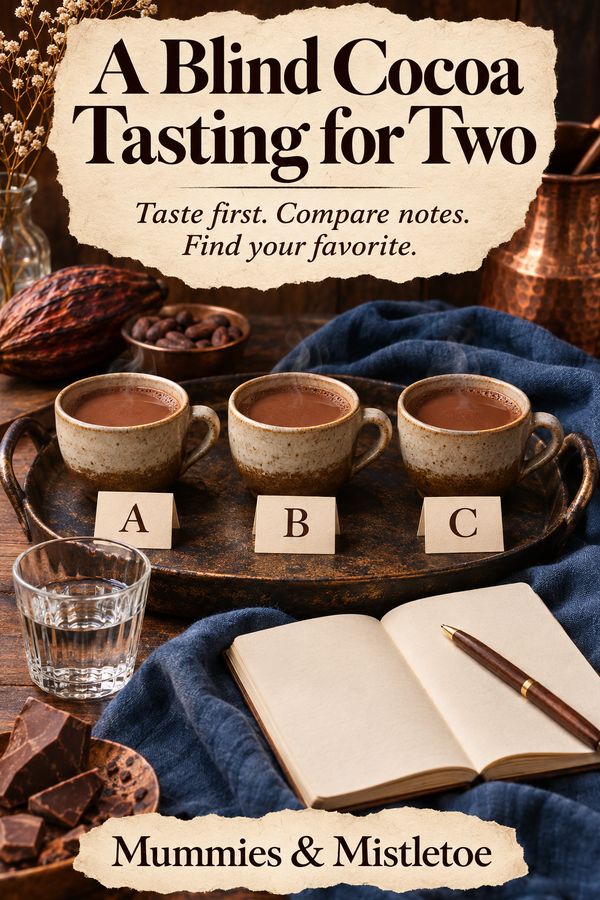
Which cocoa do you actually like best when the marshmallows and pretty mugs are taken out of the equation? A blind tasting for two makes a cozy evening out of finding the answer.
Choose two or three drinks, keep the portions small and change only one thing at a time. You will finish with a favorite cup and notes you can use the next time you shop or make cocoa.
Decide what you are comparing
Compare three cocoa mixes prepared as directed, or compare one homemade recipe with a single ingredient changed. Do not change the milk, chocolate and sweetener all at once if you want to know which change mattered.
For a mix comparison, follow each package’s directions. For an ingredient experiment, use one tested recipe and measure the same quantities for every version except the ingredient being tested. Check dietary needs and labels before preparing anything.
Write the real names on a private key and label the tasting cups A, B and C. Use matching cups so the prettiest vessel does not win before anyone tastes.
Keep the tasting practical
Make small amounts and serve them at a comfortable drinking temperature. Try to keep the temperatures similar because a cooling cup can taste different from a freshly poured one.
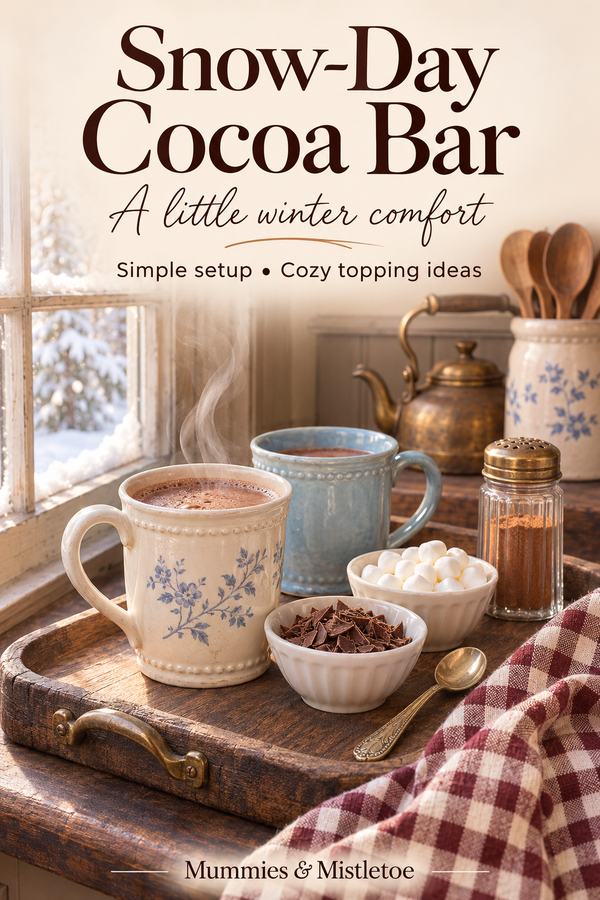
Have water and a plain snack available between samples. Taste without toppings first. A whipped-cream mountain is delightful later, but it can make three different drinks taste mostly like whipped cream.
If you are both curious about the results, one person can prepare the samples while the other labels them out of sight. For a more genuinely blind comparison for both people, ask someone else to arrange the cups. Otherwise, simply acknowledge that the preparer knows which is which.
Use words before numbers
Make a little tasting sheet with four headings: chocolate flavor, sweetness, texture and finish. Write a few words under each. “Silky and sweet” or “deep chocolate, slightly grainy” is more helpful than awarding a mysterious seven out of ten.
Taste quietly before discussing. Then compare notes. One person may prefer a less sweet drink while the other likes a thicker texture. There is no need to turn those preferences into a single household verdict.
Choose a favorite for everyday drinking and, if different, a favorite for dessert. That distinction may explain why neither of you wants the richest cup every night.
Add one topping round
Now give the leading drink a small topping test. Divide it into two portions and add a different finishing touch to each, using ingredients you already enjoy. Record whether the topping improved the drink or simply made it sweeter.
Keep the winning combination on a recipe card with the preparation method and actual measurements. If a mix won, write the exact variety so you do not buy a different one next time.
End with full cups of your chosen favorites and put the score sheets away. The tasting has supplied the conversation; the rest of the evening can simply be warm and comfortable.