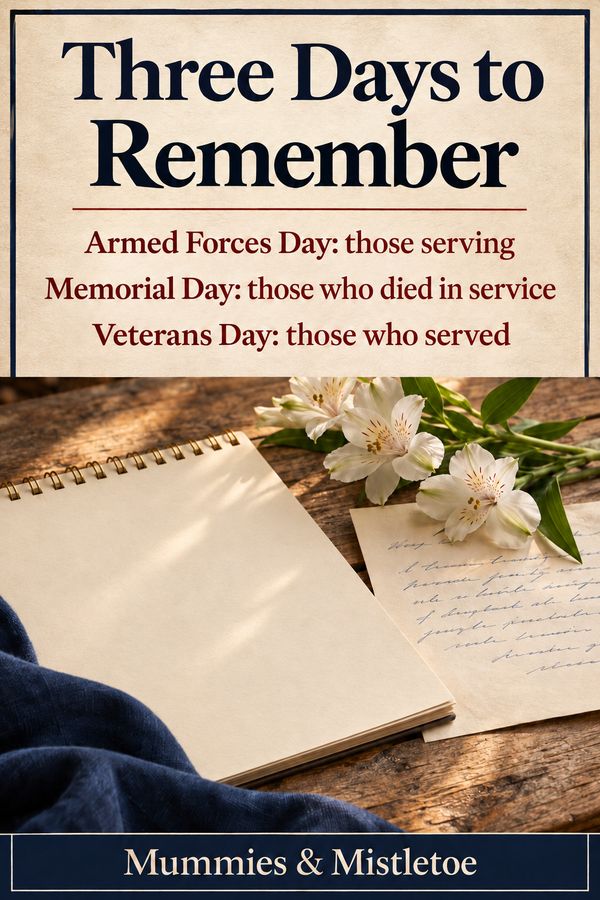
Armed Forces Day, Memorial Day and Veterans Day each honor a different group of people. Knowing the distinction helps families choose thoughtful words and gives children a clear starting point for understanding each observance.
Keep three simple distinctions handy
Armed Forces Day honors people currently serving in the U.S. military. An appropriate acknowledgment might be a note to a serving relative or attendance at an advertised public event. Ask about an event's visitor requirements before making plans.
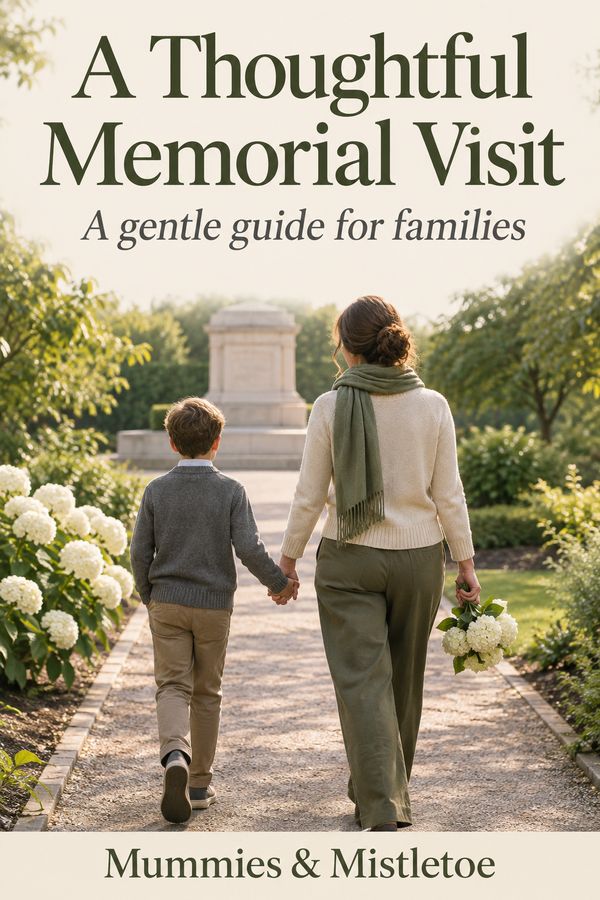
Memorial Day remembers those who died in military service. A remembrance ceremony, a memorial visit or learning the story of someone named on a local monument fits its purpose.
Veterans Day honors those who have served. It is an opportunity to thank veterans, including living veterans whose service may not be visible in everyday life.
The Library of Congress explains the distinctions, and the VA's Veterans Day guide offers further context. Keep those pages as references when children ask questions you cannot answer on the spot.
Use the right greeting for each observance
For a currently serving cousin, try: “Thinking of you today. Would you enjoy a letter from the kids?” For a veteran you know, “Thank you for your service” can stand on its own. If conversation follows, let that person decide what to share.
For a bereaved family on Memorial Day, a personal remembrance is often more meaningful than a broad holiday greeting: “I remember how warmly your dad welcomed everyone. Thinking of him and of you today.” Use a true memory, even a small one.
Children can draw a picture or sign a note, but the adult should check the destination and recipient first. A relative's preference matters more than making a particular craft.
Add a useful calendar note
Write a short explanation beside each observance in your family calendar. Under Memorial Day, you might add “Remember those who died serving”; under Veterans Day, “Honor those who served.” Keep separate notes for a ceremony's actual date and time, since community events may be scheduled on a nearby day.
When a child asks, “Which day is for Grandpa?” start with what you know about Grandpa's service and what he would welcome. The distinctions give you a starting point. The relationship tells you how to make the day personal.