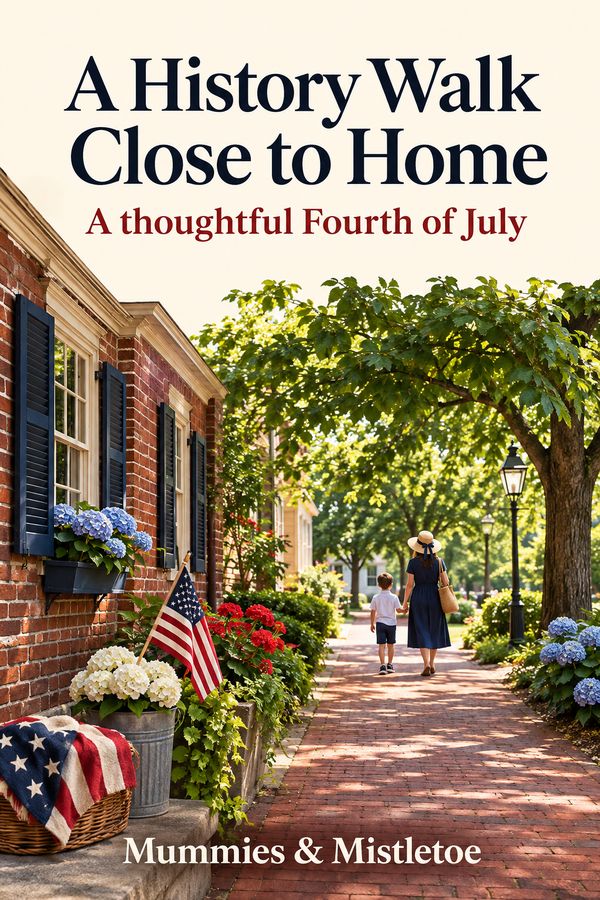
A local history walk can make Independence Day more interesting than a list of famous names. Choose two or three nearby markers, buildings or museum stops, then ask what each one tells you about the place where you live.
The route does not have to include a Revolutionary War site. A town hall, memorial, former school or community museum can open useful questions about how local life and civic participation changed over time.
Research before planning the route
Use your local library, historical society, museum or government heritage site to choose places open to visitors, noting current hours and access.
Read the background information before taking children. Some sites may need age-appropriate context about slavery, displacement, exclusion or conflict. A little preparation helps you answer honestly without relying on a plaque’s few sentences alone.
Choose a short route with shade, rest stops and an indoor or cooler-time alternative. Independence Day heat and crowds can change what is comfortable.
Give each stop one question
At a marker, ask who wrote it and when it was installed. At a building, ask what it was used for and who could enter. At a memorial, ask who is named and whose experience is absent.
Copy a short phrase from each marker and note when it was installed. Keep that date separate from the date of the event it describes.
A child can draw the object or copy one short phrase. An older reader can compare the marker with the historical society’s account.
Distinguish evidence from a good story
Local legends can be entertaining, but label them as legends unless reliable evidence supports them. If two sources disagree, save the question for a librarian or historian instead of choosing the more dramatic version.
Notice what kind of source you are using. A diary entry, newspaper report, later memoir and modern marker offer different perspectives. None automatically tells the whole story.
Ask what additional record would help: a map, a census page, a photograph or an account from another community. You do not need to find everything during the walk.
Keep the outing pleasant
Build a pause into the route: a shaded bench, a drink stop or time to browse the museum shop. That break also gives everyone a chance to compare what they noticed.
Let each person choose the stop they found most interesting. A family member who is tired can sit out a section without missing the point of the activity.
Save a small local-history page
Afterward, write the route, sources and three things you learned. Add one question to investigate later and one place you want to revisit when you have more time.
The walk has made the holiday local and concrete. Instead of only repeating a familiar national story, you have begun to understand how history is recorded, remembered and sometimes questioned in your own community.