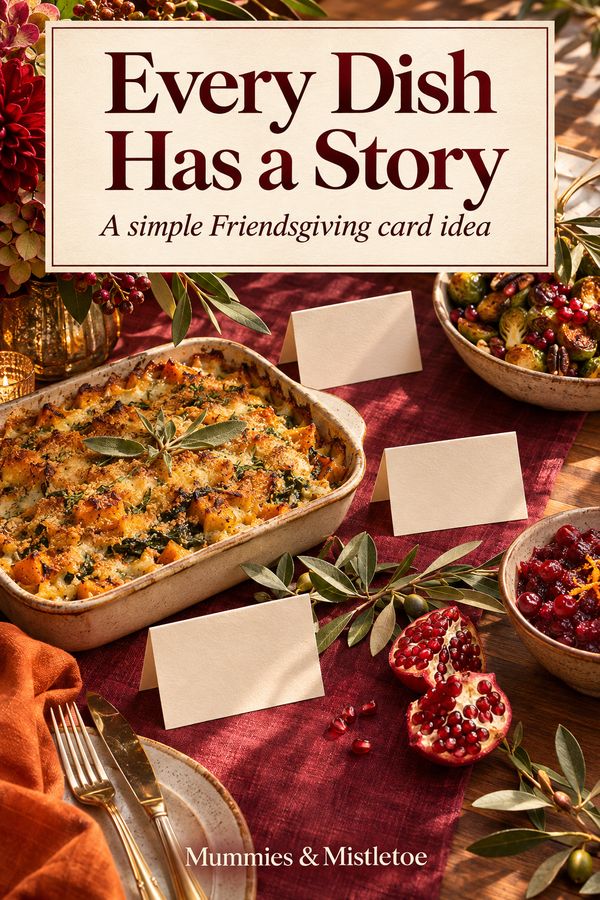
A Friendsgiving potluck dish arrives with more than ingredients. It may be the casserole someone learned from a roommate, a salad they make every week or a dessert that reminds them of home. A small dish story card lets those details travel with the food, even when the cook is across the room.
For Friendsgiving, ask each contributor for a few practical facts and one short story. Keep the card easy to read and useful at the serving table. It should help guests choose their food and give the person who brought it a place in the gathering.
Ask for the Details Before the Day
Send contributors a short message: “Could you send the name of your dish, its ingredients and two sentences about why you chose it? We are making little cards for the table.” Give a deadline early enough to write or print the cards without a rush.
Keep the full ingredient information available with each dish, including sauces and packaged components, so guests with food allergies can check it.
Use the contributor's preferred name and the dish name they give you. If a recipe belongs to another person or published source, include that credit when sharing the recipe itself.
Keep the Front Simple
A folded card about the size of an index card gives you room for three things: the dish name, the cook's name and a short story. For example:
Auntie's lemon potatoes
Brought by Sam
“These were always beside the roast at Sunday lunch. I make them when I want the kitchen to smell like home.”
That example shows the format; invite your guests to use their own words. A funny, ordinary sentence is more engaging than a polished paragraph they did not write.
Use dark lettering on light card and keep the text large enough to read without lifting it. Put the ingredient information on the back or on a separate clearly labeled sheet. A small card holder makes the story easy to see.
Give Every Contribution Equal Space
A bakery pie, a pot of homemade beans and a bag of favorite rolls can all have a card. Ask “Why did you choose it?” instead of assuming every guest cooked from scratch. Someone might answer, “This is the pie I buy whenever I visit my sister,” and that is a perfectly good story.
A cook who prefers can simply name the dish. Give each card the same amount of space so the table feels like a shared meal rather than a competition.
Let the Cards Start Conversation
When people are eating, you might ask one cook about a detail on their card. Keep it conversational rather than calling everyone to give a speech. A guest who recognizes an ingredient or a family habit may find a natural way into the discussion.
After the meal, gather any recipes and stories contributors would like the group to keep. Save the cards with the menu. Next year, those few sentences can remind you not only what you ate, but who made the table feel like Friendsgiving.