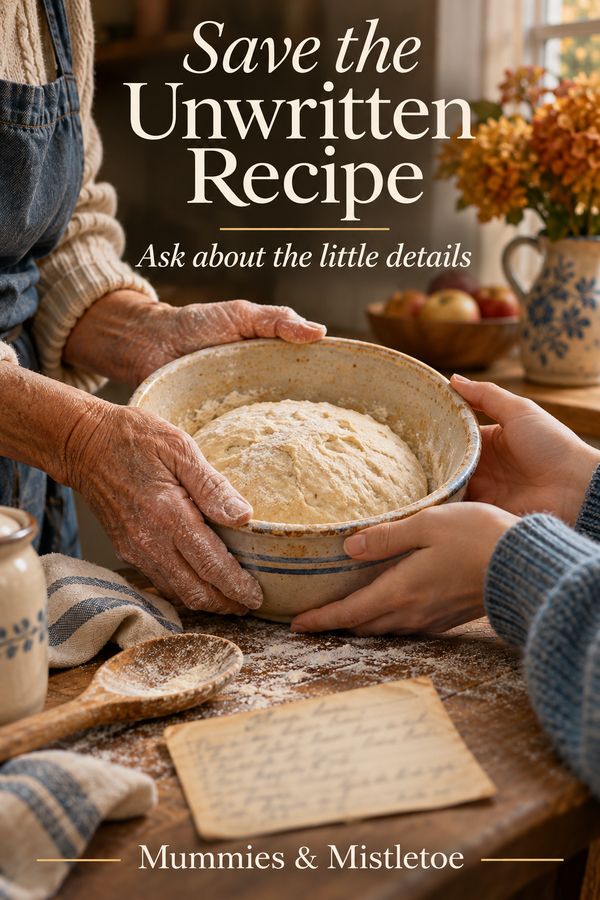
“Add flour until it feels right” is an instruction that makes perfect sense to the person who has cooked a dish for forty years. A recipe interview helps capture what that person sees, smells and feels before those details disappear between the written lines.
Choose one familiar recipe with a step you cannot quite reproduce. Ask your grandparent or family cook to show you that moment: the thickness of the batter, the size of the pan or the color that means it is ready. Build the interview around those missing instructions.
Start with the version they actually make
Write the dish's name, who taught it to them and approximately when they began making it. Ask whether today's version differs from the original. A changed ingredient can carry a useful story about availability, taste or the people eating it.
Keep the original recipe intact. Put your interview notes on a separate page so later readers can distinguish the source from your additions.
Ask about the missing cues
Useful questions include:
- What should this look like before the next ingredient goes in?
- How thick is it when you say it is ready?
- Which pan do you usually use?
- What tells you it needs more time?
- What mistake did you make when you first learned it?
If watching a demonstration, note the approximate measurements and ask before interrupting a time-sensitive step. Photographs can help document texture or pan size, with permission.
Separate memory from a tested instruction
Write down substitutions as the cook describes them, including whether they have actually used them. “I sometimes use this” and “that might work” belong in different notes.
For safety-sensitive steps, such as cooking meat or preserving food, pair family knowledge with current authoritative guidance before treating the recipe as ready to follow. An interview captures history; it does not automatically validate every remembered method.
Read the recipe back together
Check ingredient names, quantities and the order of steps. Ask the cook which detail a beginner is most likely to misunderstand. Add that explanation beside the relevant step instead of burying it in a long introduction.
Keep their characteristic phrase if it matters, followed by the practical cue: “until it looks happy,” for example, can sit beside a description of the color or texture they mean.
Give them a copy
Share the cleaned-up notes for correction before circulating them through the family. Credit the cook and anyone they named as the recipe's source.
The finished page can preserve both a usable method and a voice you recognize. Next time someone makes the dish, they will have more than a list of ingredients. They will have the small observations that once lived only in one person's hands.