The most useful housewarming information is often the least glamorous: where to return a library book after hours, which entrance leads to the community center, or where to find the official waste-collection schedule.
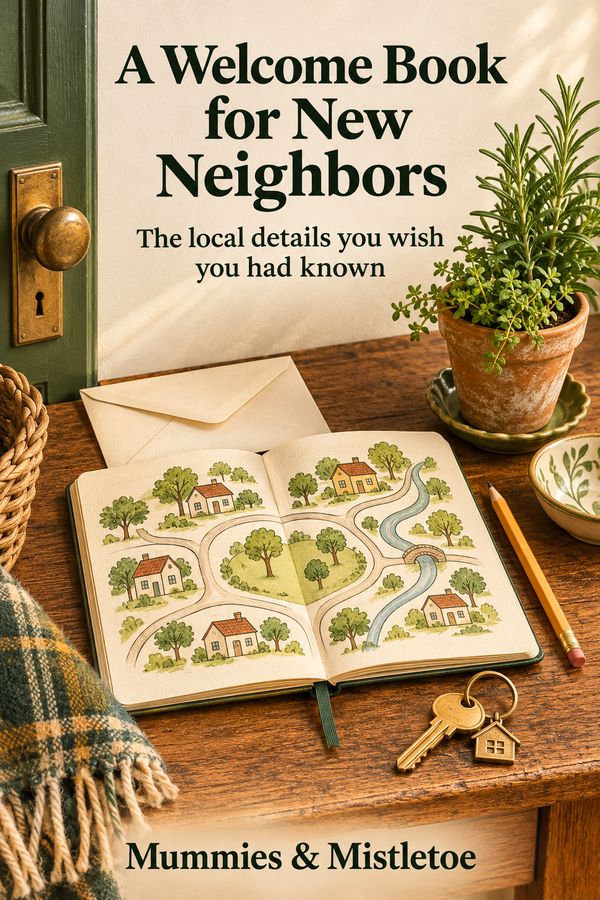
A small local welcome book can save a new neighbor several rounds of searching. Keep it short, current, and specific enough to use.
Start with five everyday questions
Think about what someone needs in their first few weeks. Where can they find groceries? How do they learn about local services? Where is a good place to walk? What public spaces are nearby? Which local information sources are reliable?
Choose the questions that fit the recipient. A family with young children and a person moving into a small apartment may need different details.
Aim for a few pages. This is a friendly orientation, not an encyclopedia of the town.
Separate facts from favorites
Label your recommendations honestly. “Our favorite place for a quiet coffee” is a personal opinion. Opening hours, collection schedules, and registration requirements are facts that need checking.
Link to the official source for details likely to change. Add a “checked on” date beside useful entries. If you include a telephone number or address, verify it directly rather than copying an old social-media post.
Keep the guide to public information and personal recommendations, leaving out private numbers and access codes.
Give each entry a job
A simple format keeps the pages readable:
Place or service: the name.
Useful for: why someone would go there.
One practical detail: parking, entrance, accessibility information from the official source, or something else that helps on a first visit.
Current information: the official website or contact page.
For a park, name the entrance for a favorite short walk and link to the park's access information. Those two details help someone plan their own first visit.
Include a first-week page
Put the immediately useful items together: grocery options, library information, public transport resources if relevant, and links for local government services. Let the later pages cover enjoyable discoveries.
A blank section called “Our finds” gives the new resident room to add their own places. That turns the guide into a starting point instead of a prescription for living exactly as you do.
You can include one personal note: “The bakery on this page became our Saturday stop. We’d love to go with you sometime if you’d enjoy that.” Make the invitation easy to accept or leave for later.
Deliver it in a form they will use
A few printed sheets in a folder work well. A digital document is easier to update. Keep the title and file name simple so it can be found again.
Check the facts once before giving it and leave a few blank lines for the neighbors' own discoveries. Their favorite bakery or walking route may be the first thing they add.