A wedding letter can say the things that do not belong in a toast, a ceremony or a room full of cameras. It can be funny, reassuring, ordinary or deeply personal. The useful part of planning the exchange is making sure each person has a quiet moment to receive it.
Agree on the plan together before the wedding week. One person should not arrive with three handwritten pages while the other discovers, on the morning itself, that a letter was expected.
Decide What Kind of Letter You Mean
Choose a loose length and purpose. A page or two is plenty for most exchanges, but the agreement matters more than the number. Are these private memories, words of encouragement or an explanation of what you are looking forward to? Decide whether the letters should avoid repeating the vows you will say later.
You might each answer three questions: What is one moment from our life together I want you to remember today? What do I appreciate about the way you care for people? What ordinary thing am I looking forward to sharing with you?
Specific details make the letter yours. “You left soup outside my door during that impossible workweek” says more than a paragraph of familiar romantic phrases. Keep a joke only if the recipient will enjoy it on a busy, emotional morning.
Write Before the Final Rush
Make a rough draft several days ahead. Read it aloud privately to hear any sentence that does not sound like you. Shorten explanations that need a long backstory; your partner usually knows the story already.
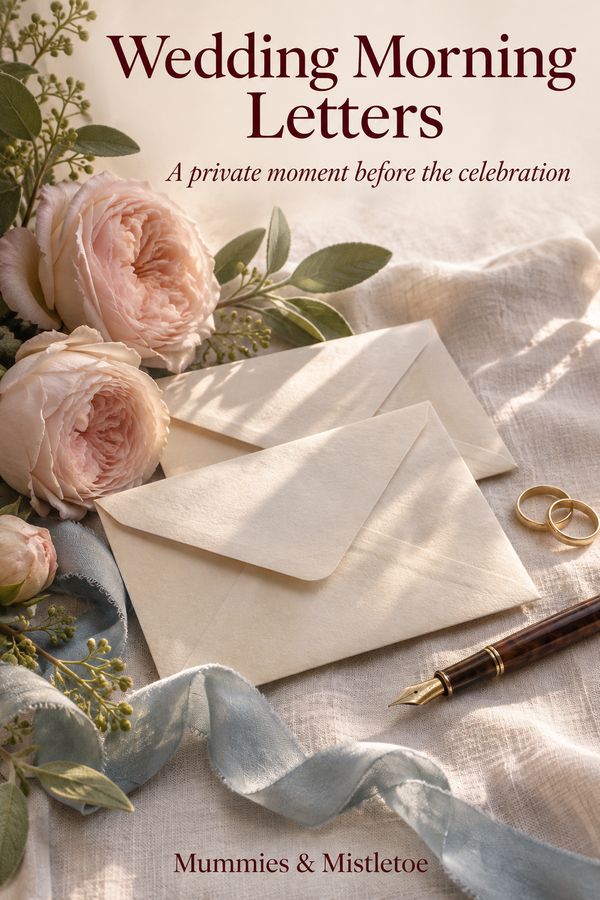
Copy the finished letter onto paper you enjoy writing on. Check that the ink is dry before folding it. Place it in an envelope with the recipient's name and a simple instruction such as “For a quiet moment before the ceremony.” An ordinary envelope can do this job beautifully.
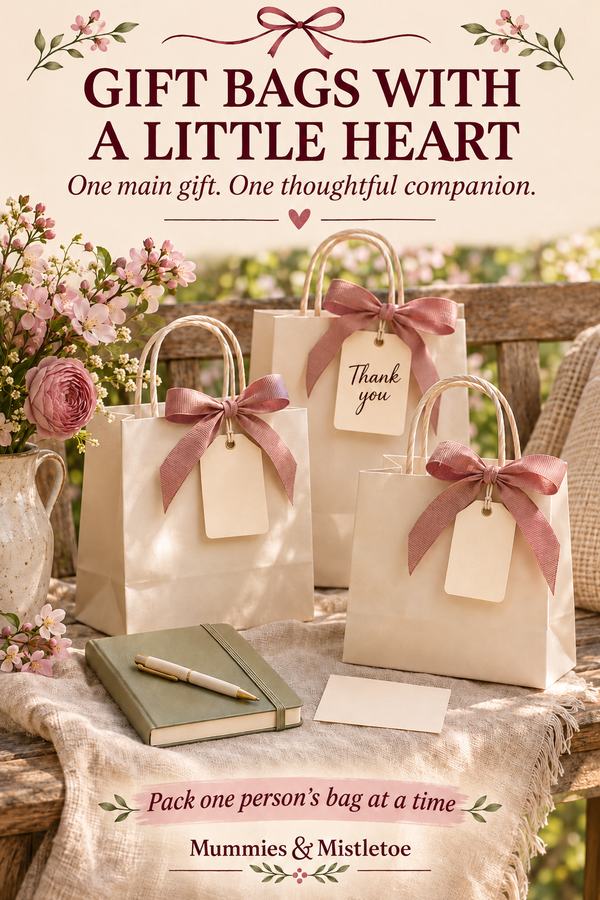
If you want a small keepsake alongside it, choose something the recipient already uses. A notebook from Mummies & Mistletoe could hold the letter and future anniversary notes, but the exchange does not need an additional gift to feel complete.
Give Delivery to One Reliable Person
Choose a friend or family member who already knows where each person will be getting ready. Give them the sealed envelopes the day before and agree on a time window. Avoid a handoff that depends on someone crossing a busy venue just before the ceremony.
Build in a place to read: a chair in a quieter room, a few minutes before dressing or a short pause after the morning preparations. If the schedule changes, the letter can wait. A rushed reading in front of an audience defeats the purpose of making it private.
Be Clear About Cameras and Sharing
Tell the photographer whether the exchange is private, whether a photograph of the envelopes is welcome, or whether either person wants their reaction photographed. The same agreement applies to reading aloud and social media. Receiving a letter does not automatically make its contents part of the public wedding story.
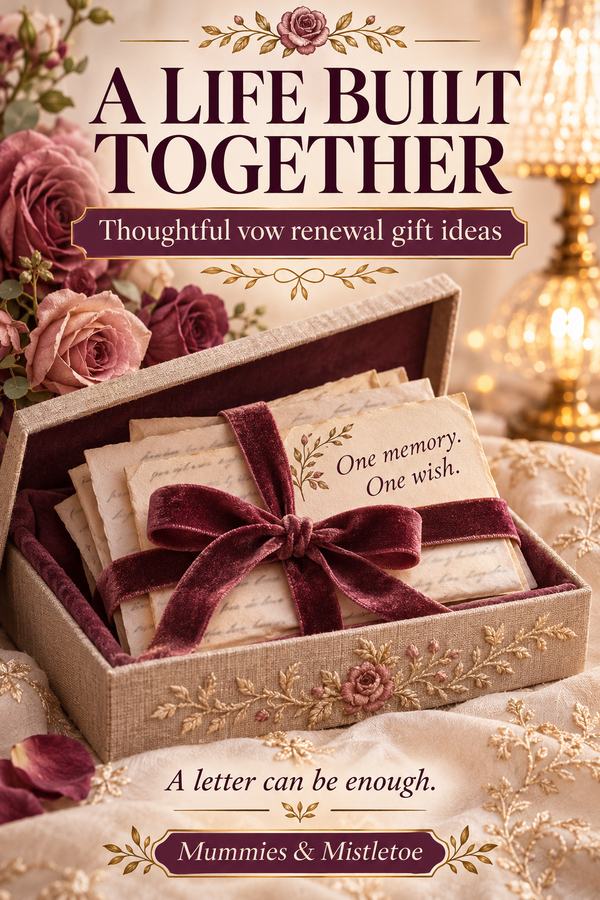
Afterward, store both letters where you can find them again. Put the date on the envelopes and keep a private digital copy if you want one. The wedding morning is the first reading; a later ordinary evening may be when the words have the most room to settle.