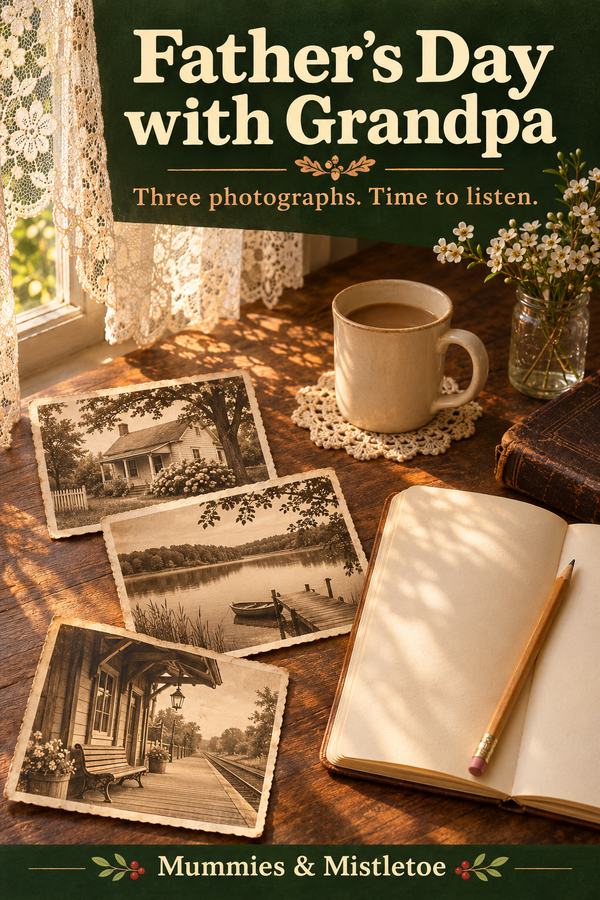
What would you like to ask Grandpa about an old family photograph? Father's Day can be a chance to hear that story together. Bring a few pictures, make room to listen and turn one of his recollections into a small keepsake afterward.
The gift is the prepared time together, with a useful object only if it adds something he would enjoy. A notebook, a printed photograph or his familiar afternoon drink can support the visit. Let his interests and energy guide the shape of it.
Plan Father's Day Gifts for Grandpa Around Time Together
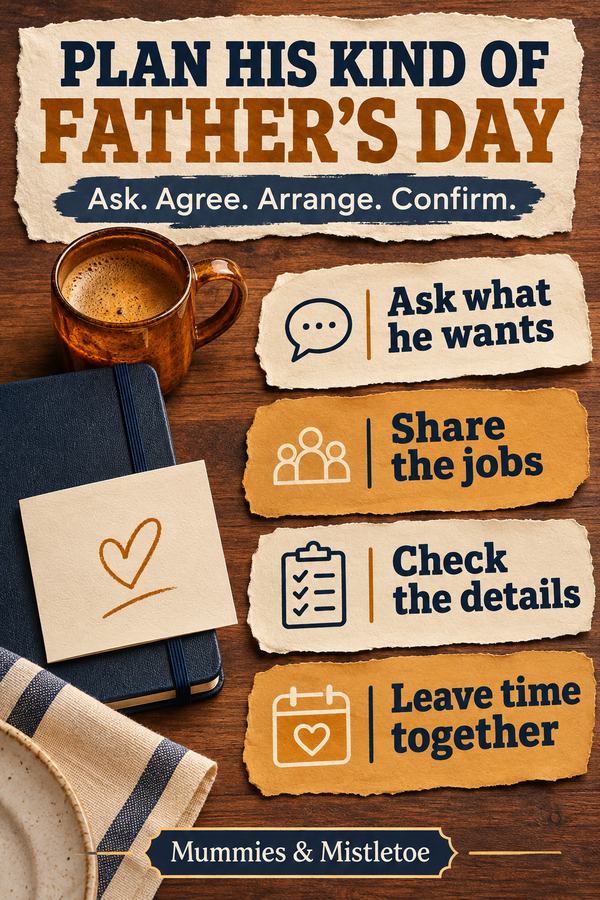
Choose a visit or call he would welcome. Ask what time suits him, and leave room for the conversation to be shorter or longer than you expected. A quiet afternoon may be more comfortable than adding an activity to a crowded family meal.
Tell him the simple idea in advance: you would like to look at a few photographs and hear about them. Invite him to choose some if he wants. He may have a picture or object in mind that means more than the ones you would select.
Arrange the practical details yourself where you can. Bring the photographs, a notebook and anything agreed for the visit. The gift should not depend on him searching cupboards or preparing a whole afternoon for everyone else.
Choose Three Photographs or Objects
Pick three or four photographs to begin with. A photograph of a familiar place, a family gathering and a hobby can lead to different stories. Use copies when possible so the originals stay protected with their owner.
An object can work instead of a photograph. He might enjoy talking about a tool he used, a book he kept or something connected with a pastime. Ask before handling or moving it, and let him decide what he wants to show.
Give each image enough space to be seen. A reasonably sized print may be easier to share than several people crowding around a phone. Choose the format that is comfortable for him and the people joining the conversation.
Use Prompts That Invite a Story
Begin with what is in front of you. Ask who is in the picture, where it was taken or what happened just before it. Then follow the detail he offers instead of moving immediately to the next question.
Useful prompts include “What did you enjoy doing there?” and “Who taught you how to do that?” For a work photograph, ask what an ordinary day looked like. For a family gathering, ask what meal or activity he remembers.
Leave room for a different memory to appear. The photograph may remind him of another person or a place outside the picture. Follow that story if he wants to tell it. The conversation does not need to cover every image you brought.
Give Children a Small, Real Part
Let each child choose one picture or question beforehand. They might ask about a game he played, a meal he liked or something he learned when he was their age. Help them choose a question they are interested in hearing answered.
Give younger children paper so they can draw something from the story. An older child might write down a name, place or phrase to remember. These small jobs help them participate without turning the visit into a formal interview.
After he answers, encourage one follow-up about what he said. “What happened next?” or “Did you try it again?” keeps the child connected to the story. They can set aside the prepared question if another detail catches their attention.
Keep Notes in the Way He Prefers
Ask whether he would like you to write a few things down. If he is comfortable with it, record names and short details while leaving your attention on the conversation. You can fill out your own notes soon afterward.
If you would like an audio recording, ask him first and explain how you intend to keep and use it. Let him choose a conversation without recording if that is more comfortable. A handwritten memory can be enough for the keepsake.
Read back an unfamiliar name or place while you are together so he can correct it. Mark uncertain details in your private notes for a later check. Accuracy matters more than making the story sound polished.
Turn One Story Into a Finished Gift
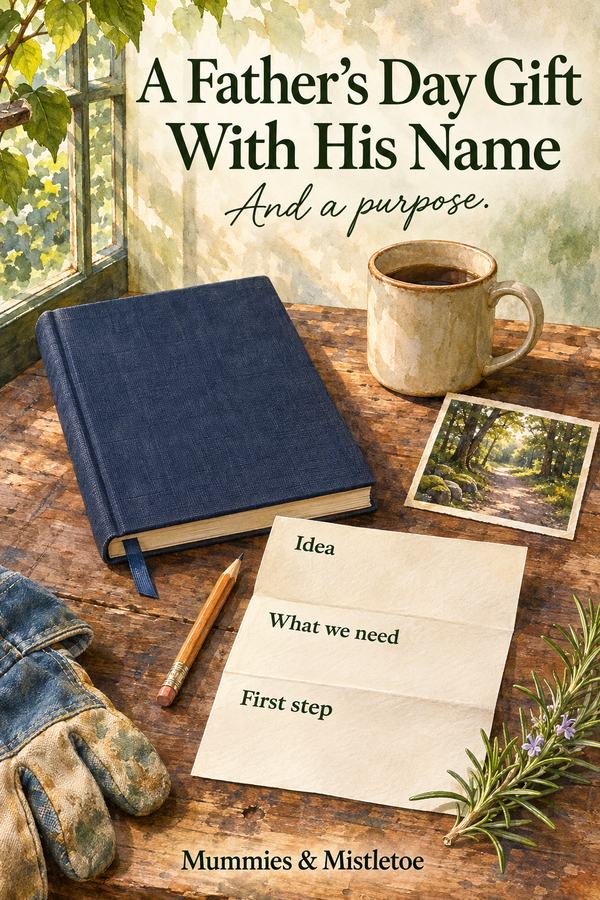
Choose one photograph and a short passage from the visit. Type the passage in readable text or write it neatly on a separate card. Let him check the words and names before you make the final version, especially if it will be shared with others.
Place the photograph and story together in a small album or frame, with enough space that both can be enjoyed. A child's drawing can sit on a facing page. Keep the layout simple so the story remains easy to read.
For a notebook version, begin with that one finished page and leave the remaining pages for future visits. Present it as a place you can add to together, not an assignment he must complete on his own.
Finish the Promise You Made
Plan the follow-up before leaving. If you promised a print, bring or send it once it is ready. If you agreed to look up another family photograph, make a note of which one and return with it when you can.
Add a personal card that thanks him for a detail from the afternoon. Mention the story or the time together rather than writing a general tribute. The card can show that you were listening.
Place the finished photograph and story where he chooses, then sit down and let him tell you what it brings to mind next.
If Grandpa enjoys bird illustrations, our Owl and Roses journal has 150 lined pages for the stories you collect together. Start with one dated memory and leave the next page for another visit.