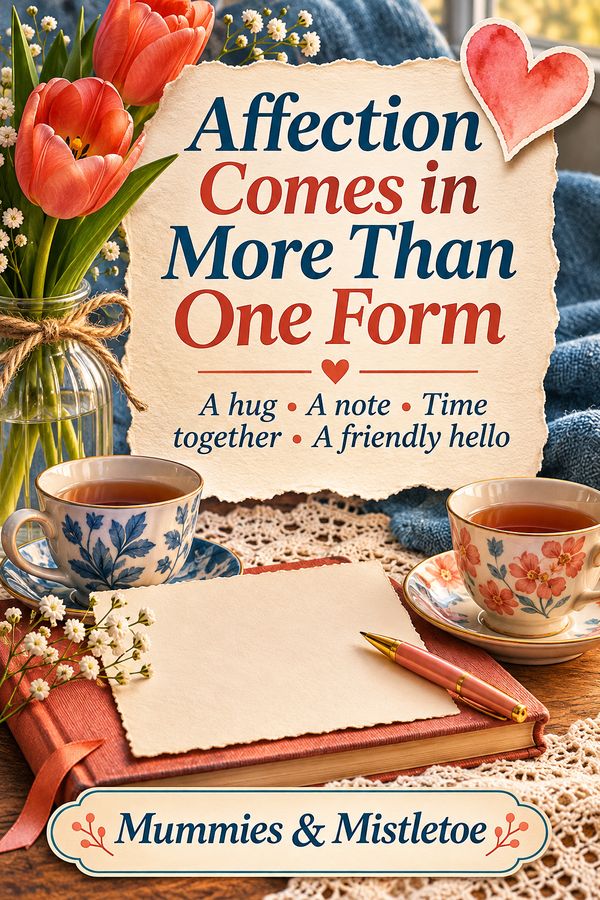
National Hugging Day feels warmer when each person gets to choose how to connect. Offer a small menu: a hug, a kind note, ten minutes together or a friendly wave across the room.
The point is to notice someone warmly. A hug is one possible answer, not the test of whether the day was successful.
Offer choices on National Hugging Day
“Would you like a hug, a high-five or just a hello?” gives children and adults something easy to say. Keep your tone equally cheerful for every option. If someone says no, accept it and move on without asking for a reason.
A young child can point to a picture or choose a word. An older relative may appreciate a phone call more than an unexpected visit. Someone having a difficult day might want company without conversation.
Avoid announcing another person’s choice to the group. People should be able to decline physical affection without becoming the subject of a family discussion.
Match the gesture to the relationship
For a partner, offer a short break together with phones put away. For a friend, send a specific appreciation: “I still smile about the message you sent before my interview.” For a child, ask which shared activity they would choose for ten minutes.
At work, a written thank-you or friendly conversation is usually an easier starting point than a physical gesture. Keep any group activity optional and appropriate to the workplace.
If you want a simple family activity, give everyone a small piece of paper and ask them to finish one sentence: “One thing I enjoy doing with you is…” Read the notes privately or share them only with permission.
Make the offer manageable
A gesture does not need to become an entire afternoon. Offer something you can comfortably follow through on: one game, a short walk, help with a particular chore or a call at a time the person chooses.
Be specific about time. “Would you like company for tea after lunch?” is easier to accept than a vague promise to spend more time together. If the answer is not today, let the invitation rest.
For long-distance affection, record a short voice message describing a happy memory. Include a written message too if the person prefers reading. A familiar voice saying something particular can feel much warmer than a forwarded quotation.
Let people return affection in their own way
Someone may respond to your note with a joke, a cup of tea or quiet companionship. Do not require a matching gesture. The day becomes less generous when people feel they must repay attention immediately.
At bedtime, ask a child what made them feel cared for that day. Their answer may surprise you: the hug might matter less than the time you helped find a missing toy. Listen for what they tell you and remember it for an ordinary day next week.
Remember one preference you learned today and use it next week. That small act of attention gives National Hugging Day a place in ordinary life.