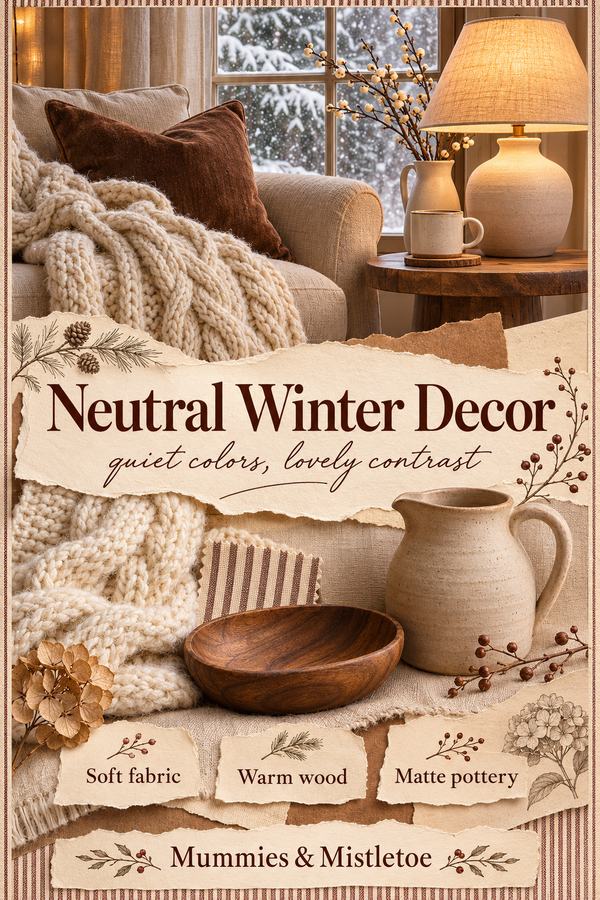
The cream throw looked lovely in the shop, but at home it has disappeared into the cream sofa. Neutral winter decor needs differences you can see and feel, even when the colors stay close together. A little contrast in texture, shape and wood tone can give a quiet room more depth.
Choose Three Materials to Repeat
Choose three materials to repeat around the room. For example, use soft cream fabric, medium-toned wood and matte pottery. Let those materials appear in different forms: a throw on the sofa, a wooden bowl on the table and a pottery lamp beside the chair.
This gives you a way to choose additions without making every object match. The wood in the bowl doesn't have to be identical to the table, and the pottery doesn't have to come from a set. Look for a similar warmth rather than the same finish.
Make a small group of samples before moving the room around. Put the throw beside a cushion and hold both near the wood furniture. If one cream looks pink or yellow next to the other, decide whether you like that difference in your room's light.
Use the room's largest permanent pieces as your starting point. A gray sofa needs a different supporting combination from a honey-colored wooden bench. Working with those pieces is easier than trying to make the room resemble a white room in a photograph.
Keep White From Becoming One Flat Surface
Place smooth and textured fabrics next to each other. A plain cotton cushion lets the loops of a knitted throw show; a nubby cushion can stand out against a smooth sofa. When every fabric has the same texture, even a small color difference may disappear from across the room.
Add one deeper neutral near the pale fabrics. A cocoa-colored cushion, dark wooden side table or charcoal lamp base will give the lighter pieces a visible edge. Choose the deeper shade from something already in the room.
Stand at the doorway and look at the sofa without concentrating on individual items. You should be able to tell where the cushion ends and the throw begins. If they merge, move the darker piece between them or change one fabric texture before replacing both.
A patterned cushion can still be neutral. A cream-and-brown stripe or a small gray check gives the eye something to follow without bringing in a strong new color.
Let Wood Supply More Than a Brown Accent
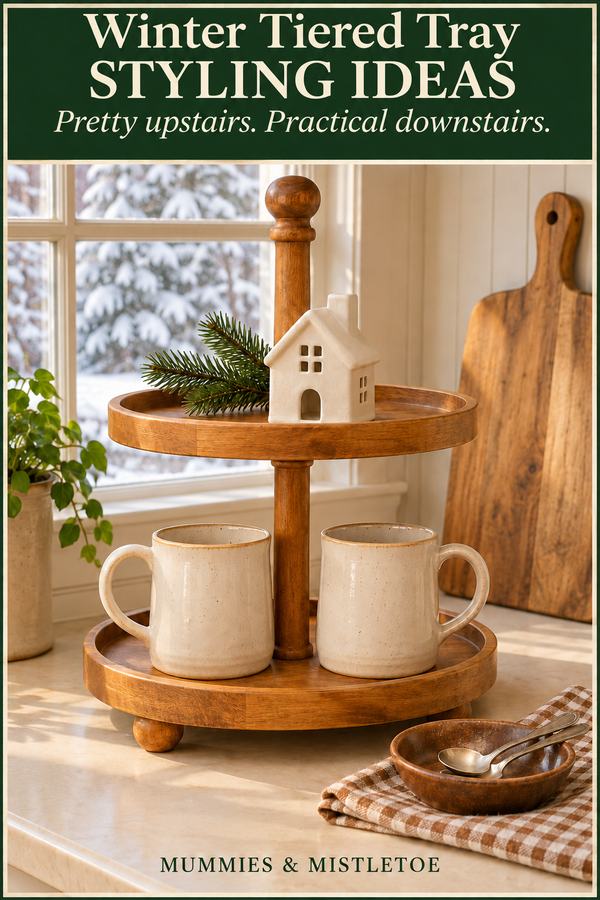
Use wood where its shape and grain can be seen. A shallow bowl on a pale table, a small stool beside a chair or a tray on a fabric ottoman each contributes something different. Choose the object for its job as well as its color.
A bowl can hold the remote or a handful of everyday items; a tray can give a mug a stable place on an appropriate surface. Keep a coaster handy and check that the tray sits level. The warm material is most convincing when it belongs to the way you use the room.
If your furniture already contains several wood tones, repeat the one you like most in one smaller object. You don't need to replace the others. A medium brown bowl can help connect a dark table and a lighter chair without making them identical.
Avoid covering every wooden surface with fabric. Leave part of a tabletop visible beside a runner or folded cloth so the difference between the materials can do its work.
Build a Pale Corner With Three Different Shapes
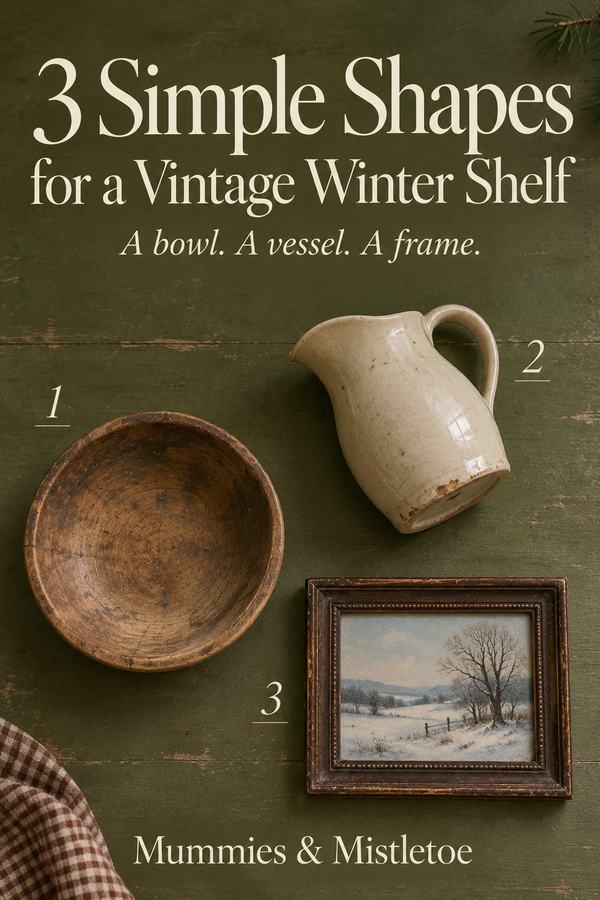
Choose one small area, such as the end of a sideboard, for a focused arrangement. Use a broad low bowl, a taller narrow vessel and one folded textile. The different outlines keep a mostly white grouping from looking like a row of matching containers.
Place the tall vessel toward the back, with the bowl lower and slightly forward. Set the folded cloth beneath only part of the bowl so both the cloth and the surface below remain visible. Turn the vessel until its handle, rim or uneven glaze catches the light.
You can leave the vessel empty. If you add artificial winter stems, leave gaps between the stems so their outlines show. Keep the tallest part proportionate to the furniture and clear of anything hanging above it.
For a kitchen corner, make the bowl useful for fruit or wrapped snacks instead of adding decorative filler. Use a bowl labeled food-safe for anything unwrapped.
Use Light to Show the Texture
Look at the room after dark, when winter fabrics are often used most. A lamp beside a textured throw may reveal its surface more gently than a bright overhead light. Move the lamp within the limits of its cord and a safe, stable surface to see the difference.
Check bulb compatibility with the fixture before making changes. If several lamps look very different in color, decide whether bringing them closer together would make the room feel more comfortable. You don't need to replace every bulb at once to compare the effect.
A shaded lamp near the chair and another light across the room give the room two inviting spots to settle into. Put the light where someone reads or talks, then let the materials around it catch that light.
In daylight, open curtains fully where practical and clean the glass. A winter room can feel softer without keeping its natural light out.
Choose the One Piece the Room Still Needs
After arranging what you own, identify the missing material or shape. Perhaps the sofa needs a darker cushion, or the room has plenty of fabric but no small wooden surface. Name that gap before looking for another blanket.
A useful note might read 'one brown-and-cream pillow cover for the existing insert' or 'a low wooden tray that fits the ottoman.' Measure the place it will go and keep that measurement with the note.
A neutral room becomes interesting through the differences: a rough weave beside smooth pottery, pale fabric against brown wood. Once those contrasts are working, you can enjoy the quiet palette without continually adding more to it.
For printed accents for another season, explore Mummies & Mistletoe with your room's quiet palette in mind. Keep the texture and contrast you've already built, and choose any added pattern as a deliberate focal point.