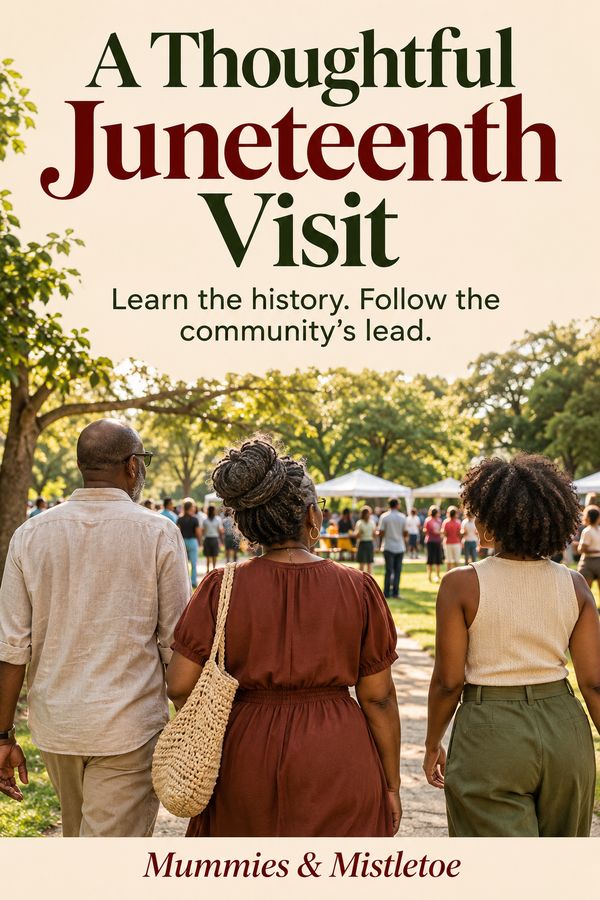
A community Juneteenth program can lead you to a local historian, an artist you have not heard before or a neighborhood story worth learning. Give those parts of the day room in your plans, alongside time to enjoy the celebration with its organizers and guests.
Learn the history before you arrive
On June 19, 1865, General Order No. 3 announced emancipation in Texas. The National Archives explains the order and its context, including its arrival more than two years after the Emancipation Proclamation. Juneteenth grew from Black community commemorations of freedom and continues to carry both celebration and reflection.
Read that background with anyone joining you. With children, use a clear explanation of slavery and emancipation appropriate to their age, and leave room for questions. You can revisit harder questions after the event with reliable educational resources.
Follow the community's invitation
Read the event page for admission, registration, accessibility, parking and what to bring. Notice who is organizing it and whether particular activities have their own sign-up process.
Choose the parts of the program you can attend attentively. A history talk, performance or community conversation deserves time in your plan, not just a stop between food stalls. If an organizer requests volunteers or donations, follow the stated process and contribute only what you can genuinely offer.
Be a considerate guest
Listen to speakers without treating attendees as personal history guides. If you have a question, use an announced question period or ask an organizer where to find further information.
Ask permission before photographing people, particularly children, and follow any photography restrictions. A public event can still include private moments of remembrance or connection.
Support participating vendors when you want what they offer and can afford it. Read their own descriptions of their work. This is a good place to discover local artists, books and organizations whose work you may want to follow beyond one day.
Take one next step afterward
Talk about something specific you learned. Save the name of a speaker, a book recommendation or a local historical site to explore. If you enjoyed a performance, look for the artist's official page and future public events.
A useful follow-up is small enough to complete: borrow the recommended book, read the museum's exhibit notes or return for another community program. The event becomes part of an ongoing understanding of your community, with its organizers and histories remaining at the center.