The Diwali your hosts remember from childhood may center on a particular story, a family gathering or a much-loved part of the celebration. A little background reading and two or three practical questions can help you arrive ready to appreciate what matters in their household.
Learn from a community source
The Hindu American Foundation's Diwali guide introduces the festival of lights and explains that customs vary by region and community. Diwali is observed in different ways across several religious traditions, so a general overview is a starting point, not a script for every gathering.
For example, HAF describes how many Hindus connect Diwali with Rama's return to Ayodhya, while others commemorate Krishna's defeat of Narakasura. In some regions, it also coincides with a new year. These differences offer a useful question for a relaxed moment: “Is there a particular story or part of Diwali that is especially important in your family?”
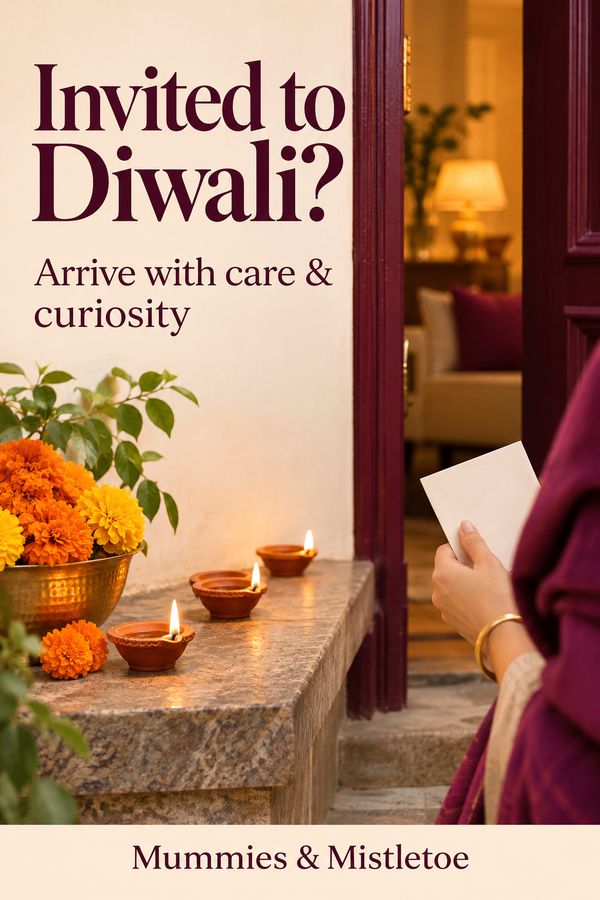
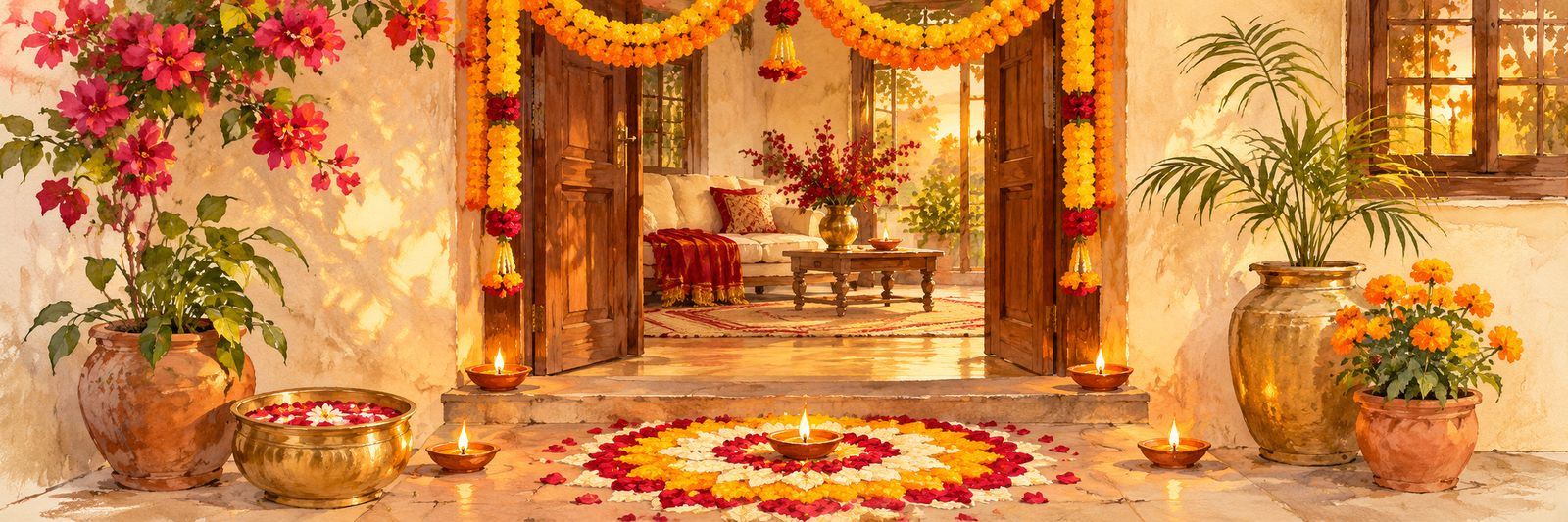
The small clay lamps called diyas are another detail to notice. Learn how your hosts use and understand them before treating them simply as table decorations. Their explanation will tell you more about this gathering than a generic festival photograph.
Ask a few useful questions in advance
Confirm arrival time and whether the invitation includes a meal, a religious observance or another activity. Ask about dress, footwear and anything guests should know about the setting.
A simple message works: “Thank you for inviting me. Is there anything you'd like me to know or bring?” If the host says nothing is needed, accept that answer.
For food gifts, ask before choosing. Ingredients, dietary practices and kitchen requirements vary. Bring an agreed item with its ingredient information, or choose a non-food gesture the host welcomes.
Arrive ready to follow the household's lead
Notice where shoes, coats and bags belong. Ask before photographing people, decorations or religious activities. If you are unsure what guests are invited to do, quietly ask the host or the person they designate.
You can participate respectfully without imitating an action you do not understand. Listening and observing attentively are meaningful ways to be present. Save longer questions for a relaxed moment rather than interrupting a ritual or meal preparation.
Enjoy the personal details
Ask which part of the celebration the host especially looks forward to, if conversation makes room for it. They may mention a family recipe, a story, a visit or a particular tradition. Treat that answer as their experience, not a rule for everyone who celebrates.
Offer ordinary help when useful, such as carrying dishes, and follow the host's direction.
Thank them afterward
Send a personal note mentioning something you appreciated. “Thank you for explaining that family tradition to me” is more meaningful than a generic summary of the evening.
Keep learning through the sources your host or community recommends. A considerate guest leaves with gratitude, a little more understanding and respect for the particular people who shared their celebration.