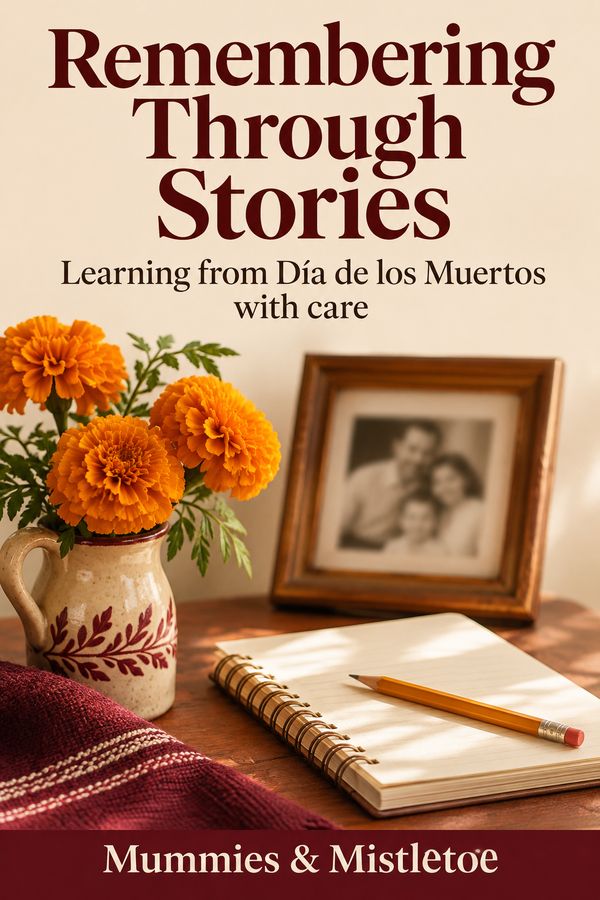
Día de los Muertos invites attention to remembrance, but it deserves to be understood through the people and communities who practice it. Begin by learning about the tradition before borrowing its visual elements for an activity.
You can pair that learning with a simple conversation about someone your family remembers, while being clear about what belongs to your own household's practice.
Start with cultural context
In a Smithsonian essay on changing Día de los Muertos traditions, folklorist Norma Cantú describes Mexican Indigenous roots, Catholic influences and the many variations across communities. Remembrance of those who have died is central; the occasion is not simply a spooky party theme.
Read the essay or another community-led resource together. Notice who is speaking, where their experience comes from and how they describe differences among celebrations. Avoid turning one account into a universal checklist.
Listen to a public invitation
A Mexican cultural center, museum or community organization may offer an exhibit or event for visitors. Follow its guidance about participation, photography and any contributions guests are invited to make.
If an exhibit includes an ofrenda, read the interpretation supplied by its creators. Ask questions through an appropriate visitor program rather than interrupting someone else's personal remembrance.
Make space for your own family's stories
At home, invite willing family members to share a memory of someone who has died. A photograph, a familiar saying or a remembered meal can begin the conversation. Let each person decide whether to participate.
Try a specific prompt: “What is a small thing they did that you still remember?” Ordinary details often bring a person into focus: the way they folded a newspaper, greeted a visitor or insisted on one particular song.
Preserve a story with permission
Write down the memory and who shared it. Ask before recording, photographing personal objects or sharing the account beyond the family. Keep sensitive details private.
If you create a family memory page, name it for what it is. You can acknowledge what you learned about Día de los Muertos without presenting your own activity as an authentic version of a tradition you do not practice.
Continue learning with care
Save the cultural source alongside your notes so the context remains connected to the activity. Choose another community-authored resource or public exhibit to explore later.
Learning and remembrance can sit beside each other respectfully. One helps you understand a living cultural tradition; the other gives your household a little time to speak about the people whose lives remain part of yours.