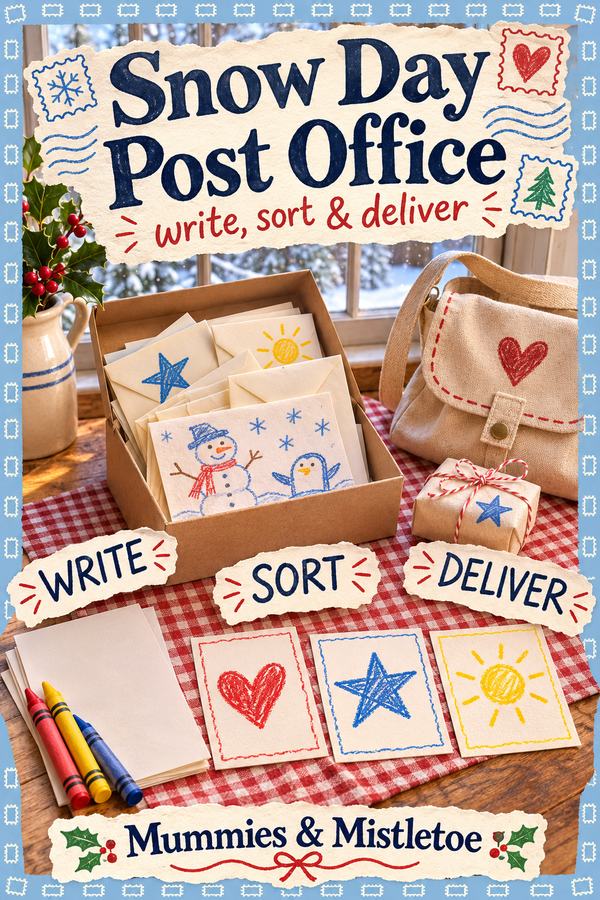
Today, the living room is becoming a post office. These snow day activities for kids turn a few rooms into a make-believe post office. Children can write, draw, sort and deliver messages, with enough different jobs to keep the game going after the first letter arrives.
Open Your Snow-Day Post Office
Gather scrap paper, crayons, a few envelopes or folded paper pockets, a shoebox and a bag for deliveries. Add two or three empty lightweight boxes for parcels. Remove old address labels from packaging before it becomes part of the game.
Choose three delivery stops in shared spaces, such as the kitchen table, a living room chair and a bookshelf children can reach. Put a paper sign at each stop. Use a color or simple picture as well as a name so children who aren't reading yet can join in.
Make the shoebox the outgoing-mail box by leaving its lid off. A separate tray can hold delivered letters. Keep the route on one floor if that suits your home, with no climbing or hiding mail near appliances.
Explain the game in one sentence: everyone can send a message, and the postal team will sort it and deliver it. Let the children choose who writes, sorts or carries the first round.
Make Letters Worth Opening
Begin with messages that give the recipient something to enjoy or do. A drawing of the family pet, a tiny comic or a note inviting someone to play a game can all become mail. A child can dictate a message while an adult writes it down.
Offer three prompts if someone needs a start: draw a place you'd like to visit together, describe an imaginary snow creature, or invite the recipient to choose the afternoon snack. Keep the prompts optional so the game doesn't feel like a worksheet.
Fold each message and put it in an envelope or paper pocket. Mark the destination with the name, color or picture from the delivery stop. Draw a pretend stamp in the corner, making it large enough for small hands to color.
Older children can write a reply that includes one question. Younger children might answer with another drawing. The exchange gives the postal workers a reason to return to the outgoing box.
Turn Sorting Into a Game
Spread the outgoing mail on the table and sort it into piles by destination. For a younger child, match the envelope's colored mark to the same color on the sign. An older child can read the destination and check that every letter has one.
Add a few intentionally unfinished envelopes for the sorter to return to the writer. Leave off a destination or draw a stamp without a message inside. Present these as puzzles to fix together, not mistakes someone has made.
For a second round, sort the letters by size before sorting them by destination. Ask which ones will fit in the delivery bag without folding again. A parcel may need its own trip, which gives another child a job.
Keep the sorting rules simple enough that the children can run them. Once the system works, let them invent their own postal marks or a special pile for replies.
Plan a Delivery Route
Draw a rough map of the three stops on a sheet of paper. Use large boxes for the rooms and a line showing the order of delivery. The map only needs to make sense to the people playing.
Let the carrier visit each stop and place the mail in its designated tray or spot. A second child can be the route checker, marking each stop on the map. Swap roles after one circuit so the same person isn't always carrying the bag.
If you're playing with one child, be the customer at one stop and the writer at another. Leave a reply ready for the child's return trip. You can change your imaginary address without changing the physical route.
After the first delivery, ask the children to choose a shorter route or a different starting point. Walk it together and compare which path was easier to remember. The map becomes part of the play rather than a drawing that sits unused.
Add a Parcel Challenge
Give the postal team an empty box and an imaginary delivery request. It might contain a paper crown for the reading chair or a drawing for the kitchen table. Use only light, unbreakable contents appropriate for the children playing.
Ask them to wrap or close the parcel with paper and tape, then add a destination label. They can decorate a reusable bag instead if wrapping is frustrating. The goal is to make a parcel that reaches the right place, not to produce neat corners.
Try a special instruction such as 'deliver with a bow' or 'ask the recipient to sign with a drawing.' An adult can supply a receipt sheet with space for the recipient's mark. Keep the instructions playful and visible on the parcel.
When the delivery is complete, the recipient opens it and sends a thank-you note. That starts another round without needing another set of supplies.
Close the Post Office for a Break
Choose a final delivery time in the game and put a closed sign beside the outgoing box. Gather the crayons and scraps, then let each child choose one letter or parcel label to keep. The rest can go into a folder if they want to reopen the game later.
A warm drink or snack can follow at the kitchen table, with an adult preparing hot drinks and checking the temperature for children. Use the everyday cups they handle comfortably. The post office doesn't need a special party menu.
Leave the map and delivery bag together in the shoebox. When someone wants another round, the route will be ready and the first letter can go straight into the outgoing tray.