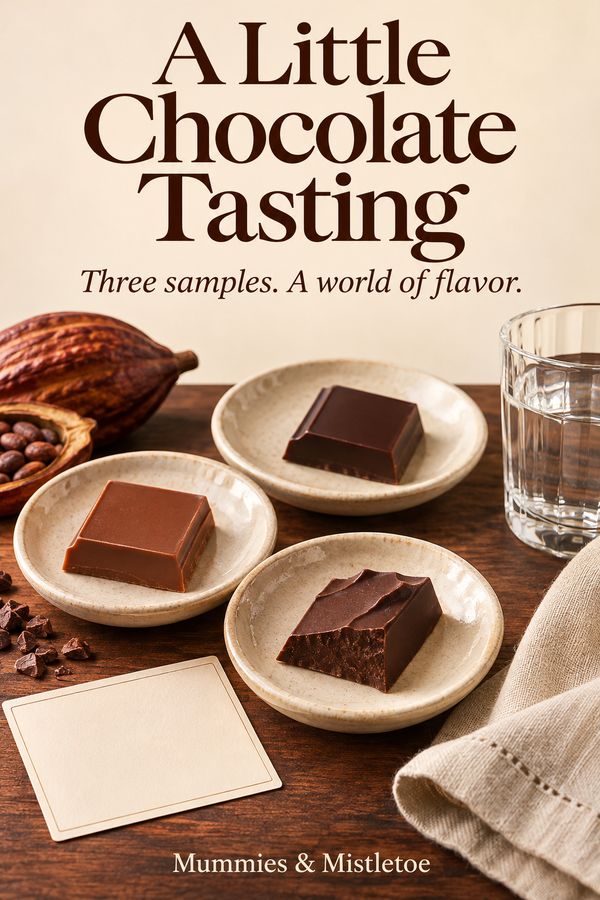
World Chocolate Day is a lovely excuse to compare a few good squares of chocolate. Three samples and a simple flavor map give everyone something specific to notice and discuss.
Choose your World Chocolate Day comparison
You might compare three cocoa percentages from one maker, or similar percentages from different makers. Another option is plain chocolate beside one with nuts and one with fruit, provided those ingredients suit everyone attending.
Keep wrappers and ingredient information beside the samples. Ask about allergies before selecting the chocolate, and use separate serving utensils where needed. Label each sample with a letter so notes are easy to match later.
For four people, start with one small piece of each chocolate per person. Reserve extra pieces for a second taste after the first round.
Draw a flavor map
Divide a page into three sample columns. Under each letter, add four prompts:
Look: glossy, matte, smooth or textured?
Smell: what does the aroma remind you of?
Taste: what do you notice first, and what stays afterward?
Texture: creamy, crisp, grainy, slow-melting or something else?
These are observations, not grades. “Reminds me of hot cocoa” is as useful as a specialized tasting term. Leave room for a favorite and a note about when you would enjoy it.
Taste before discussing
Let everyone smell and taste the first sample before anyone announces an opinion. One confident description can steer the whole table. Take a small sip of water between samples and give each one a moment.
Once everyone has written something, compare notes. Differences are part of the fun. A chocolate one person finds pleasantly bitter may be too intense for someone else.
Try the favorite again at the end. Has it changed after tasting the others? Does the texture matter more than the sweetness?
Keep a useful record
Save the wrapper name and the group's observations, especially if you are choosing chocolate for gifts or baking. Avoid assuming a higher cocoa percentage means everyone will prefer it; the tasting has already shown how individual preferences can be.
Wrap remaining chocolate according to the maker's storage instructions. The little flavor map can go in a kitchen notebook. Next time you see an unfamiliar bar, you will have a more specific idea of what you enjoy and a reason to make another small tasting tray.