The Christmas photograph shows everyone around the table. It does not explain why the serving bowl became a family joke, who made the recipe, or why one person arrived wearing borrowed slippers.
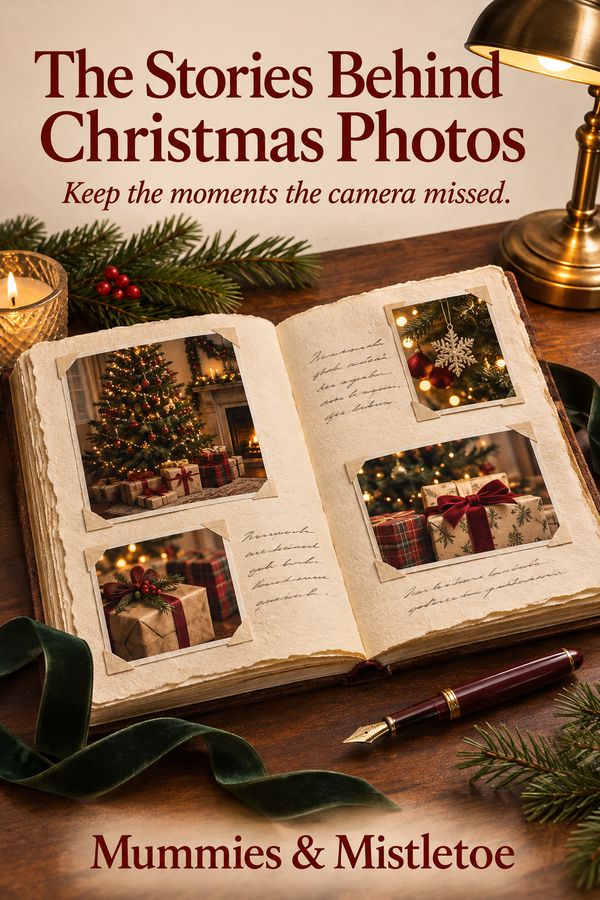
A Christmas caption book pairs a small selection of pictures with the stories you will otherwise have to reconstruct later.
Choose fewer photographs than you think
Start with ten or twelve images from one Christmas or a small group of years. Look for pictures that raise a question or hold a memory, not only the technically best photographs.
Include ordinary moments: preparation, cleanup, a familiar room, or someone quietly doing a job they always did. These can reveal more about family life than a row of posed portraits.
Use copies for the project and keep the originals safely stored. If you are working digitally, keep a separate backup before cropping or editing files.
Ask three questions about each image
Who is here? What was happening? What would someone looking at this later never know?
Write down names, relationships if useful, and the date or approximate year. Mark uncertainty honestly. “Probably Christmas 1998” is better than inventing a precise date that may later be treated as fact.
For the story, ask a person who was there: “What do you remember about this?” Let them answer before suggesting your own version. Two memories can sit alongside each other if they differ.
Write captions that add, not repeat
“Christmas dinner” tells very little. “Dad made the potatoes in the blue bowl because the usual serving dish had gone home with Aunt Jo after Thanksgiving” gives the picture a place in real life.
Aim for two to five sentences. Include one concrete detail, then explain why it mattered or why people still remember it. Keep the tone affectionate without turning every page into a joke.
Do not use someone else’s private or embarrassing experience as the entertaining detail. Ask before including a story that involves them, especially if copies of the book will be shared widely.
Give quiet contributors a place
Look for the people whose work made the holiday happen but who appear in fewer pictures. A photograph of the finished food can carry a caption about the cook, with their own words if they would like to contribute.
You can include a page with no photograph: a short memory, a recipe source, or a description of a tradition that was rarely documented. The book does not have to pretend the camera captured everything important.
Avoid assigning one relative the job of remembering the entire family history. Gather a few short contributions and keep the project manageable.
Assemble a readable record
Use a simple layout with the photograph, caption, and date. Choose readable text and leave enough white space that each page feels intentional. A small album with handwritten captions works just as well as a printed digital book.
Let contributors check names, quotations, and sensitive details before producing shared copies. Keep private contact information out of the pages.
Add a final blank page for a story someone remembers later. Christmas memories tend to arrive when another person sees the picture, not when you have the document open and ready.
The finished book does not need to preserve every image. It needs to preserve the part the images cannot hold on their own: the people’s voices, the small explanations, and the texture of being there.