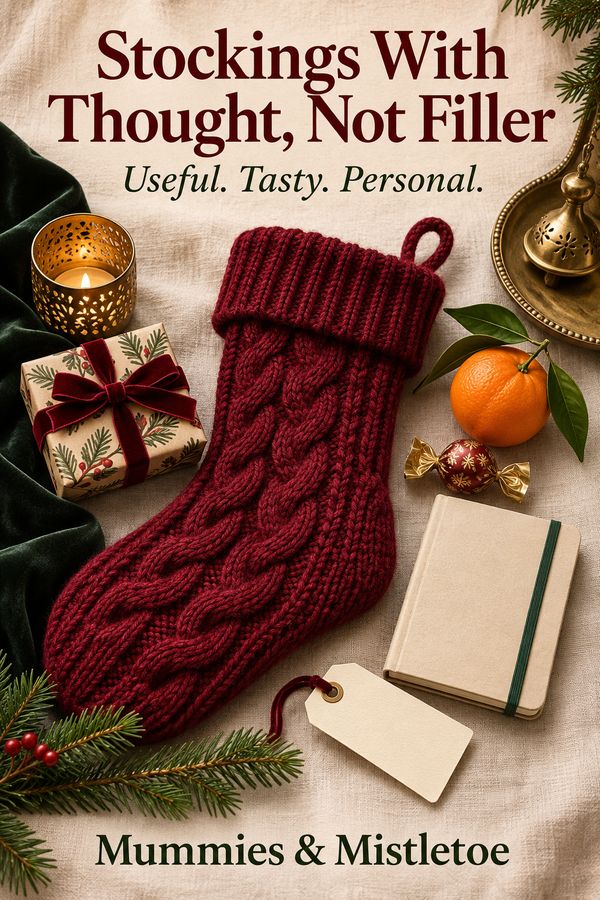
A Christmas stocking can become surprisingly expensive when every empty inch looks like a problem to solve. Start with a budget and a few purposeful categories, and you can stop buying before the stocking becomes a collection of things nobody wanted.
The size of the fabric should not decide the size of the spending.
Set the total before choosing the fillers
Choose a comfortable amount for each recipient. If you are filling several stockings, write the overall total too. Small purchases are easy to overlook when they happen across several shopping trips.
Include any delivery costs and avoid buying a multipack unless you know where the extra items will go. A low price per piece is not a saving if most of the pack becomes clutter.
Families can choose equal budgets without expecting every stocking to contain the same number of objects. A person’s preferred item may take more of their share and less physical space.
Divide the space into three useful categories
Try useful, tasty, and personal. Useful means something the person will genuinely use, not a chore disguised as a gift. Tasty means a known favorite that suits their food needs. Personal means a small item or note connected to their interests.
You might allocate roughly half the budget to one useful item and split the rest between a treat and a personal detail. Or spend most on the personal item and add a small favorite snack. The proportions should follow the recipient, not a rule.
Write a short candidate list for each category. Keep it to two or three possibilities so shopping stays focused.
Check what they already have
Before buying, consider whether the recipient is using things up, avoiding certain foods, simplifying their home, or trying a new hobby. A refill of something they love can beat a novelty version of something they never asked for.
For children, choose age-appropriate items and check the product guidance. Keep small pieces and edible items appropriate to the individual child. For adults, avoid assuming that beauty products, alcohol, or joke gifts are universally welcome.
If you are unsure, ask a small question during ordinary conversation. You do not have to reveal the entire stocking plan to learn their favorite flavor or whether they need another notebook.
Add value without adding objects
A note can make an ordinary item personal: “For your Saturday walks,” or “I remembered you said these were your favorite.” An agreed plan for time together can also fit in an envelope, provided it is realistic and does not hand the recipient an unexpected expense.
Do not use promises as filler if you are unlikely to follow through. One genuine invitation is better than a booklet of elaborate coupons nobody redeems.
A favorite shop can help with a larger coordinated gift even when its products are too big for a stocking. If a journal or mug from Mummies & Mistletoe suits the recipient, keep it outside the stocking and let a small related note or treat connect the two.
Stop at enough
Lay out the contents once, check the total, and put them away together. Empty space is not a failure. Tissue or a folded note can help presentation without another purchase.
Keep the short recipient list with your holiday notes. Next year, you can remember which small pleasures earned a smile and which purchases you happily skipped.