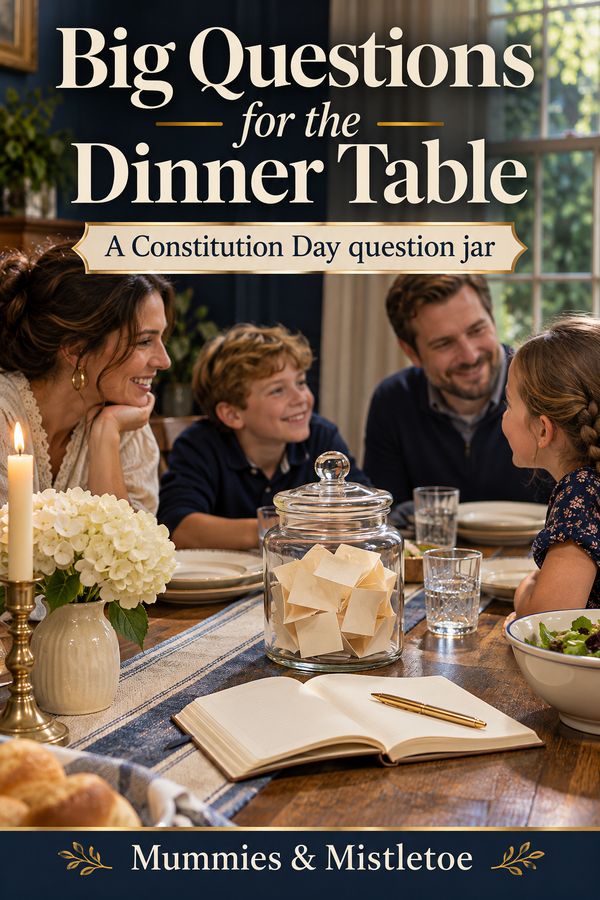
A Constitution Day question jar can make a family supper more curious without turning it into a quiz. Fill it with questions whose answers you can look up together, then choose only two or three for the evening.
The National Archives' Constitution page provides the document and historical context. The Constitution was signed on September 17, 1787, giving the observance its date.
Write questions at different levels
Use a mix of straightforward and open-ended prompts:
- Where and when was the Constitution signed?
- What do the words at the beginning say the government should do?
- Which part describes Congress?
- How can the Constitution be amended?
- What is a question we have about how government works today?
Put one question on each slip. Children can draw a star on the ones they would most like to discuss. Avoid questions designed to embarrass someone for not knowing a fact.
Keep the document within reach
Have the Archives page open or use a reliable printed copy. When a question is drawn, invite guesses before checking. Look for the relevant wording together, and separate what the document says from your interpretation of it.
For example, a question about amendments leads to Article V. You can identify the section without attempting to explain every legal detail at dinner. Write down anything that needs a more thorough answer.
Give conversation a fair shape
Let each person finish a thought. Ask, “What makes you think that?” as an invitation to explain, not a challenge to win. If a current political disagreement takes over, return to the question in the jar and the source you are examining.
A useful household rule is that anyone may say, “I need to learn more about that.” Adults can model it first.
Make a follow-up card
At the end, choose one unanswered question. Write the question, the source you plan to consult and who wants to help. A library civics resource or another National Archives educational page can be a manageable next step.
Keep the jar for a later meal, changing questions as children grow. The activity works when it makes people more willing to ask and investigate. Nobody needs to leave the table having memorized a document; a better outcome is knowing where to begin when a civic question comes up.