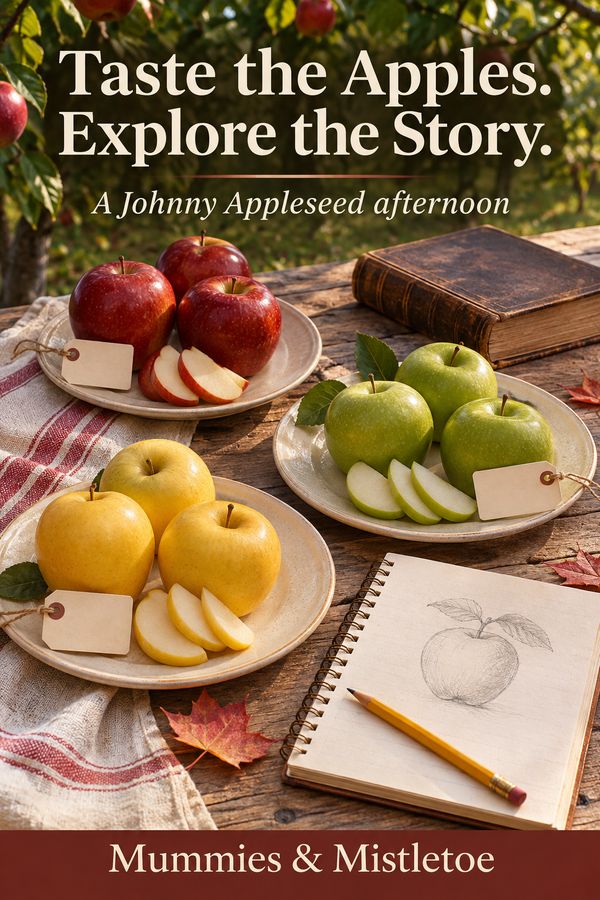
An apple tasting gives Johnny Appleseed Day something concrete to begin with: three apples that look and taste different. Add a short look at the person behind the nickname for a manageable mix of observation and history.
Choose apples you can identify
Buy three labeled varieties and keep their names with them. Select sound fruit and wash it before an adult cuts manageable tasting pieces. Prepare portions appropriate for the people eating them, removing cores and seeds.
Set out a little of each variety on separate plates. Keep the rest for a planned snack or recipe so the activity does not create more cut fruit than your household wants.
Compare with ordinary words
Make a page with one row per variety and columns for color, texture and flavor. Look at the whole apple first, then taste.
Ask whether the flesh feels crisp or soft, whether the flavor seems sweet or sharp and whether the peel changes the experience. There is no need to vote for a universal winner. One apple may be a favorite snack while another sounds appealing in a familiar recipe.
Meet John Chapman behind the nickname
Johnny Appleseed was the name associated with John Chapman, a real nurseryman whose life became the subject of many stories. North Carolina Historic Sites introduces Chapman and the growth of his legend.
Read a short biographical passage together and compare it with a children's story you know. Ask: Which details are presented as documented history? Which belong to the way the story is told? Keep a small “questions to check” list instead of treating every familiar picture as a fact.
Look closely at the seeds
An adult can show the cut core and let children observe the seeds without eating them. Sketch their shape and count those visible in this particular apple. Note that one apple's count does not establish a rule for all apples.
If your family wants to grow an apple tree, make that a separate research project with a local extension service or nursery. The tasting activity does not need to promise that today's seed will produce the same variety you just enjoyed.
Keep a record worth using
Save the variety names and favorites in your kitchen notes. Add the title of the historical source and one question for a library visit. The afternoon ends with a better sense of both apples and storytelling: real things to taste, real observations to record and a familiar legend worth examining more closely.