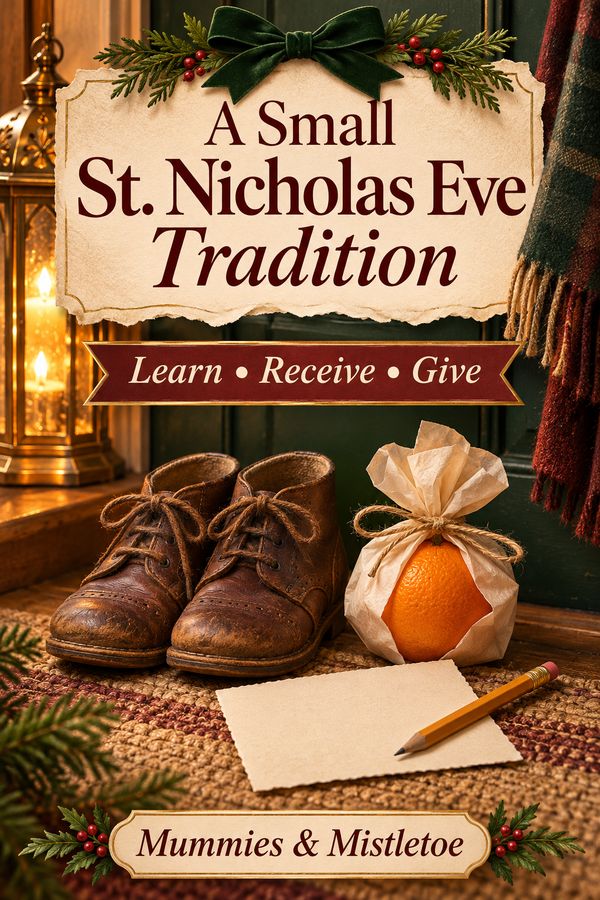
A pair of shoes by the door makes a small, memorable invitation: tonight, we will remember someone known for generosity. A St. Nicholas Eve tradition can be that simple, with a short story, a modest surprise and something useful to give to another person.
St. Nicholas was a Christian bishop associated with Myra. Some families leave shoes out before his December 6 commemoration, a custom described by the St. Nicholas Center. Follow your own church calendar if your parish observes the feast on a different civil date.
Begin with the person behind the tradition
Choose a short, age-appropriate account of St. Nicholas from your parish or a trusted church source. Read it before putting out the shoes. Explain that the gifts are connected to his remembered care for people in need.
There is no need to turn the evening into a test of whether children have been good. Keep the focus on generosity. If your family also enjoys Santa stories, explain the connection in language appropriate to your children without treating every later holiday custom as part of the saint’s life.
Ask one open question: “What could we give that would really help someone?” Give children time to think beyond toys.
Keep the shoe surprise modest
Choose one small pleasure and one useful thing. An orange and a new pencil, a bookmark and a handwritten note, or an age-appropriate treat can be enough. Put food in its packaging or in a clean bag beside the shoe, rather than directly inside it.
Choose items for the actual child. Small coins, hard sweets and tiny trinkets are unsuitable for young children who may put them in their mouths. A picture book can sit beside the shoe if it is the better choice.
Adults can participate too. A note that says “Thank you for getting us through the difficult mornings this month” may be the most treasured thing waiting by the door.
Pair receiving with one practical gift
Pick a recipient or organization before shopping. If a local pantry requests a particular shelf-stable item, buy that item. If a neighbor has asked for help carrying groceries, agree on a time. A small, completed act is easier for children to understand than a large abstract promise.
Let each family member contribute something possible: selecting an item, writing a greeting, carrying a bag or helping with delivery. Keep the recipient’s privacy intact. The act does not need a photograph to count.
Make it easy to repeat
After the feast, put one note in your calendar: the story you used, the gift that worked and the giving project you completed. Add a reminder a week before next year’s observance to check the recipient’s current needs.
Keep a small envelope with the children's notes if you enjoy seeing their handwriting change. Over time, that envelope can tell a story of what your family noticed and learned to give. The tradition stays manageable because it has only a few parts: learn, leave a shoe, receive a little and offer something useful.