The family will still want a familiar dinner, even if the napkins are green. St. Patrick's Day dinner ideas can use foods you already enjoy, with a green vegetable, sauce or garnish giving the meal its seasonal color. You don't have to dye every part of supper or ask everyone to try an unfamiliar dish at once.
Choose one of these three menus for four people, then use trusted recipes or package directions for the cooking. Adjust amounts to the people you're feeding and their usual appetites.
Choose a Familiar Main Dish
Start with the main dish your household will happily eat. Pasta, baked potatoes and a simple roast or store-prepared main each give you a different kind of evening. Give that familiar meal one green accent.
Check dietary needs before settling the menu, and read the sauce labels. Pesto often contains nuts and dairy; a familiar sauce served separately can make it easier to accommodate the table.
For a small child or a cautious eater, keep one familiar component plain. A sauce served separately or vegetables in their own bowl lets people choose their portions. The table can still look seasonal while the plates look a little different from one another.
Make a Pasta Supper With a Green Side
Use your usual amount of pasta for four people, guided by the package and appetites. Serve it with a familiar sauce, then add a green side such as peas, broccoli or a simple salad. Pesto can supply the green if everyone likes it and its ingredients suit the group.
Put grated cheese or another favorite topping in a separate small dish. Add bread if your family usually enjoys it with pasta. A bowl of fruit or a familiar purchased dessert can finish the menu.
Write the shopping list in four parts: pasta and sauce, green side, optional topping and dessert. Check the cupboard before buying, especially if you already have half a packet of pasta or a jar of sauce. Follow storage guidance and don't assume an opened ingredient is still suitable simply because it looks fine.
Try Baked Potatoes With a Choice of Toppings
Plan potatoes according to the size and appetites your family normally needs, and cook them using a trusted method. Offer two or three toppings, such as cheese, beans or a filling you already make. Add a green vegetable or salad beside them.
Keep the toppings separate so people can build their own plates. A small bowl of chopped herbs can add green for those who enjoy them, but it doesn't need to be mixed into everyone's food. Use your usual meal portions to decide how much of each topping to buy.
This menu works well when people arrive at slightly different times, provided you follow safe cooking and holding guidance. Decide in advance whether you'll serve at the table or from the kitchen counter. Put the spoons with the toppings before calling everyone to eat.
Use a Ready-Made Main on a Busy Evening
Choose a main dish from a source you already trust and follow its heating or serving directions. Pair it with a green vegetable and one familiar starch, such as rice, potatoes or bread. The seasonal effort can go into the table and a short family moment instead of a complicated recipe.
Check the package's serving information, ingredients and use-by guidance before planning for four. If the portions are smaller than your household usually eats, add an appropriate side rather than assuming the number on the package guarantees a full meal. Keep packaging available for anyone who needs ingredient details.
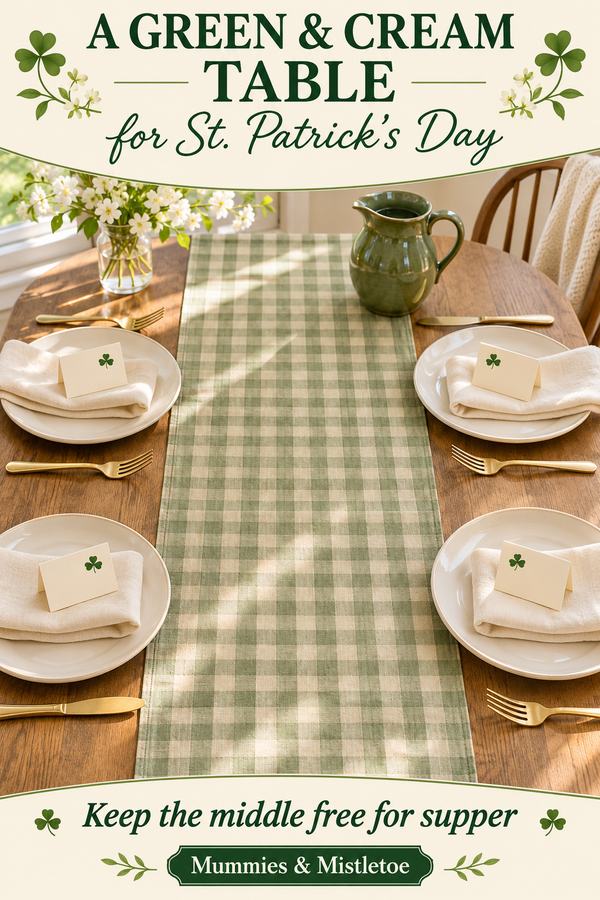
A green-and-white tablecloth or a few green napkins can give this simple supper a clear occasion. Choose a cloth that fits the table and leaves the places comfortable to use. The food doesn't need to match every decorative color.
Work Backward From the Time You Want to Eat
Write down the longest cooking or heating time first, including any preparation and resting time in the recipe. Start there, then fit the side dish and table setting around it. If a potato recipe needs longer than the pasta option, let that determine the evening's schedule.
Set the table before the final cooking stage if you can. Put out glasses, napkins, serving spoons and heat-resistant trivets, then fill water glasses near mealtime. Keep children involved with jobs suited to their age, such as placing napkins or writing names on paper cards, away from hot surfaces.
Leave the last few minutes for checking that the food is ready and bringing it to the table. Don't schedule a craft that requires your attention at the same moment a pan needs draining. The meal will feel easier when the decoration is already finished.
Give the Supper One Shared Moment
Ask each person to bring one small piece of good news to the table, or name someone who helped them recently. People can pass, and children can answer with a drawing or a few words. Let one little story lead naturally to another.
If your family enjoys making plans, choose one ordinary thing to do together soon: a walk, a library visit or an afternoon cooking a favorite snack. Write it on the back of a name card so someone can remember to arrange it. Keep the plan small enough to carry out.
Save the menu that worked best with a note of everyone's favorite topping or side. Next March, a few green napkins and that familiar supper may be all you need.
If this supper becomes the start of more little family celebrations, explore Mummies & Mistletoe for seasonal table details. Keep the favorite menu with your table measurements, ready for another occasion with the same people.