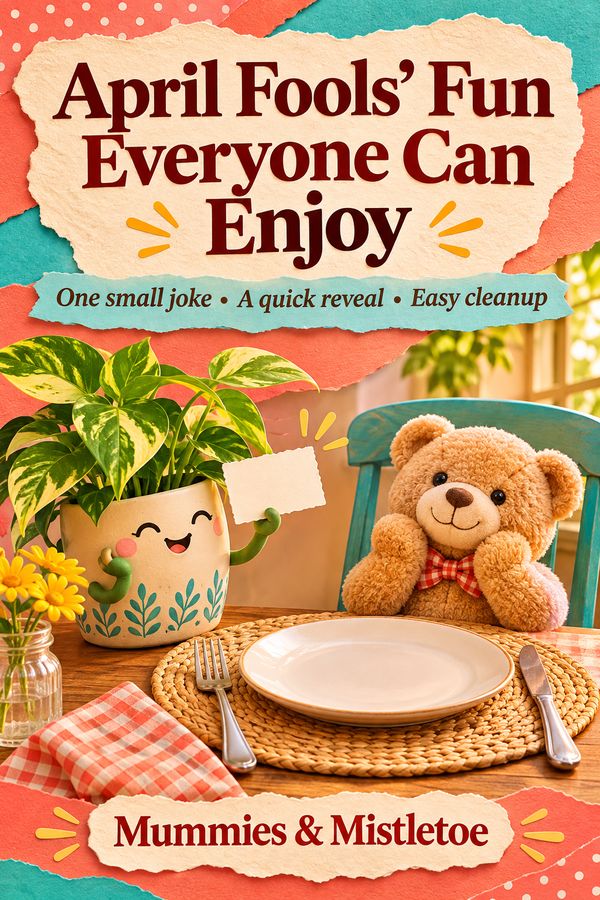
A houseplant requesting a vacation is the kind of April Fools’ surprise everyone can enjoy. Silly words and quick discoveries give the household something to laugh about without leaving someone else a mess.
Choose one small joke with an immediate reveal. A household that enjoys silly wordplay will probably have more fun with a ridiculous breakfast menu than with a carefully staged deception.
Pick the audience before the joke
Think about what the person already finds funny. A child who loves talking animals might enjoy a note from the houseplant. A partner who likes puns may appreciate a series of terrible food names on the dinner menu.
If someone dislikes surprises, include them in making the joke for the rest of the family. Being a co-conspirator can be more enjoyable than being the target.
Keep the joke away from subjects that carry real worry: illness, emergencies, money, relationships, pets or damaged possessions. Leave food, medication, alarms and accessibility settings alone.
Try an obviously silly announcement
Make a paper sign announcing an imaginary household service: “Socks matched while you wait. Complaints accepted in rhyme.” Put it somewhere it will not cover useful information.
Another option is a menu that renames ordinary dishes without changing them: “Cloud Soup” for the soup you are actually serving, with the real name written underneath. The joke belongs in the language, not in secretly changing what someone eats.
A stuffed animal can hold a note requesting a seat at dinner. Keep it off food-preparation surfaces and out of walkways. The discovery should be quick and harmless.
Let children build a joke safely
Ask them to invent a nonsense rule for a pretend club, draw a wildly impractical invention or write a weather report for a room in the house. “A high chance of cushions on the sofa” is the sort of absurdity that needs no victim.
Help them check three things: nobody gets frightened, nothing gets damaged and the joke can be cleared away in a minute. If it fails one of those tests, redesign it together.
Practice the reveal. A young child may not understand why continuing a false story after someone is upset stops being funny. Show them how to say, “It’s our silly April Fools’ joke,” immediately.
Make cleanup part of the plan
Use removable paper signs and a small number of props. The person who plans the joke should put everything back. Do not hide essential items or create a mess someone else has to discover during a busy morning.
After the laugh, ask which part worked. Save the funniest invented menu or drawing if the family wants to keep it.
A good April Fools’ tradition can become a collection of shared absurdities: the year the fern requested a vacation, the year dinner had a ridiculous name, the year everyone wrote one terrible pun. Nobody has to lose for the household to enjoy the joke.