Choose the Flowers for the Porch You Have
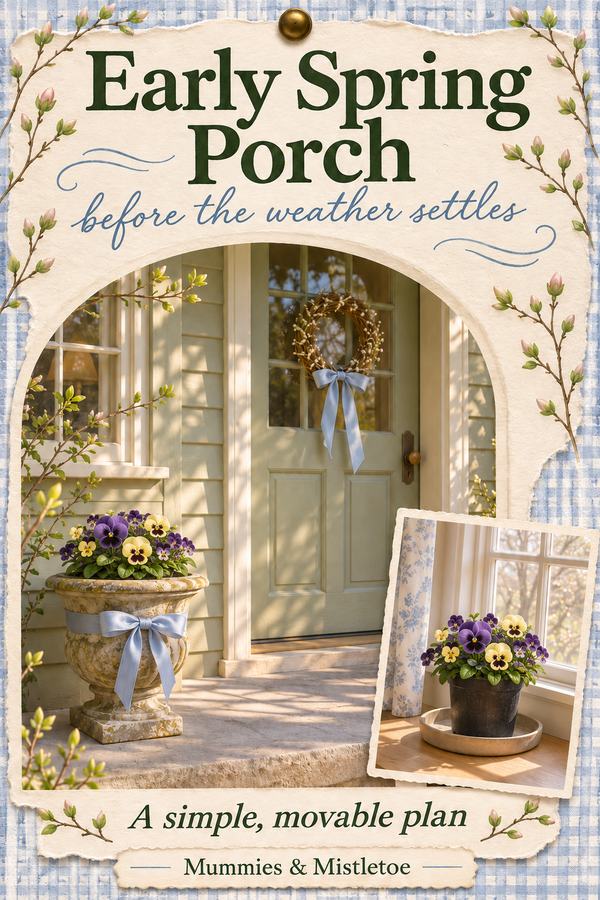
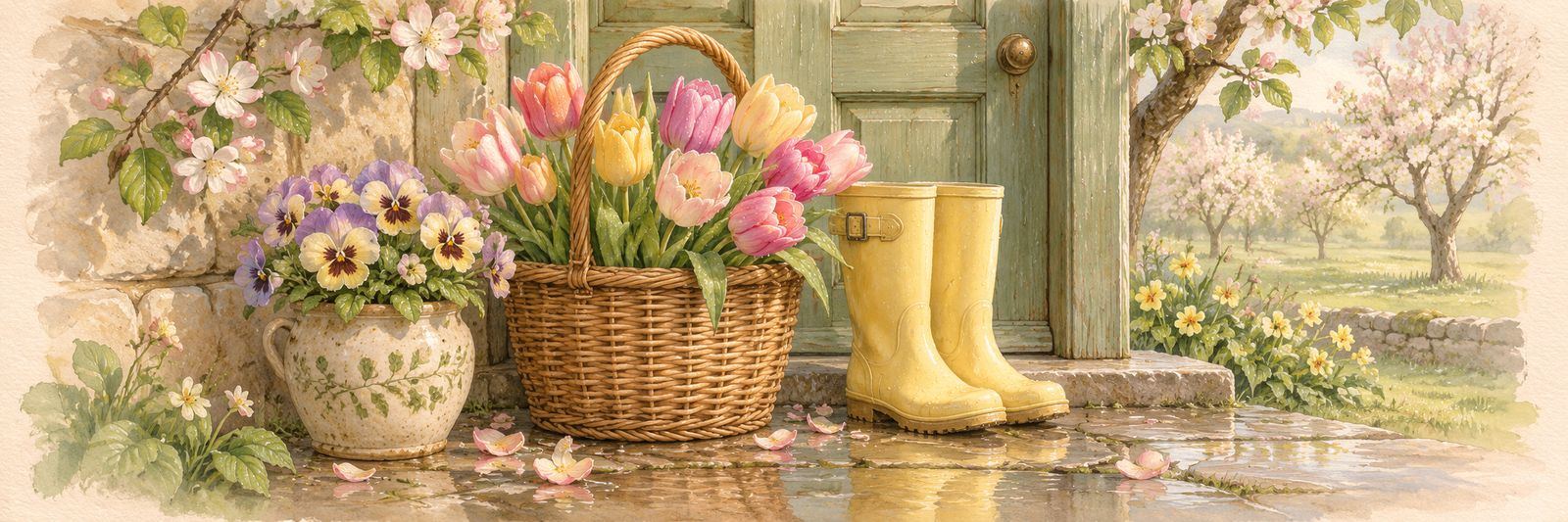
The empty pots are back by the front door, and the first trays of flowers are waiting at the garden center. Spring porch flower pots will be easier to enjoy if you match the plants to the light and the local weather before choosing their colors.
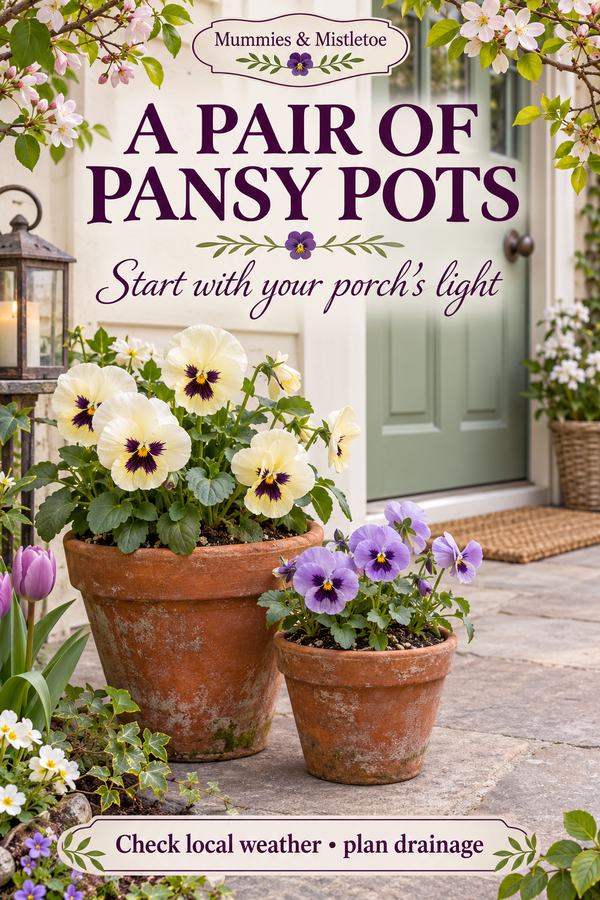
This plan uses two coordinated pansy containers, one larger and one smaller, sharing the same light and watering needs. It gives you a clear place to begin and enough variety to make the pair look considered. The exact plant count comes from the varieties and container sizes you choose.
Check Light and Weather Before Buying
Iowa State Extension describes pansies as cool-season plants suited to full or part sun, with some protection from heat helpful as temperatures rise. They tolerate light freezes, but that doesn't make every nursery plant ready for any cold spell. Ask your local nursery whether its plants have been prepared for outdoor conditions and when they can go out in your area.
Watch the porch at more than one time of day. A covered corner may receive much less light than the step beside it. Record where the sun reaches the pots so you can discuss that location instead of buying for a vague idea of a sunny porch.
If the location is deeply shaded or already hot, ask for a better local plant choice. Keep the paired-container design, but choose plants suited to the site. The color plan is flexible; the growing conditions are the part to settle first.
Choose Two Pots and a Color Pair
Choose containers with a related finish, such as two terracotta pots or two painted pots in the same cream shade. A twelve-inch and a sixteen-inch pot can be a starting point for the scale test, not a rule about how many plants to buy. Check their depth and the plant labels before committing to the arrangement.
For a soft pair, use cream flowers in the larger container and pale lavender in the smaller. For more contrast, use golden yellow in one and deep purple in the other. Repeat the same leaf texture and pot finish so the pair has a connection even when the blooms differ.
Stand the empty pots in position first. Keep both off the walking line, with enough space to open the door and carry bags past them. View them from the approach to the porch, then move them to your work surface for planting.
Prepare the Containers for Drainage
Illinois Extension's drainage guidance recommends drainage holes and explains why a gravel layer under the potting mix doesn't improve drainage. Check the bottom of each container before filling it. If you use a decorative outer pot, keep the plant in a draining inner pot and empty water that collects in the outer one.
Fill the pots with container potting mix. Illinois Extension's soil guide explains that ordinary garden soil can drain and aerate poorly when confined in a pot. Check whether the mix already contains fertilizer, then follow its feeding instructions.
Gather the pots, mix, plants, gloves and watering can in one place. Keep the plant labels nearby. You'll use their spacing and care guidance during planting and again when the display begins to grow.
Arrange the Plants Before Filling the Gaps
Set the nursery plants in their pots inside the empty display container to test the spacing. Look at the plants' stated mature spread, not only the small size they are today. If the display needs fewer plants than you expected, give the extras their own pot.
Add enough potting mix beneath each root ball to keep the plant at its existing soil level. Remove the nursery pot, place the plant and fill around it, leaving room below the rim for watering.
After planting, water the mix thoroughly and let the excess drain. Wipe the outside of the pots before moving them to the porch. Ask for help with a filled container if lifting it would be awkward; the design can be tested while the pots are still empty.
Build a Care Routine Around the Potting Mix
Iowa State's container-care guide recommends checking the potting mix to decide when to water. Feel the mix and follow the plant's needs; when watering is due, water thoroughly enough for excess to leave the drainage holes. Check that the pot is not sitting in collected water afterward.
Make a habit of looking at the flowers when you come through the door. Remove spent flowers as recommended for the variety, and check for wilted leaves or damaged stems. Keep the plant labels in a small envelope near your garden supplies so the care details don't disappear.
As weather warms, reassess the location and condition of the pansies. Their preference for cool weather means this planting will have its best season in spring. As the days grow hot, you can replace tired pansies with summer flowers.
Connect the Pair to the Rest of the Welcome
Echo one flower color in a nearby seasonal flag or door ribbon. A lavender accent can link to a flag's floral detail; cream pots can give a busier design a quieter neighbor. Leave enough space that moving fabric does not brush the flowers.
Keep the variety labels with a note of where each pot sits and when you planted it. Those details will help you choose the next pair as the weather changes.
For an Easter welcome, our He Is Risen garden and house flag can provide the illustrated detail beside the pansies. Choose the scale for your entrance and keep enough space between the pot and flag for both flowers and fabric to move freely.