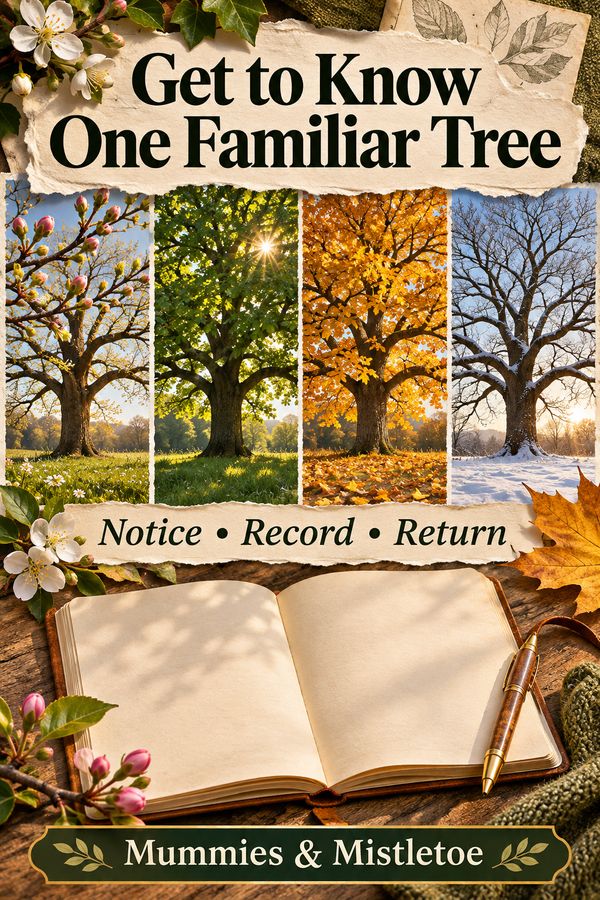
For Arbor Day, choose a tree you already pass regularly and begin a record of how it changes through the year. A familiar tree can give you plenty to notice without planting a new one.
A familiar tree gives the project staying power. You can notice it on the way to school, from a window or during a short weekly walk, without turning every visit into an outing.
Choose a tree you can revisit
Pick a tree you can observe from a public path or your own yard, leaving its branches and growing space undisturbed.
Sketch a simple location map in the notebook so the family can find the same tree again.
Choose a comfortable observation spot and use it for photographs. A consistent viewpoint makes seasonal comparisons easier.
Describe before identifying
Record the overall shape, bark appearance, branching pattern and any leaves, flowers or fruit you can see. Draw a small detail without removing it from the tree.
Use a regional field guide or local extension resource to identify the species. Compare its leaves, bark and branching pattern with the guide.
Write “possible oak” or “not identified yet” when that is the honest answer. The record remains useful even before you know the name.
Make a page that invites another visit
Use four headings: date, weather, what changed and one question. Add space for a photograph or drawing. Keep the page simple enough that a child can complete it in a few minutes.
On the first visit, describe the tree as fully as you can. On later visits, focus on changes: new buds, leaf color, seed pods, birds using branches or the shape of the shade.
If leaves look damaged, draw what you see and add a question for your next visit. The page can hold a mystery as well as an answer.
Return at useful intervals
Choose a few dates across the year and add extra visits when something changes quickly. Spring growth and autumn color may reward closer attention; winter can reveal branch structure that leaves previously hid.
Let each family member choose one detail to follow. One person may notice wildlife while another watches the outline of the crown.
Make an annual comparison
At the end of the year, place the records in order. Ask which change was easiest to miss and which question you still have. Choose one photograph from each season for a small display.
A dedicated notebook can keep the observations together. If you want a journal design that makes you eager to return to the project, browse Mummies & Mistletoe and check the current interior specifications before choosing.
Next Arbor Day, revisit the first page. The tree will be familiar in a different way: not simply something in the background, but a living part of a place you have learned to notice.