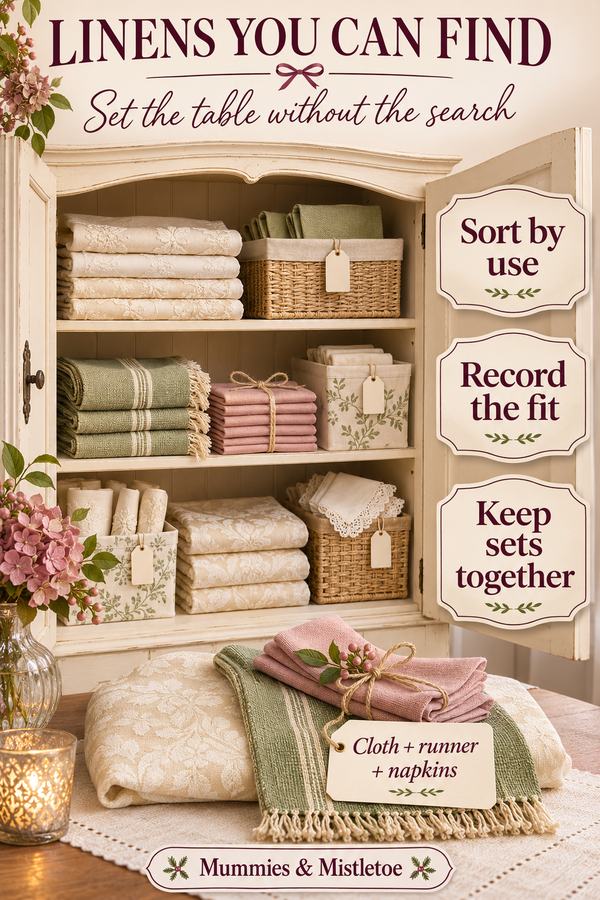
The tablecloth you want is somewhere beneath the holiday napkins, but pulling it out means bringing half the shelf with it. Linen closet organization works better when you can see which cloth fits which table. Start with that information, then give each stack a job.
This plan is for tablecloths, runners, placemats and cloth napkins, even if they share a cupboard with towels. You'll make a small record of what each piece fits and assemble a few useful combinations. The goal is to set the table without unfolding everything you own.
Take Out One Category at a Time
Begin with tablecloths and leave the other shelves alone until you have space to sort them. Check each cloth for its care label, marks, loose hems and remaining dampness. Launder and dry pieces according to their labels before putting them into storage.
Set aside anything needing a repair so it doesn't return to the ready-to-use stack by accident. A small attached note can say what needs attention. Keep favorite older pieces in the process even if they're no longer right for a large dinner; some may suit a side table or a smaller gathering.
Next gather runners, then napkins and placemats. Count the matching napkins in each folded pile. Write down the actual number you can put on the table.
Record What Fits Your Tables
Measure each table's length and width, or its diameter if it's round. Then measure the cloth while it lies flat. For a centered rectangular cloth, subtract the table length from the cloth length and divide by two to find the drop at each end; repeat with the widths for the sides.
For example, a 60-by-84-inch cloth on a 36-by-60-inch table gives a 12-inch drop on all four sides. A 60-inch round cloth on a 42-inch round table gives a 9-inch drop. These are fitting examples, not requirements for every setting.
Write a small card for each cloth: dimensions, table it fits, approximate drop and number of matching napkins. Note any table leaves needed. Keep the card with the cloth so you don't have to repeat the measuring before every meal.
Linen Closet Organization by Use
Make one group for everyday meals, one for gatherings and one for strongly seasonal pieces. Within each group, keep the largest cloth at the bottom and lighter runners above or beside it. Avoid a tower so tall that removing the bottom piece becomes a two-handed job.
If shelf space is limited, stand folded cloths upright in a suitable shallow bin, like folders. Check that the bin can slide out without scraping the shelf above. A shelf label should describe the contents you can recognize, such as round table cloths or six-person napkin sets.
Give the most reachable space to what you use most. A Christmas cloth can live higher than the everyday placemats, while the spring runner belongs near the front when you're setting the table with it regularly.
Fold to the Shelf, Not to a Fixed Rule
Measure the depth of your shelf and choose a folded size that leaves a little room at the front. Fold one cloth to that size, then use it as a visual guide for the others. You don't need every piece to have identical folds if their fabric weights and shapes differ.
Fold a long runner into a broad, loose rectangle. Keep decorative ends inside the fold so they don't catch when you pull another piece out. Check the care label before pressing any folds or using heat near trim.
Store linens clean and fully dry, away from damp areas and direct sunlight. If a special piece has unusual fibers, embroidery or age-related damage, follow the care guidance for that particular piece.
Make Complete Settings Easy to Lift Out
Put a cloth, a coordinating runner and the right number of napkins together when they form a setting you use often. A loose fabric band or a shallow container can keep the group together without compressing it. Add its measurement card where you can see it.
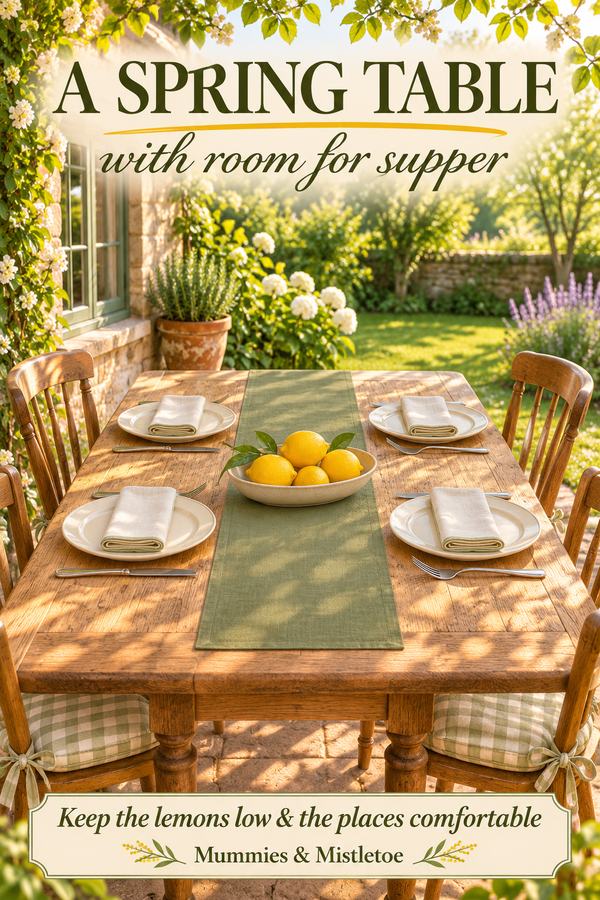
For a six-person spring lunch, that might be a plain cream cloth, a green runner and six pink napkins. A second group could pair the same cream cloth with blue placemats, with a card in the second stack noting where to find the shared cloth.
This is also a useful way to spot a worthwhile addition. If several settings need one simple runner or two extra napkins, you have a specific shopping need instead of another pile of nearly matching fabric.
Give Small Pieces a Defined Space
Keep napkin sets upright in a shallow divided box or in separate small stacks. Put the count on the label: four green, six cream, eight striped. A single spare napkin can be useful for lining a bread basket, so give unmatched pieces a small section rather than mixing them into complete sets.
Stack placemats flat when their material allows it, keeping rigid or delicate pieces from bending over a shelf edge. Store napkin rings separately so they don't press marks into fabric. A small box with a lid keeps them from rolling behind the stacks.
Place a repair bag nearby, with only the pieces awaiting work inside. When a hem is fixed or a stain is treated successfully, return that linen to its proper set and update the count card.
Test the System With Your Next Meal
Choose a real upcoming meal and take out its cloth, runner and napkins. Check the fit on the table, including the chairs and any extension leaves, before putting the set away again. Adjust the card if your first measurements missed a detail.
If you have to move three other piles to reach the set, change its shelf position now. Leave a little free space for clean laundry returning to the cupboard.
Put the six pink napkins beside their green runner, slide the fitting card into view and close the door. The next time you need that setting, you'll be able to lift it out in one trip.
If your fit cards reveal a gap in the holiday stack, browse our Christmas table linens with those measurements beside you. Choose the piece that completes a setting you already own, then give it a fitting card before putting it away.