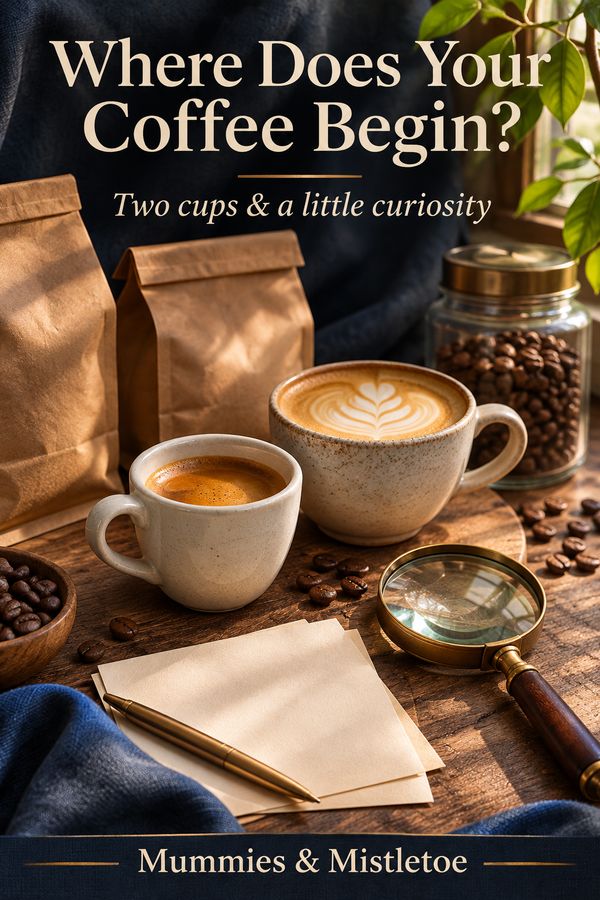
National Coffee Day offers a reason to look beyond the cup and read the bag. Compare two coffees, note what their labels actually tell you and follow one question about origin to a reliable source.
Choose two coffees for National Coffee Day
Pick two coffees with clear maker information. They might list different origins, processing details or roast descriptions. If one is a blend with limited detail, record that honestly instead of assigning it a single origin.
Use coffees that suit the people attending, including decaffeinated options where preferred. Brew according to the maker's directions with the equipment you already use. Serve modest portions at a comfortable temperature.
Read the package before inventing a story
Look for the named country, region, producer or cooperative, if provided. Note the roast description and any tasting notes. Those notes describe the maker's interpretation of flavor; they are not necessarily added ingredients.
Avoid assuming that a beautiful landscape on a bag identifies the farm, or that a general word such as “natural” proves an ethical or environmental claim. Follow the maker's own traceable information if you want to investigate further.
Taste, then compare language
Smell each cup before sipping. Write your own impressions first: nutty, sharp, chocolate-like, mild, earthy or simply “I would drink this again.” Then compare them with the package's description.
If you normally add milk or sugar, try a small plain sip only if you want to, then prepare the coffee as you enjoy it. This is a conversation over coffee, not a test of drinking it correctly.
Use the same cups and brewing approach where practical so the comparison is easier to follow.
Follow one question to a source
Choose a question the package raises: What does this processing term mean? Who produced the beans? Where does this region sit on a map? Use the maker's detailed information, a producer's own materials or an established coffee education source.
Write the source beside your answer. If the information is unavailable, leave the question open. A gap is more honest than an appealing invented explanation.
Save the useful preferences
Record the exact coffee name and which preparation each person liked. That note can guide a future purchase or a gift for someone whose taste you now understand better.
National Coffee Day becomes a chance to pay attention to an everyday drink, from the words on its bag to the way you actually enjoy it in your cup.