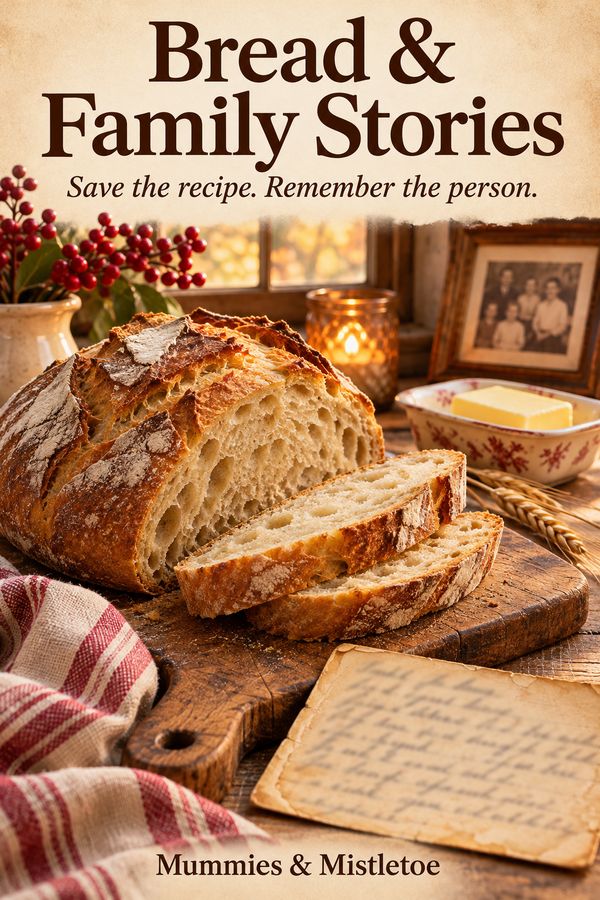
For National Homemade Bread Day, the most interesting thing on a recipe card may be the note in its corner: “Use the blue bowl,” “Double this for Christmas,” or “Grandpa liked the crust dark.” A bread-and-story evening makes room for those details while everyone shares something good to eat.
For National Homemade Bread Day, use a bread recipe someone in the family already knows well, or buy a loaf from a bakery and spend the evening preserving the recipe story. You can celebrate the people behind the bread without making an unfamiliar dough the centerpiece of your plans.
Choose One Loaf for National Homemade Bread Day
Ask a relative which bread they remember, who made it and when it appeared. Be specific: Was it everyday toast, a Sunday dinner roll or a holiday loaf made only once a year? Ask whether the recipe came from a cookbook, a newspaper, a package or someone else's kitchen.
Choose a loaf the group enjoys. The baker might demonstrate a shaping step or arrive with the bread already made, ready to tell its story.
A small supper can be as simple as the bread, a familiar soup and fruit. Keep the table clear enough for a recipe card and a few photographs, using copies of photographs beside the plates.
Record the Recipe in Two Layers
First, preserve the written recipe as it exists. Photograph or scan the card. Keep the author's wording, even if you later make a separate, clearer cooking copy.
Then add a page of practical notes. Useful questions include:
- What kind and size of pan do you use?
- How do you tell when the dough has risen enough?
- Which step looks different from the written instructions?
- What would you tell someone making it for the first time?
- How do you store the finished loaf?
Treat remembered quantities as questions to resolve, not facts to guess. Mark an uncertain note for the experienced baker to check during a future batch. A family memory and a tested recipe can share a folder without pretending they are the same thing.
Give the Conversation a Gentle Shape
Invite each person to tell one memory connected with the loaf or the person who made it. Someone might recall a warm kitchen after school; another remembers being allowed to brush the tops of rolls. Do not require a polished story.
If the baker would enjoy it, record a few minutes of their explanation. Say the date and the speaker's name at the beginning, then save a copy with the recipe. Transcribe the most useful instructions onto the notes page so it remains usable without playing the whole recording.
Send Home Something Worth Keeping
Make copies of the corrected recipe and its source credit. Add a short paragraph about the person and occasion, not a generic quotation. If you send bread home too, tuck the recipe copy alongside it.
A recipe notebook can become a gift after several evenings like this. If you choose a lined journal from Mummies & Mistletoe, let the family recipes and memories do the personalizing inside. One carefully documented loaf is a good first entry.