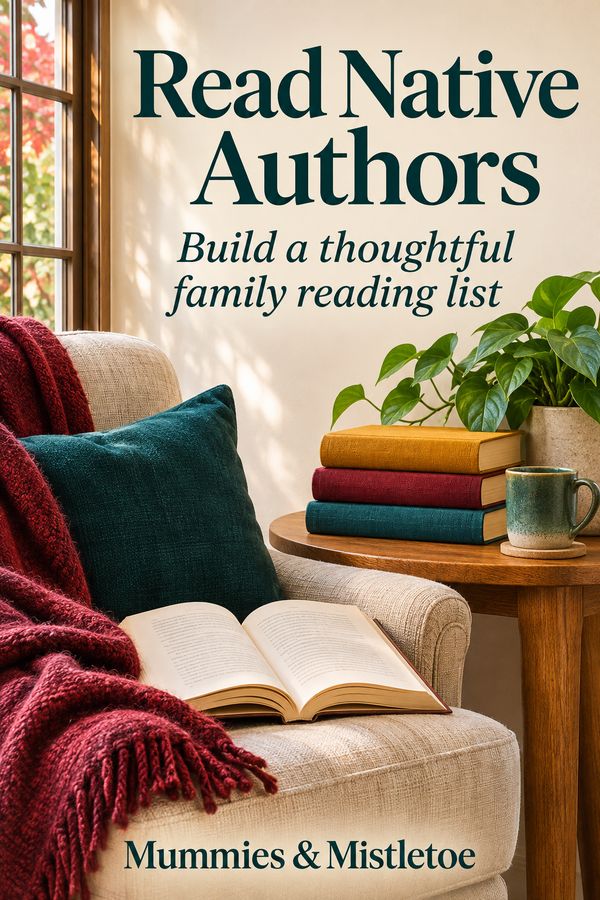
A reading list for Native American Heritage Day can become something your family returns to throughout the year. Begin with stories chosen for the readers you actually have: a funny picture book for a younger child, an absorbing novel for a teenager or a book adults can discuss together.
The goal is to read particular writers and particular stories with attention. Native peoples are not one culture or a subject confined to the past. A varied shelf can include contemporary family life, fantasy, poetry, history and humor.
Find Native-Led Recommendations for Native American Heritage Day
The American Indian Library Association's Youth Literature Awards offer picture-book, middle-grade and young-adult selections by Native and Indigenous creators. Use the categories as a starting place, then read the publisher's description and consider the reader's interests and maturity.
Among the award-winning books are the picture book Chooch Helped by Andrea L. Rogers, illustrated by Rebecca Lee Kunz, and the young-adult anthology Legendary Frybread Drive-In: Intertribal Stories, edited by Cynthia Leitich Smith. These are different reading experiences for different audiences, not interchangeable choices for every child.
Ask a librarian to help locate a selection, including an audiobook or accessible edition if that suits your family. A request through the library can be the next step even when the title is not on the local shelf.
Make a Small, Varied List
Choose three books to begin: one you can read soon, one for a different reader or format, and one to keep on the wish list. Record the author and illustrator as carefully as the title.
Use the creators' own biographies or reliable publisher information to learn how they describe their Nation or community. Do not guess an identity from a surname or an illustration. The National Museum of the American Indian's guide to selecting Native American literature offers questions about authority, accurate representation, tribal specificity, language and contemporary life.
A notebook page with four columns is enough: title and creator, format, where to find it, and why this reader might enjoy it. Leave a line for the reader's response after finishing.
Talk About the Actual Story
After a picture book, ask what the character wanted, what changed and which illustration the child would look at again. With older readers, discuss a decision, a surprising passage or the way the author builds a setting. Let the book be literature as well as an opportunity to learn.
When a question concerns a custom, word or historical event, use the author's note and the book's own resources first. Write down an unanswered question instead of filling the gap with a guess. A story from one Nation does not stand in for every Native person's experience.
Keep Reading After the Calendar Date
Put one next step on the family calendar: collect a library hold, try another book by the same writer or look for an author event open to the public. Ask readers what they want next rather than turning the list into a required completion chart.
For this observance, direct your book budget and attention toward the creators and the books. A carefully chosen story, borrowed or purchased, is the meaningful addition to the day.