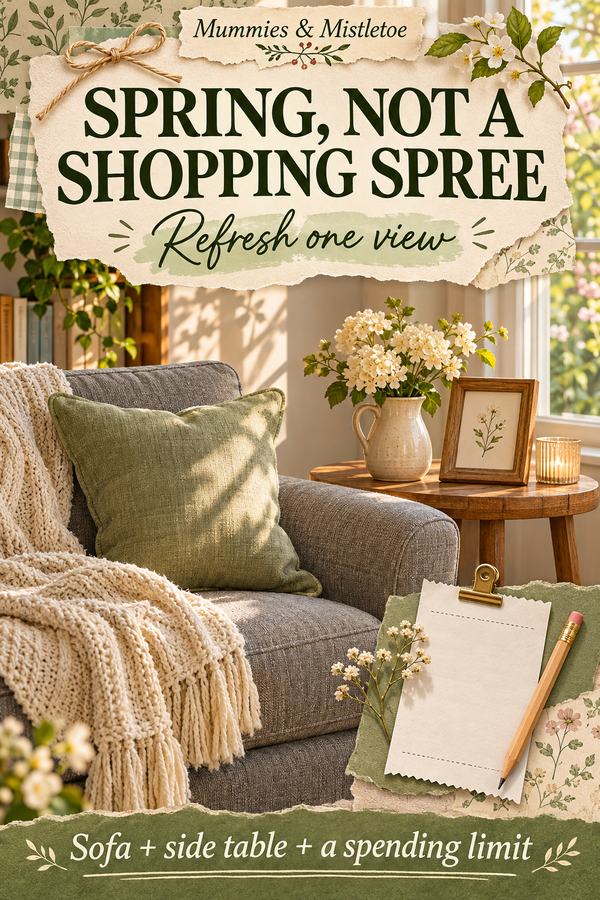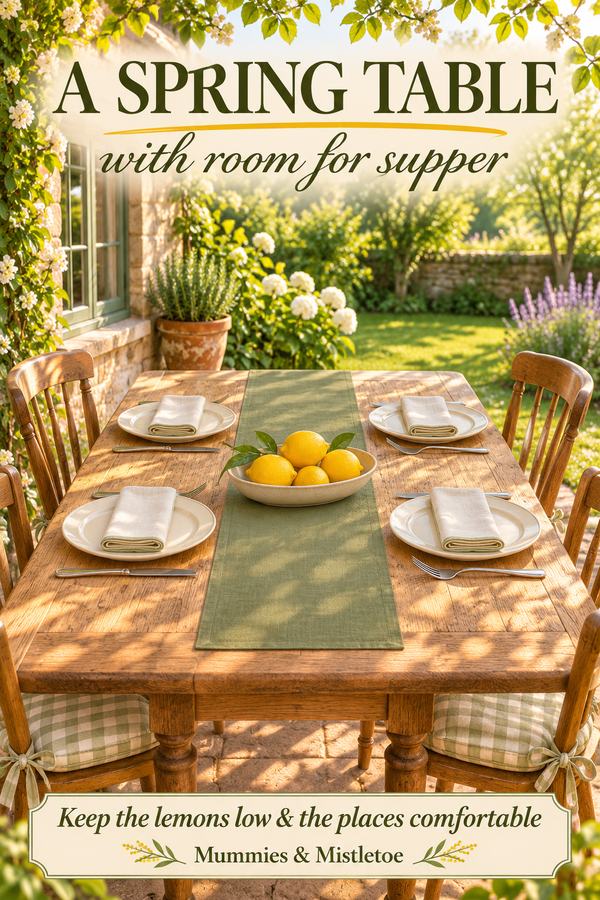
Pack a seasonal display in the order you will want to find it again: main pieces, matching hardware, then the small finishing details. Working through one room at a time keeps useful stands and clips from disappearing into the wrong box.
Choose one room or one surface to begin. Bring out only the incoming decorations for that space, along with a container for the pieces coming down. A small, complete change is easier to manage than opening every seasonal box at once.
Begin Seasonal Decor Storage With a Display Photo
Photograph the arrangement before taking it apart. Include a wider view that shows where the pieces sit, then a close view of any small supports or attachments. Next season, you can use the photograph as a starting point and change what you like.
Give the display a plain location name, such as “living room mantel” or “entry table.” Use the same name on the storage label and in your notes. A location name tells you where a piece belongs even when its color could work in several holidays.
Record anything you changed during the season. You may have moved a tall decoration because it blocked a picture or removed an item that crowded the table. Add that observation now so you won't have to solve the same problem when the box opens again.
Separate Seasonal Pieces From Everyday Pieces
Take down the items that belong only to the outgoing season. Leave the everyday bowl, frame or lamp in place if it will be part of the next arrangement. This keeps useful household objects from disappearing into a box for months.
Set aside anything borrowed from another room. Return the bedroom tray, kitchen serving bowl or dining-room candleholders before packing. If the object is on loan from someone else, put it with a note to arrange its return rather than storing it as part of your own collection.
Make a small list of the everyday pieces used in the display. The list can say “use the white bowl from the sideboard” instead of requiring a duplicate bowl in every holiday box. Your storage holds the seasonal additions while the household pieces keep doing their regular jobs.
Keep Each Decoration Complete
Group an object with the parts it needs: stand, clips, hooks or detachable pieces. Put small parts in a suitable labeled container or bag and keep it beside the protected object. Choose packing materials suited to the item, with no adhesive touching its decorative surface.
For a set, count the pieces before packing. Write “six houses and six bases” or “eight napkin rings” on the label when that is what you actually own. A count helps you spot a missing piece while the room is still easy to search.
Keep any instructions with the item. For something that requires a particular assembly order, add a photograph of the connections. Note which piece goes on first and where each attachment belongs.
Handle Care and Repairs Before the Lid Goes On
Check the item before storing it. Follow its material or product care instructions for cleaning, and let anything damp dry fully before packing. Textiles, painted objects and fragile keepsakes may need different treatment.
Put an item needing repair in a separate, labeled place with a specific next step. “Replace missing hanging loop” tells you what needs doing. “Fix decorations” makes it harder to begin. Keep any loose original parts with the item.
Decide whether the repair is something you will actually do. A piece that has waited through several seasonal changes may need a new plan. Keep it out of the ready-to-use box until it is complete, so next season's setup does not begin with the same surprise.
Label for the Moment You Will Open the Box
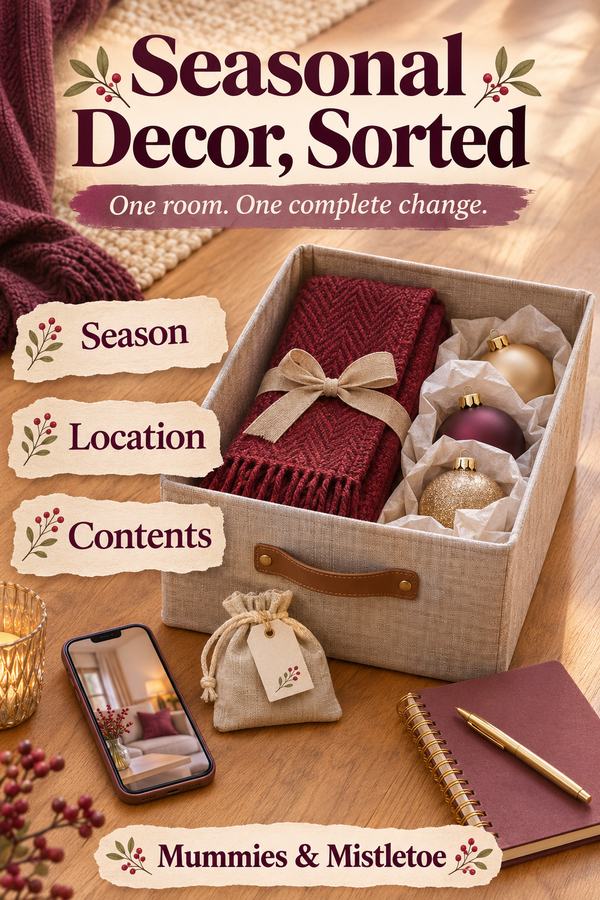
Use labels that answer three questions: which season, which location and what is inside. “Spring, entry table, small figures and fabric runner” is more useful than “miscellaneous.” Put the label on the side you can see when the boxes are stored.
Add “open first” to the box containing the main pieces for the first room you usually decorate. Put small finishing touches in another clearly named group. That lets you begin with a complete display instead of unpacking several boxes to find its largest item.
Keep a short contents list with the box and a copy in your phone or notebook if that helps you shop. Check the list before buying another runner or garland. Sometimes the thing you need is already packed under a name you had forgotten.
Set Up the Next Display Before Opening More Boxes
Clear and clean the now-available surface as appropriate for its finish. Bring in the incoming season's main pieces, then add the smaller details. Keep the outgoing container nearby until you are sure nothing from the old display remains mixed in.
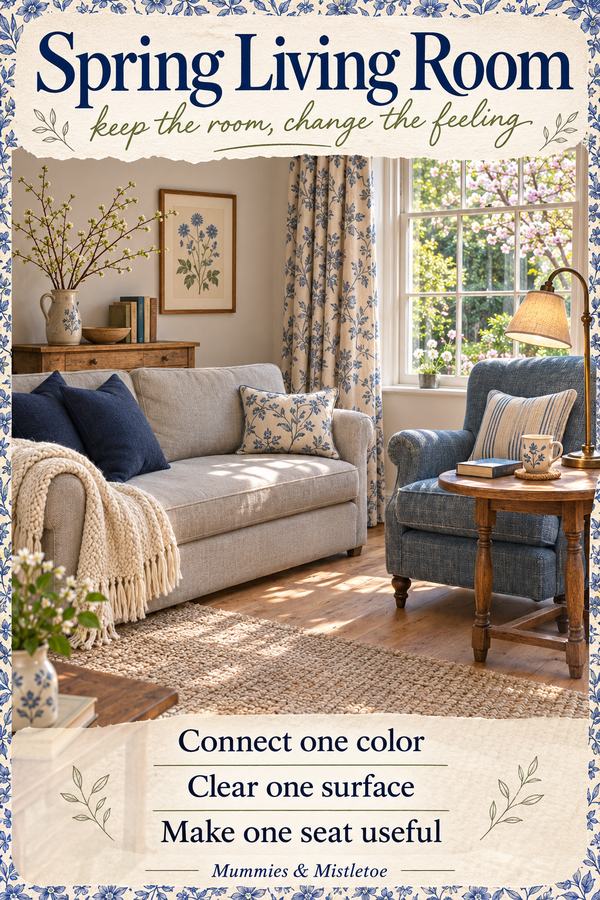
Use the new arrangement for a moment before calling it finished. Sit in the chair, open the cabinet or place the everyday items back on the table. A display that works with those ordinary actions is easier to keep looking good.
Take a new photograph and note any useful change. If a spring runner will stay through another season, record that instead of looking for it later in a sealed box. The storage system should reflect what you actually did.
Finish the Changeover in One Place
Return the outgoing box to its storage location before moving to another room. Keep heavier containers where you can handle them comfortably, following the container and shelving limits. Leave a clear route to the boxes you will need next.
Put the repair list somewhere separate from the packed decorations. Choose one manageable task if a repair is worth doing, and gather its materials before it fades from memory. The ready boxes can stay ready while that work waits elsewhere.
Close the last lid, return the borrowed serving bowl to the kitchen and leave the new display with room around it.
When you find a genuine gap after sorting, our Halloween collection makes it easy to compare flags, table linens and other seasonal pieces in one place. Keep your box list beside you so the new piece has a purpose and a place to go.