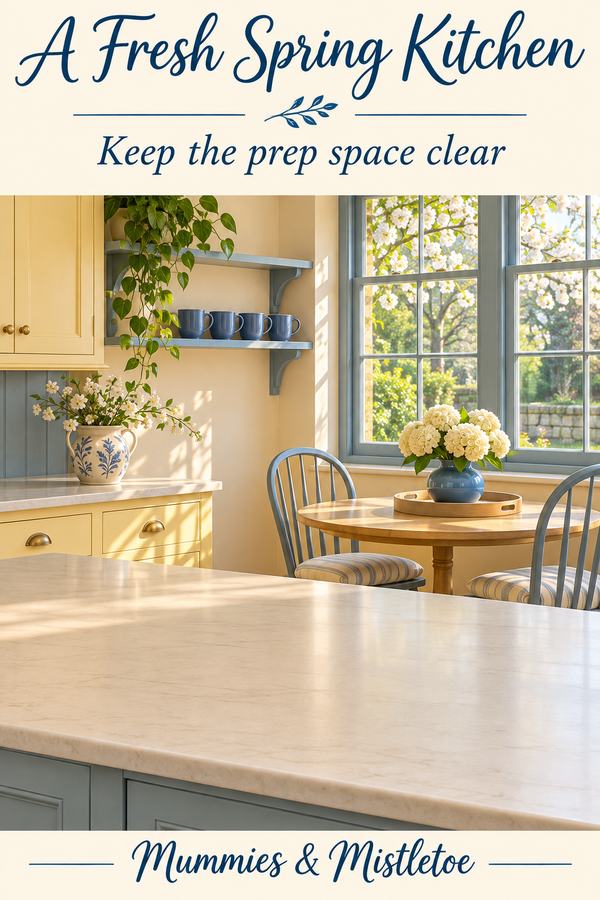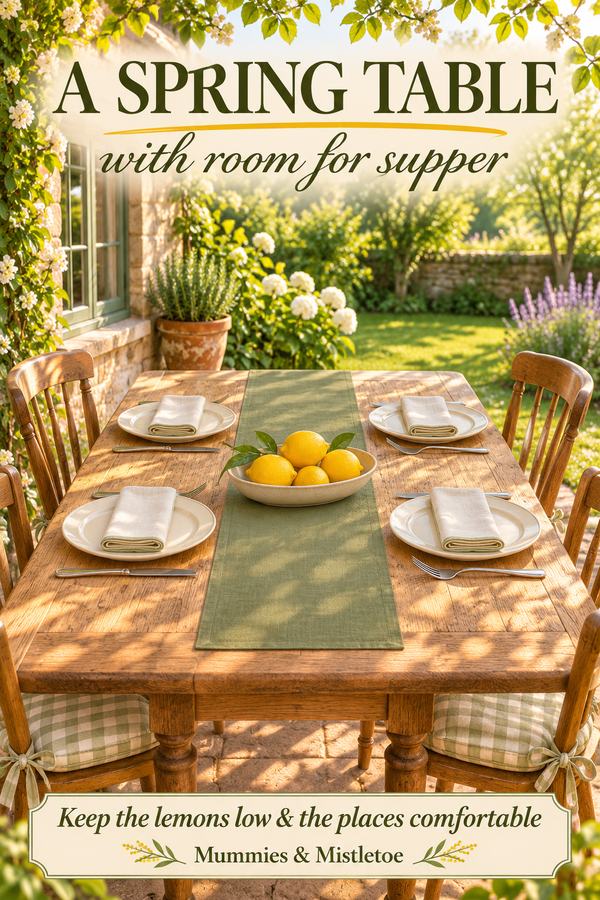
The bowl of lemons looks lovely until you need that exact patch of counter for a chopping board. In a kitchen that gets used all day, decoration has to earn its place. A spring refresh can make the room feel brighter without making lunch harder to prepare.
Start spring kitchen decor with the surfaces you need to keep clear. Then put the seasonal color where you can enjoy it without moving it six times a day. A change on the breakfast table, a small shelf arrangement, and a useful piece of fabric can do more than a row of ornaments beside the stove.
Find the counter you need for cooking
Make a familiar meal before deciding where anything new should go. Notice where you set ingredients, where the chopping board lands, and where a hot pan can safely rest on its usual protective surface. Those places belong to the work of the kitchen.
Also notice the temporary landing spots: groceries waiting to be put away, lunch boxes coming home, or dishes beside the sink. A counter may look empty in the morning but still have a job later. Don't turn that daily landing space into a permanent display.
Choose one preparation area to leave open. Put away the decorative pieces that currently occupy it and use the kitchen for a day. You may find that the room already feels lighter before you've changed a color.
Move the spring kitchen decor to a quieter surface
Look for a place outside that working area: a breakfast table, a shallow shelf, or the top of a freestanding cupboard that can be reached comfortably. Choose one surface to give the spring display a clear home.
On a table, try a compact arrangement that lifts away in one move. A small vase on a tray can be moved before a meal without carrying several separate objects. Keep the arrangement low enough for people to see each other while sitting down.
On a shelf, work with something you already use or like seeing. A favorite plate on a plate stand and a pair of cups can provide color without starting a new collection. Check that the shelf and stand support the pieces securely, and keep the display away from cooking heat and splashes.
Choose color from an object already in the room
A patterned cup, a plate, or the view through the window can suggest the palette. Pick one clear color and one quieter companion. Soft green with cream, blue with warm white, or muted pink with natural wood can each work without requiring every item to match.
Try the colors against the cabinets and backsplash before buying fabric. A shade that looks gentle in a photograph may appear much stronger beside your countertop. Hold the item in the place it will actually live and look at it in daylight and under the kitchen lights.
Repeat the chosen color in two useful places. For example, blue cups on the shelf and a blue detail in the table runner create a connection. You don't need a matching sign, vase, bow, and towel to explain the idea.
Use fabric where it can stay practical
A kitchen table is a good place for a runner when there is room to use it comfortably. Measure the table and consider how often the fabric will need washing. If the table also handles homework or food preparation, a piece that is easy to remove may suit the room better than a full covering.
Check the care label before choosing a textile for everyday use. A beautiful fabric that needs treatment you won't realistically give it may be better saved for an occasional meal. Keep useful drying cloths separate from pieces intended only for display.
Hang a towel where it can dry between uses and won't trail near a burner or catch in a door. If there isn't a good place for another towel, let the table fabric carry the color instead. More fabric isn't automatically a better refresh.
Keep the window area easy to maintain
A kitchen window can be the brightest part of the room, but it is also a place you may need to open, clean, or reach across. Leave those movements clear. A vase that must be rescued every time you use the latch is in the wrong spot.
If you'd like a plant, match it to the light and temperature at your window. Ask for advice about the specific plant, including whether it is appropriate around children or pets. Place the pot on protection suited to the surface and check for collected water.
If a plant would add a chore you don't want, use the window as the view instead. Move the color to the table or shelf. An open patch of sill can be part of the finished room.
Test the arrangement through one ordinary day
Leave the new setup in place for breakfast, meal preparation, and cleanup. Count how often you move each decorative piece. If something repeatedly interrupts the routine, reduce it or move it to the quieter surface you chose earlier.
Sit at the table and look toward the kitchen entrance. The room should have a few connected details, not a trail of objects demanding attention. Put back any everyday item you miss using, even if the empty spot looked tidy in the first photograph.
Take a picture once the arrangement works, then save a short note about the fabric and pieces you used. Next spring, you can start with that practical version: room to chop, room to wash up, and a little color waiting beyond the working counter.
If a favorite cup will be the little spot of color beyond your prep counter, browse the mugs at Mummies & Mistletoe for artwork you enjoy. Choose one that earns its shelf space at breakfast as well as looking lovely between uses.