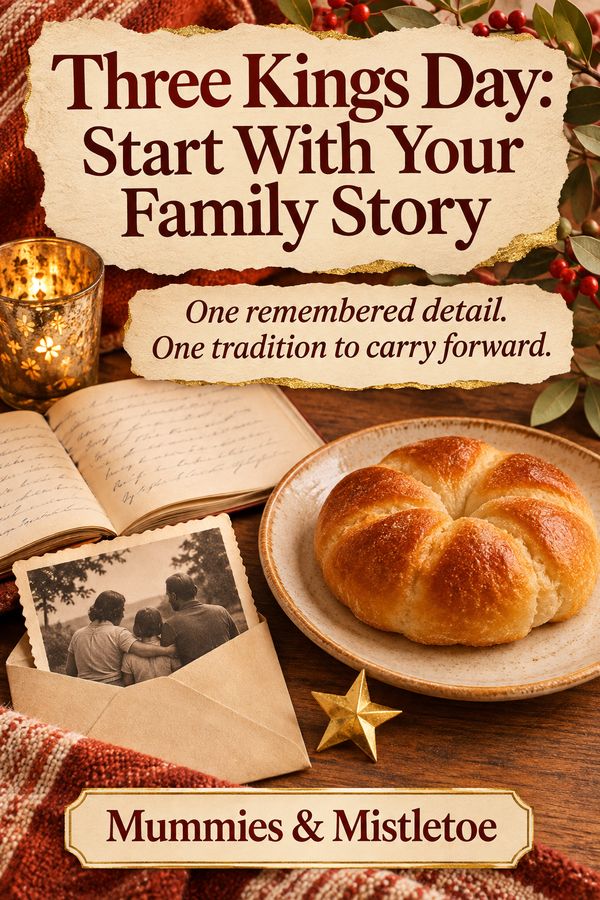
“What did your family do?” is a good first question when you want to celebrate Three Kings Day. Someone may remember a particular bread, a church service, a song or a visit to relatives. Another person may have no childhood custom at all. Start with the story you actually have, then build a small gathering around it.
In Christian observance, Epiphany recalls the visit of the magi to Jesus, as the U.S. Conference of Catholic Bishops explains. January 6 is its traditional date, though church calendars and family celebrations vary. Check your own community’s calendar before choosing the day.
Ask for one remembered detail
Call a relative or family friend with three questions: What happened first? What did you eat or sing? Who made it happen? The last question often reveals the person whose work kept the celebration going.
Write down the words they use for the occasion and any food or custom. Ask how to spell names and place names. A memory of celebrating in one town is a valuable family story, not a rule for every household in a country.
If you have no inherited tradition, begin by reading about Epiphany through your own church or a trusted cultural organization. Choose one practice you understand well enough to explain. There is no need to assemble every tradition you find online into a single afternoon.
Keep the gathering focused
Invite people for a clear purpose: sharing a family story over a favorite sweet bread, attending a service together, or reading the biblical account and talking about it afterward. Say what you will provide and whether guests are being asked to contribute.
A simple plan might be a welcome, a five-minute story from an older relative, something to eat and time for conversation. Set out the recipe or a photograph if it adds to the story. Keep fragile originals away from food and use a copy at the table.
If a food tradition is part of your plan, use a tested recipe from a source connected to that tradition. Read the whole recipe before shopping. Choose the appropriate serving precautions for any hidden token or small object; a symbolic marker beside the plate can avoid putting an object into food.
Give children a real role
A child can ask the interview questions, draw the remembered house or place name on a card, or help locate the family’s town on a map. These jobs make the story tangible without turning the occasion into a large craft project.
Let adults distinguish memory from certainty: “I remember this happening at our aunt’s house” is useful even when the exact year is missing. Write “year unknown” instead of guessing.
Save the part you want to repeat
Afterward, record the date, who came and the custom you chose. Include the recipe source, the storyteller’s name and one detail people especially enjoyed. Ask permission before sharing family photographs or recordings outside the group.
Next year, that page will give you a beginning. You will know what mattered, who can explain it and what you want to carry forward in your own household.