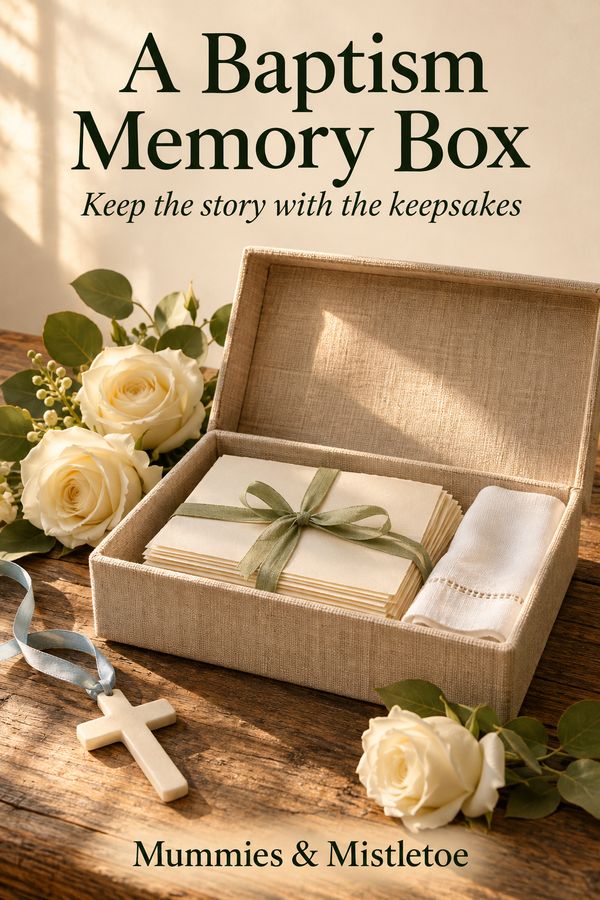
A ribbon or service booklet may be recognizable now and mysterious twenty years from now. A baptism memory box becomes more meaningful when it holds a short account of the day alongside the objects. The story tells a future reader why those particular things were kept.
Start small. Choose a box that can hold the items without forcing folds or crushing delicate pieces. You can add more later; the first job is to identify what belongs there and what information will make it understandable.
Gather Before You Decide
Place possible keepsakes on a clean table: cards, a service booklet, a photograph, a copy of the invitation or a note from a godparent or sponsor. Ask the family which objects they want preserved and which they prefer to keep in everyday use.
A photograph can represent larger items, such as clothing or a special object kept in use. It adds the item to the story without squeezing it into the box.
Copies of certificates and service records belong in the box alongside the personal keepsakes.
Write a One-Page Account
Record the person's name, date, church and place. Add the names of the people who took part and how they were connected to the family. Then write a few details you would otherwise forget: the weather, a song, the meal afterward or a sentence someone said.
If the person baptized is old enough, invite them to write their own account. Their choice of details may differ from everyone else's. Give that voice a place of its own instead of blending it into a family summary.
Choose details that the person or family will enjoy returning to: a relative's greeting, a favorite song or the first moment after the service.
Give Each Object a Small Label
A separate slip of paper can explain “Card from your godmother, received the week after the service” or “Ribbon from the flowers at lunch.”
Give photographs captions with names and dates, and keep digital copies in the family's usual photo folder.
For original photographs, papers and delicate keepsakes, choose suitable preservation materials and keep adhesive off the originals.
Leave One Envelope for Later
Add an empty envelope labeled “Memories added later.” It can hold a letter from the person baptized, a recollection from a relative or a note written on a later anniversary of the day.
The box does not have to be filled to look complete. Space allows the story to continue. Store it somewhere dry and stable, with a label the family can recognize, and tell someone else where it is. A useful keepsake is one that can be found and understood when it is time to open it again.