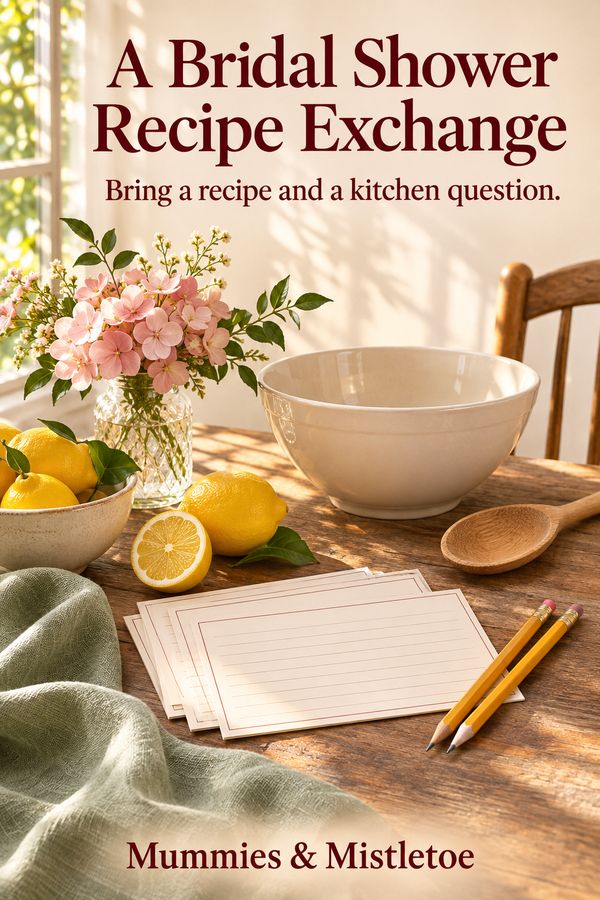
A recipe exchange becomes much more interesting when guests bring a question along with a recipe. Suddenly the table is talking about how to rescue dry rice, what freezes well for two people, and which meals are worth making on a tired Tuesday.
That is a useful shower activity for someone who enjoys food. It can celebrate a shared household without appointing one person its permanent cook.
Ask whether the idea suits the guest of honor
Some people love exchanging cooking knowledge. Others would prefer almost any other shower activity. Ask before building the event around it, and include a partner if that fits the gathering and the couple’s preferences.
Frame the exchange around everyday life together: favorite meals, dividing kitchen work, and learning useful skills. The guest of honor is a participant, not a person the guests have assembled to train.
Invite contributions from anyone who cooks, shops, plans, cleans up, or simply knows a dependable meal. Purchased shortcuts and very simple dishes belong in the conversation too.
Request one recipe and one question
Send this with the invitation: “If you’d like, bring a favorite everyday recipe and one kitchen question you’d love someone to answer. A printed copy or a handwritten note is perfect.”
Give examples so guests understand the scale: a reliable soup, an easy lunch, or a side dish they make without thinking. Ask them to credit the original source where applicable and bring a link instead of reproducing a published recipe at length.
Questions can be practical: “What can I prepare ahead for this?” “How do you organize leftovers?” “Who has a good method for dividing dinner jobs?” Nobody needs a complicated cooking problem to join in.
Run a short kitchen-knowledge round
Set aside fifteen or twenty minutes. Invite volunteers to read their question, then ask who has tried something useful. Encourage first-hand suggestions instead of letting the room turn into a competition over the correct way to cook.
Have a notepad available for answers guests want to remember. If a question involves food storage, preservation, allergies, or safety, mark it for checking against an authoritative source rather than deciding it by a show of hands.
You can demonstrate a low-stakes skill, such as folding a lunch wrap or organizing recipe notes, if the guest of honor enjoys hands-on activities. Keep any actual food preparation within the venue’s practical limits.
Include the work around the meal
Ask one question that goes beyond recipes: “What makes dinner easier in your household?” Answers might include choosing meals together, keeping a shared grocery list, or assigning cleanup before cooking begins.
This keeps the exchange from implying that the newly married person must produce impressive meals alone. A useful contribution can be a system, not a signature dish.
Avoid teasing about who “cannot cook.” People are more willing to learn when the activity is not built around embarrassing them.
Let guests take one thing home
At the end, invite everyone to choose a recipe link, tip, or unanswered question to explore. Give the guest of honor the notes only if they want them; this does not need to become another album to assemble.
The shower has succeeded if people leave knowing one helpful thing and feeling more connected. A lively conversation about real kitchens can be far more memorable than collecting beautiful recipe cards nobody ever uses.