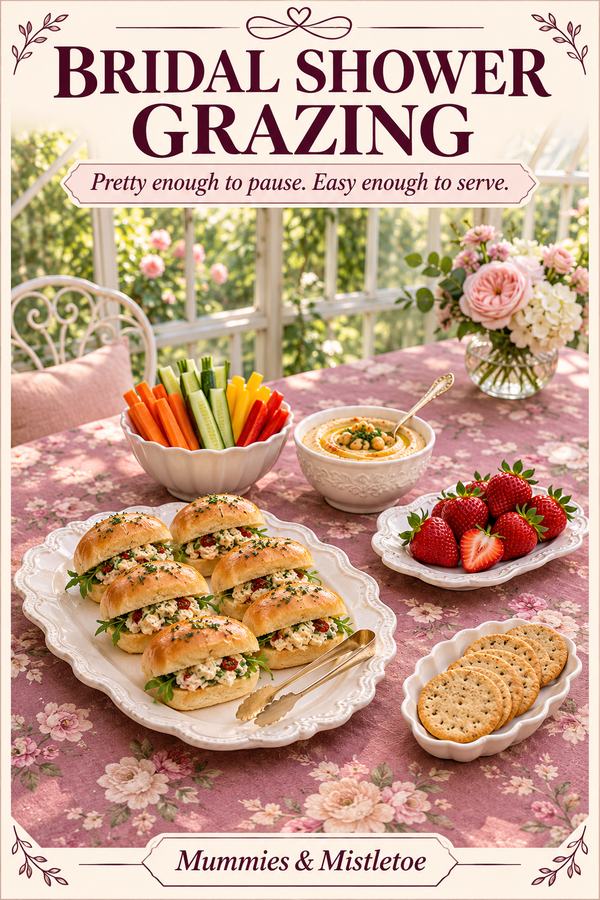
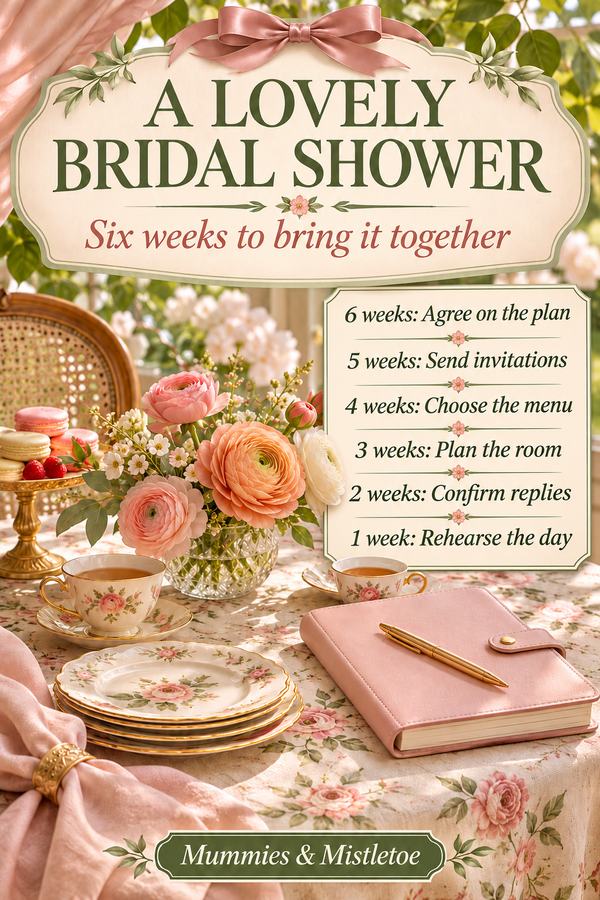
A grazing table should let guests serve a comfortable plate as easily as it catches their eye. Start with a menu and a row of empty serving dishes, then use flowers and textiles in the spaces left around them. This plan keeps a bridal shower spread generous and easy to refill.
For a grazing-style afternoon, build the spread in separate dishes rather than covering the whole tabletop with food. You can still create a generous, garden-party look while keeping portions easy to replenish and ingredients easy to identify.
Decide Whether the Spread Is Lunch
The invitation time tells guests something about the food. A gathering over lunch needs enough substantial food to replace that meal. An afternoon between meals can be lighter, with sandwiches, fruit and something sweet.
Choose the format before making the shopping list. For a light lunch, include a substantial main element such as filled rolls or a prepared savory dish, then add vegetables, fruit and dessert. For an afternoon snack, use smaller portions and tell guests what you're serving.
Use familiar recipes or a supplier's stated serving quantities to plan the food and preparation schedule.
Choose Five Parts of the Menu
Start with one substantial savory choice, one vegetable option, one fruit choice, a crisp accompaniment and a dessert. This keeps the table varied without turning it into a collection of unrelated bites.
A spring afternoon menu might include small filled rolls, vegetables with hummus, strawberries and melon, crackers, and a lemon cake. Another could use prepared savory tart portions, a vegetable salad, sliced fruit, bread and individual cookies.
Include a substantial savory option for each dietary need guests have shared.
Sketch the Bridal Shower Food Table
For a table approached from one long side, place plates at the start, substantial food next, then vegetables, fruit and accompaniments. Put napkins and cutlery near the end so guests don't have to balance them while serving.
Keep drinks on another surface if possible. Put cake or dessert at the far end or bring it out later, which gives the savory food more space during the first part of the gathering.
Set the empty serving dishes on the table before filling them. Walk along with a plate and check that you can reach each utensil without leaning over another dish. A table that looks full from across the room can still leave useful gaps where hands need to go.
Make the Cloth and Dishes Do the Decorating
A floral tablecloth can carry most of the visual detail, with plain serving plates and bowls above it. If the cloth is solid, choose one or two patterned dishes or a narrow runner for contrast.
Keep fresh flowers in their own vessels, away from food and utensils. Place taller arrangements behind the serving line where they won't block a guest's reach. Small low flowers can sit at the ends, provided they don't crowd the plates.
Serve food on food-safe dishes and boards, with decorative greenery and textiles around them.
Plan Portions From the Actual Menu
Write the expected guest count at the top of your list, then decide how many portions of each main item each person is likely to take. Small rolls and large sandwiches are not interchangeable units, so use the real size when you order or prepare them.
For a sample light lunch for twelve, you might plan twelve individual filled rolls as the main element, with a second savory option and sides. Check whether one roll plus those sides makes a suitable plate; add more if the portions are small or guests will be hungry.
Use the supplier's serving guidance for prepared platters and desserts. Keep reserve food refrigerated or unopened as appropriate until it is needed. Plan enough for each guest to make a satisfying plate.
Give Each Dish Its Own Utensil and Label
Write plain labels that name the food and its filling. “Cucumber and Cream Cheese Rolls” is more useful than “Garden Bites.” Keep ingredient packaging available for questions.
Use separate utensils for each dish and arrange them so handles don't fall into neighboring food. If a guest has an allergy, agree on a serving arrangement that addresses cross-contact as well as labeling.
Prepare any agreed separate portion before guests begin serving. Tell the guest where it is and who can answer questions, so they can settle into the party without investigating every plate.
Refill With Fresh Dishes
Prepare smaller serving dishes that can be exchanged as food is eaten. Keep cold reserve food refrigerated and exchange small platters as needed.
FDA's safe-buffet advice recommends cold food at 40°F or below and hot food at 140°F or above. Discard perishables left at room temperature for more than two hours, or one hour when the temperature is above 90°F. Include preparation and display time in that total.
Assign one helper to watch the serving area, replace utensils and manage the food timing. That person can also clear empty dishes before the table begins to look scattered.
Let Dessert Change the Table
When guests have finished the savory food, clear those dishes and make room for dessert. Move the plates and cake forks into the open space, and keep drinks easy to reach.
This gives the table a second, simpler arrangement without requiring another set of decorations. A cake on its stand, a plate of fruit and the same flowers can be enough.
Set the first slice on a plate for the guest of honor, then let someone else take over the knife while you sit down with the people you invited.
Keep the table measurements and a photo of the layout with your hosting notes. For another occasion, browse Mummies & Mistletoe for a seasonal detail that works with those same serving pieces.