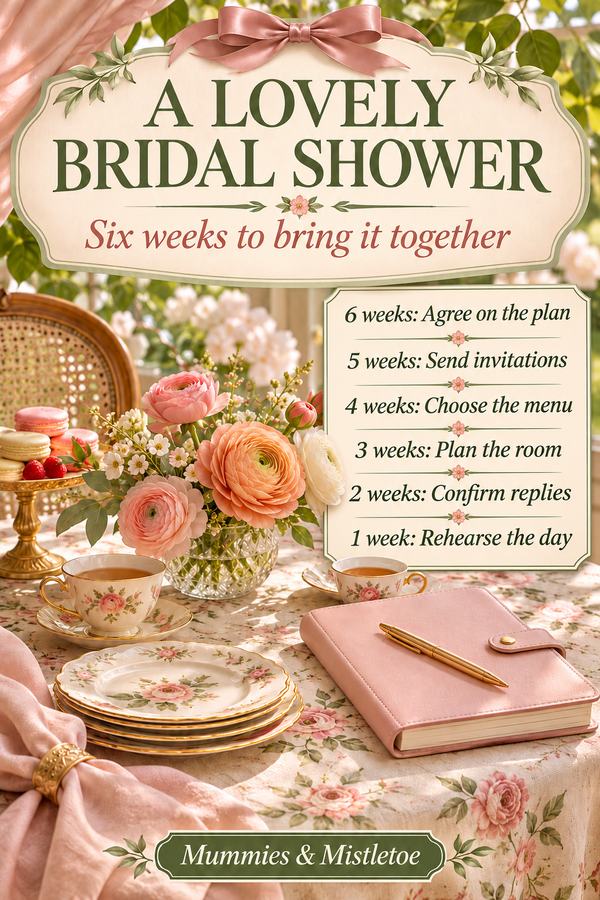
The invitation draft is open, someone has offered to bring flowers, and nobody has quite settled where the shower will be. This bridal shower planning timeline gives those decisions an order, so you can spend the final afternoon welcoming people rather than hunting for the cake knife.
Use six weeks as your working window. If the shower is sooner, combine the early decisions into one planning conversation before you order anything. The important part is agreeing on the guest list, budget and kind of afternoon before the pretty details begin.
Your Bridal Shower Planning Timeline Starts With Four Answers
Six weeks out, ask the guest of honor what would make the shower feel right to her. Cover the guest list, the setting, whether she wants games, and whether she wants to open gifts with everyone watching. A quiet lunch and a lively family gathering need different plans, even when they use the same pink napkins.
Confirm the proposed guests with her before invitations go out. Save the surprises for flowers or dessert.
Then decide who is hosting and paying for what. Put actual spending limits beside food, drinks, invitations, flowers and any room rental. A shared notebook is useful here: one page for money, one for guests, and one for the running list of decisions. Write a person's name beside every promised contribution.
Five Weeks Out: Send an Invitation People Can Use
Once the location and time are settled, send the invitation. Include the full address, the start and finish time, how to respond, and a contact for questions. Add practical details that guests would otherwise have to chase, such as parking behind the house or an entrance without steps.
Choose an RSVP deadline that leaves time to confirm food and seating. For a home gathering, roughly two weeks before the shower often gives you a useful planning cushion; a venue or caterer may need its numbers sooner.
If the guest of honor wants registry information included, use the link she supplies and open it before sending. Keep it secondary to the invitation itself. The first impression should be an afternoon together, not a shopping assignment.
Four Weeks Out: Build the Menu Around the Time
An afternoon shower between meals can have a smaller spread than a gathering that replaces lunch. Choose the food format now so you can plan the serving space.
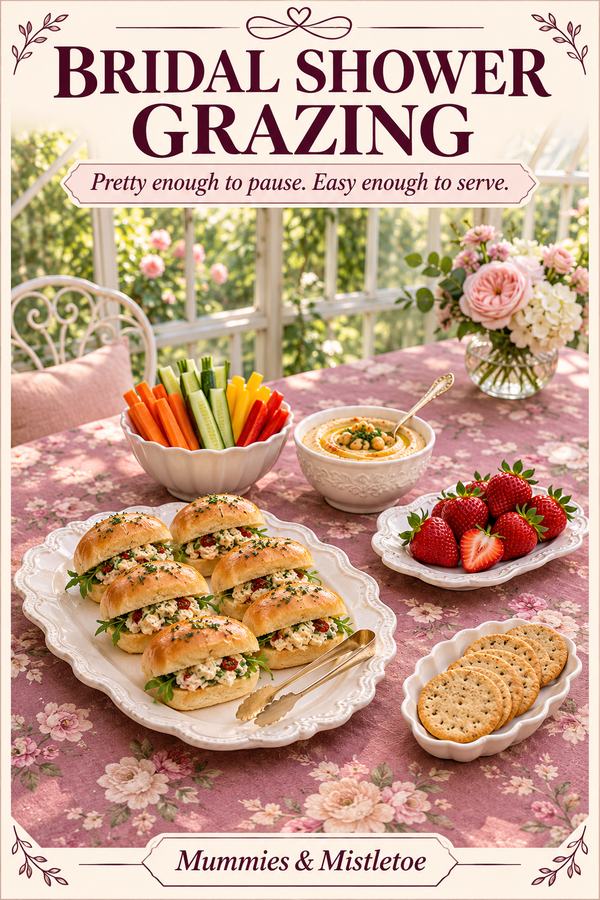
For a light afternoon, a workable menu is sandwiches, a savory vegetarian option, fruit and cake. For lunch, give guests a more substantial plate with a main dish and sides. Use recipes you know or order from a supplier whose portions and collection times you can confirm.
Ask about dietary needs with the RSVP. Record the answer next to the guest's name and identify what they can actually eat. A separate plate prepared before service can be more useful than a label on a nearly empty platter.
Choose drinks at the same time. Water should be easy to find, and anyone skipping alcohol should have something pleasant to pour.
Three Weeks Out: Give the Room a Job
Sketch the room on a notebook page. Mark seats first, then food, drinks and a place for gifts. If the same dining table must serve two purposes, write down when and who will change it over.
Pick one decorative detail worth repeating. Pressed-flower colors might appear in the invitation, paper name cards and a few small arrangements. A handwritten recipe theme might use recipe cards beside the guest book and kitchen linens near the food. Let those useful pieces carry some of the color.
Plan one shared activity, with a quieter alternative. Guests could write a favorite easy supper on a large card, with the ingredients on one side and the method on the other. Leave a line for the contributor's name and a short memory, or attach a separate note if the recipe fills the card. Someone who doesn't cook can write a restaurant recommendation or a memory instead. Put pens where guests can reach them while seated.
Two Weeks Out: Turn Replies Into a Working List
Follow up privately with people who haven't replied. Confirm the count with anyone supplying food or seating, then count plates, glasses, forks and napkins against the expected attendance.
Give each helper a bounded task: collect the cake, set out drinks, greet arrivals, or record gifts if presents will be opened. “Help wherever needed” leaves several people hovering over the same job.
Prepare a gift record with columns for the giver, the item and any personal detail worth remembering. Check spellings as gifts arrive. If gifts won't be opened during the party, arrange a way to connect each card with its parcel before they travel home.
One Week Out: Rehearse the Afternoon on Paper
For a two-hour shower beginning at two, your outline might look like this:
2:00: Guests arrive, find drinks and leave coats.
2:20: Welcome everyone and serve food.
2:50: Invite guests to write recipe or memory cards.
3:10: Open gifts if the guest of honor wants to.
3:40: Serve cake and make time for photographs.
4:00: Say goodbyes and pack the guest of honor's gifts.
Adjust the gift-opening window to the guest count, or omit it entirely. Leave conversation room between activities. Put the schedule where helpers can see it, with collection times and food preparation added separately.
The Day Before: Finish the Small Things
Set out serving pieces with a paper label naming what belongs in each. Charge the phone you'll use for photographs, put a pen beside the gift record, and make room in the refrigerator for the food that is actually coming.
Before guests arrive, place the guest of honor's chair where she can talk comfortably with the group. Set a glass of water beside it. When the doorbell rings, the notebook can stay closed.
If you like keeping the plans on paper, browse the journals in our shop for a notebook you would enjoy using after the shower too. Reserve the first few pages for the budget and guest list, leaving the rest for the gatherings that follow.