The first day of a new job already comes with enough unknowns. A good encouragement gift should make one small part of it easier, not give the recipient another thing to carry, explain, or find room for.
Think about the workday they are actually entering before choosing the present.
Match the gift to the setting
Someone working from home may appreciate a favorite drink for the morning. A commuter might enjoy a snack for the journey or an offer to handle dinner that night. A person in a shared workspace may have little room for a desk accessory, and some workplaces restrict personal items.
Ask what would help if you are unsure. “Would a first-day lunch delivery be welcome, or would you rather I sort dinner afterward?” gives a useful choice without spoiling the kindness.
Giving the present at home the evening before leaves the first morning free for the new routine.
Choose one thing that earns its place
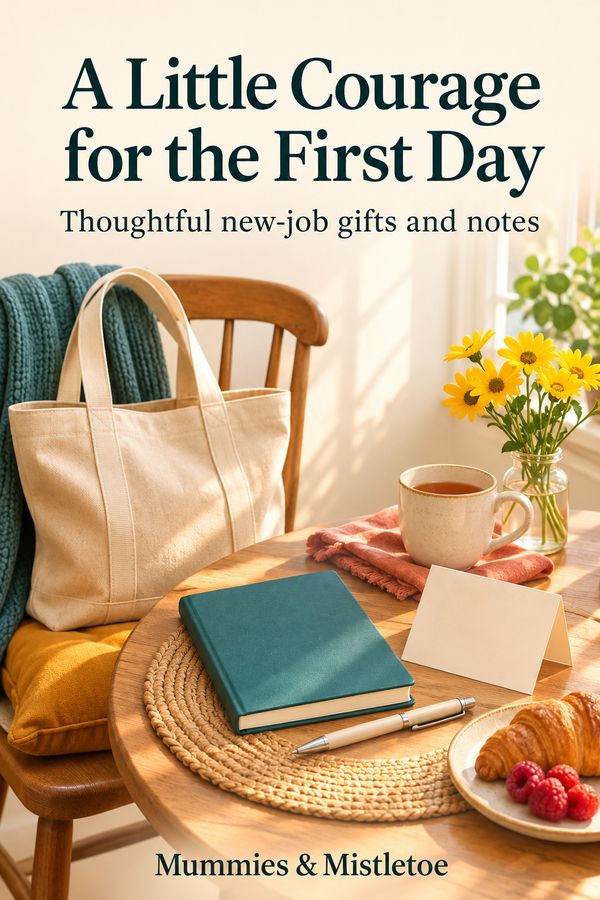
A small notebook may suit someone who likes handwritten notes. A mug may fit a familiar coffee routine. A packed snack should reflect what they actually enjoy and can eat. Existing favorites are a safer guide than novelty slogans about being a boss.
If a journal or mug fits, you can browse the Mummies & Mistletoe shop for a design that feels like them. Choose a design that matches an interest they already enjoy.
The gift can also be time: a ride, a prepared meal, or taking an errand off their evening. Arrange the details together so the help fits their day.
Write a note that reduces the pressure
Avoid predicting instant success or telling them to prove themselves. A new role includes learning, and encouragement can leave room for that.
Try: “You do not have to know everything on the first day. I’m cheering for you as you learn the people, the routines, and where they keep the good pens.”
Or: “I hope today gives you a few friendly faces and one small thing that feels familiar by the time you come home.”
Add something specific you believe in: their curiosity, patience, careful listening, or willingness to ask good questions. Those qualities are more useful than a demand to be brilliant immediately.
Give it at an easy moment
Leave the note with the gift the night before, or hand it over without expecting a long conversation during the morning rush. If you send a message, make it one they can read without replying.
A private note keeps the attention on the person and gives them room to share news of the job in their own time.
Check in after the first-day attention fades
A few days later, ask an open question: “How is it feeling so far?” Listen to the answer instead of immediately offering solutions.
If you promised dinner or an errand, follow through. The useful part of the gift may turn out to be the ordinary support around it.
Starting a new job is a beginning, not a single performance. A thoughtful note can remind someone that they are allowed to grow into it.