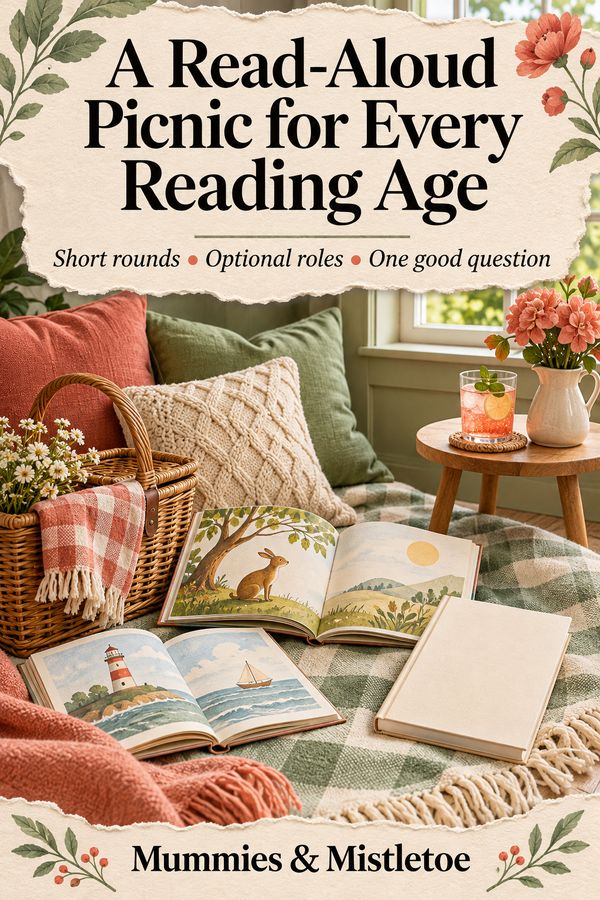
A read-aloud picnic can include a preschooler, a confident reader and an adult who simply wants to listen. The trick is to choose short rounds with different ways to join in, not one book that is supposed to suit every age perfectly.
Spread a blanket indoors or choose a comfortable outdoor spot. Bring a small stack of books, a simple snack and enough time to enjoy a story without rushing to the next activity.
Choose three kinds of reading
Start with a picture book whose illustrations reward looking closely. Follow with a short poem, joke or passage an older child can choose. Finish with something interactive, such as a book with a repeated phrase or a story that invites predictions.
Ask a librarian for books that reflect a range of families and experiences. Preview each selection so you know its length, content and any words you want to practice before reading aloud.
Keep the whole first session manageable. Three ten-minute rounds with breaks can work better than one long reading that loses half the group. Adjust the timing to the people who are actually there.
Give listeners useful roles
A child can turn pages, point out an illustration or hold a card showing the repeated phrase. An older reader can introduce the author and title, read a short section or choose the final question.
Make reading aloud optional. Someone may love books and still dislike performing. Listening, drawing a scene or selecting the next title are real contributions.
Arrange the group so everyone can see the pictures. If the book is small, pause to show each spread or read in a smaller circle. An audiobook excerpt can offer another way to participate when a printed text is difficult to access.
Keep the picnic simple
Choose snacks that are easy to handle and suitable for the group. Keep sticky food away from borrowed books, put drinks on a separate surface and clean hands before turning pages.
If you are outside, bring a waterproof layer beneath the blanket and a way to keep pages from blowing. Have an indoor plan so the gathering does not depend on a perfect forecast.
A small basket for finished books prevents them from disappearing under coats and crumbs. Put library books back in it as soon as each round ends.
Ask one good question per book
Try “Which picture would you like to step into?” or “What would you ask this character?” For nonfiction, ask what surprised the listener or what they would like to find out next.
Accept short answers. A child pointing to a page may be showing more engagement than one who repeats a polished sentence. Leave room for laughter and quiet looking.
Before packing up, let each person choose a book they want to revisit. Write the titles on a small reading list and return borrowed copies on time. The picnic has succeeded if someone wants another story, even if you never reach the bottom of the stack.