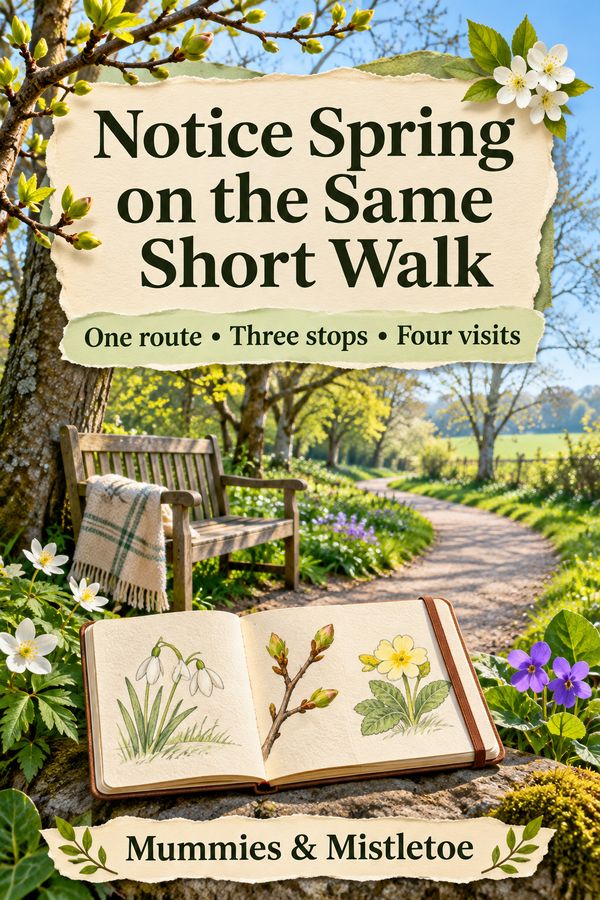
Walk the same short route four times and spring becomes easier to see. A bud that looked unchanged last week may open; a familiar corner may sound different; sunlight may reach a bench that stayed shaded before.
This family ritual needs a route you can repeat, not a spectacular destination. Choose somewhere close enough that you will actually return.
Pick three stopping places
Use a short accessible route with a tree, a patch of ground and a place where you can pause to listen. These become your three observation stops. Stay on permitted paths and choose places where the group can stand safely without blocking others.
Make the first walk short. Ten or fifteen minutes can be enough for a family with young children or limited energy. A view from a porch or window can serve as a repeatable alternative when getting outside is difficult.
Write the date, time and general weather at the top of a page. Those details help explain why visits feel different.
Give each stop one job
At the tree, look for changes in buds, leaves or bark appearance. At the ground stop, notice growth, moisture or fallen material without picking or disturbing it. At the listening stop, stand quietly for a minute and record what you hear.
Ask for specific descriptions. “Three pale green tips” is more useful than “spring is here.” A child can draw the shape while an adult writes their words underneath.
If you do not know a plant or bird, mark it as unidentified and investigate later with a reliable field guide or local nature resource. Guessing can be part of the conversation, but keep guesses separate from observations.
Repeat the route, not the exact experience
Choose three more visits across the next few weeks. Use the same stopping places and, when practical, a similar time of day. Take photographs from the same angle so comparisons are easy.
Let different people lead the noticing each time. One child may focus on color while another notices sounds. Avoid turning the walk into a race to collect the most discoveries.
Bad weather can become part of the record if conditions are safe. If they are not, postpone and note why. The calendar should support the ritual, not pressure anyone into an uncomfortable outing.
Make one comparison page
After the fourth visit, put the drawings or photographs side by side. Ask what changed, what stayed the same and what surprised you. Choose one observation that deserves another visit later in the year.
A simple notebook works well for keeping these records together. If you want a dedicated keepsake for seasonal walks, browse the Mummies & Mistletoe shop for a journal style you enjoy, then check the listing’s interior details before choosing.
Label the finished page with the route and dates. Next spring, you can repeat the walk and compare years. What began as a short outing becomes a small record of a place your family knows well.