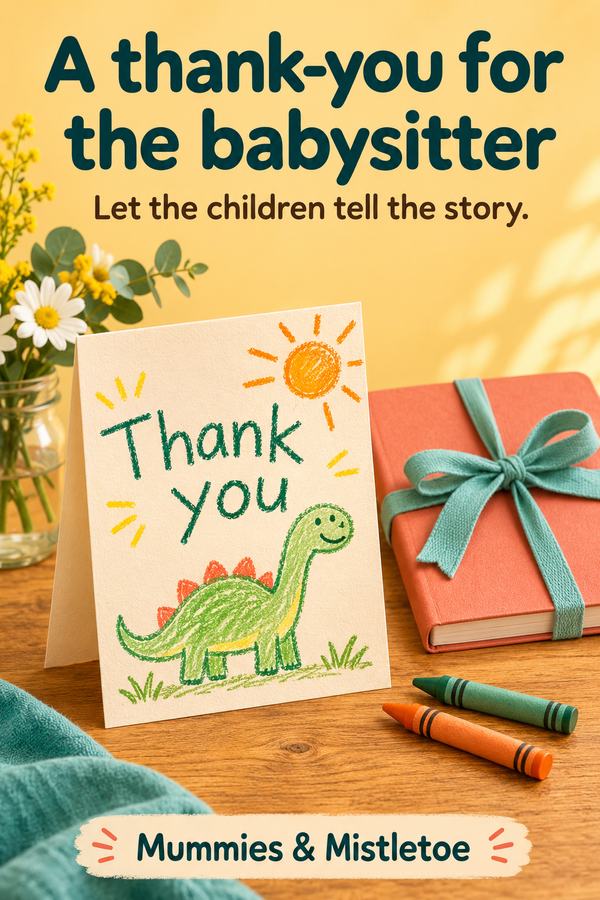
Ask the children what they most enjoy doing with their babysitter. Their answer can become the best part of a thank-you card, paired with a small gift chosen for the person who cares for them. Their own words will matter more than a perfectly polished message.
Choose the occasion first: a holiday thank-you, a birthday or the end of a regular arrangement. Then plan a small gift and a card the children can help make. Keep the card short enough that they can finish while they still enjoy the activity.
Choose Babysitter Gift Ideas for the Person
Think about what the babysitter or nanny has mentioned enjoying outside work. They may like a particular café, keep a journal or bring a favorite drink when they arrive. Use a detail they have shared rather than assuming they want something decorated with their job title.
A gift card to a familiar place gives them a choice. A notebook can suit someone who enjoys writing. A mug can be useful if you know their preferred size and style, especially when paired with a drink they already like.
Keep a gift separate from wages and any compensation arrangements you have made. Choose its size around your relationship and the occasion. The purpose here is to make a personal thank-you that belongs to the recipient.
Ask the Children for One Real Detail
Ask each child to name something they enjoy doing with the person. A specific prompt helps: “What game do you play together?” or “What do you like about the afternoons they are here?” Write down the child's own words.
Choose one detail for the card. “I like when you do the dinosaur voices” tells a fuller story than a page of general praise. A younger child might point to a drawing while you write their explanation beneath it.
Let an older child write privately if they prefer. They may have their own memory or way of saying thank you. Your role is to provide the paper and time, then help assemble the pieces without making every sentence sound like an adult wrote it.
Make a Small Thank-You Card Together
Fold one sheet of cardstock in half. Give the children a separate piece of paper for their drawings first, especially if several children are contributing. That way, each person has room to work before you decide how the pictures fit on the card.
Choose one drawing for the front or arrange several small ones with space between them. Attach the drawings after the children finish. Write the recipient's name inside, followed by each child's short message and name.
For a child who prefers making marks to drawing a scene, let their colors become the background for a simple paper heart or circle. Add their spoken words beside it. The result still records their contribution without requiring a particular drawing skill.
Add a Note From the Grown-Ups
Use a separate paragraph to say what you appreciate. Mention something concrete: the steady afternoon routine, the way the person welcomed a shy child into a game or the care they took during a change in your schedule.
Write only what you have actually observed or experienced. A note such as “Thank you for making the after-school hours feel settled. We appreciate how patiently you help everyone get started” can be warm without making grand claims.
For someone leaving a regular role, include a memory you will keep. You might mention the book the children still request or a small routine that became part of family life. Let the note acknowledge the relationship as well as the practical help.
Build One of Three Small Gifts
For a café regular, put a gift card in a small envelope inside the handmade card. Add a line such as “For a break that belongs to you.” Choose a location you know they use and check that the card is suitable for it.
For someone who writes, pair a notebook with a pen they would enjoy using. Keep the children's artwork on the removable card so the notebook remains theirs to fill. A compact size may be useful if they carry a bag between work and other plans.
For a tea or coffee drinker, wrap a cup with a small amount of their usual drink. Keep the cup's care information with the gift. Avoid building a large basket around unfamiliar flavors; one known favorite gives the package a more personal starting point.
Make the Handoff Easy
Arrange a moment when the person is not trying to gather bags, answer the door and settle the children all at once. The children can hand over the card together, or one child can give it while the others add their own words.
For a holiday gift, choose a moment when you can give it without rushing the goodbye. For a farewell, set aside a few minutes within the day so the goodbye has room to happen.
Use packaging the recipient can carry comfortably. A slim notebook and card can go in a small bag; a breakable cup needs protective wrapping. Keep the card outside that protective layer so it can be read without unpacking everything.
Keep the Children's Part Recognizable
Resist rewriting the funny little phrase that makes the note sound like your child. Correct a name if needed, but let the child's wording remain their own. An unusual spelling or a lopsided drawing can be part of what makes the card personal.
If the children want a copy, photograph the finished card before giving it. Then let the original belong to the person receiving the thank-you. Keep any photograph private unless the people involved have agreed to share it.
Set the gift beside the card and ask the children who would like to hand it over. Leave the message visible when they carry it to the door.
For someone who enjoys writing and a playful witchy design, our pink floral witch-hat journal could be the notebook in that thank-you gift. Keep the children's drawings on their card so the lined pages stay ready for the recipient's own ideas.