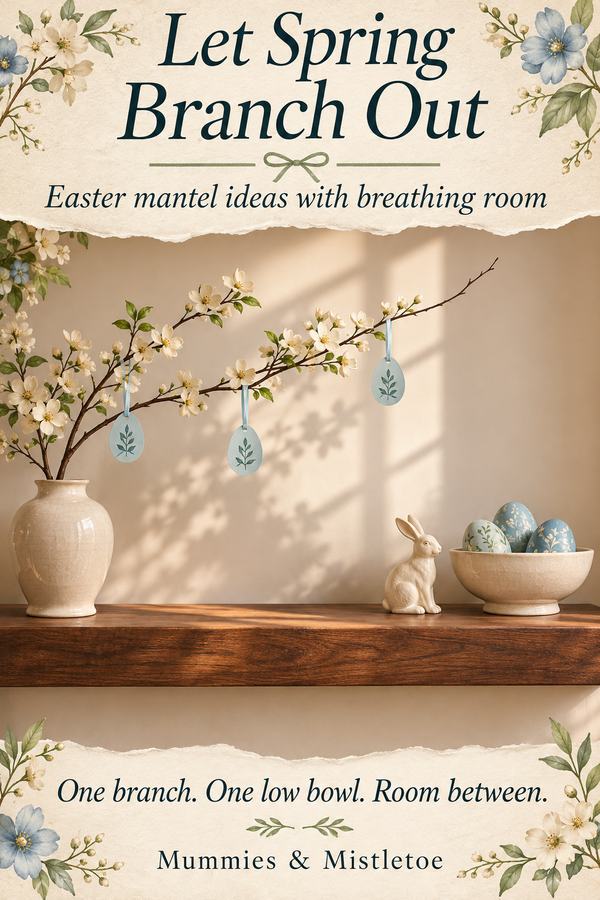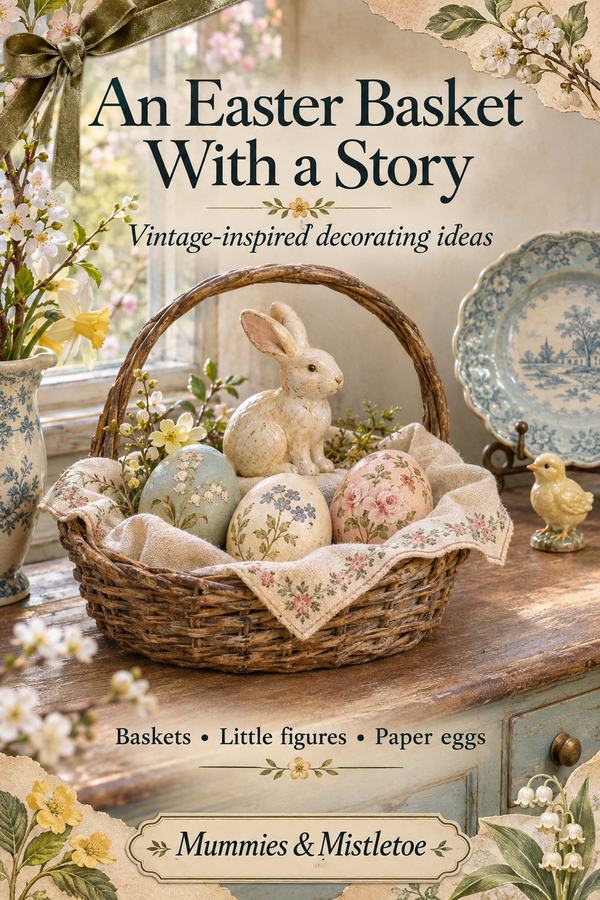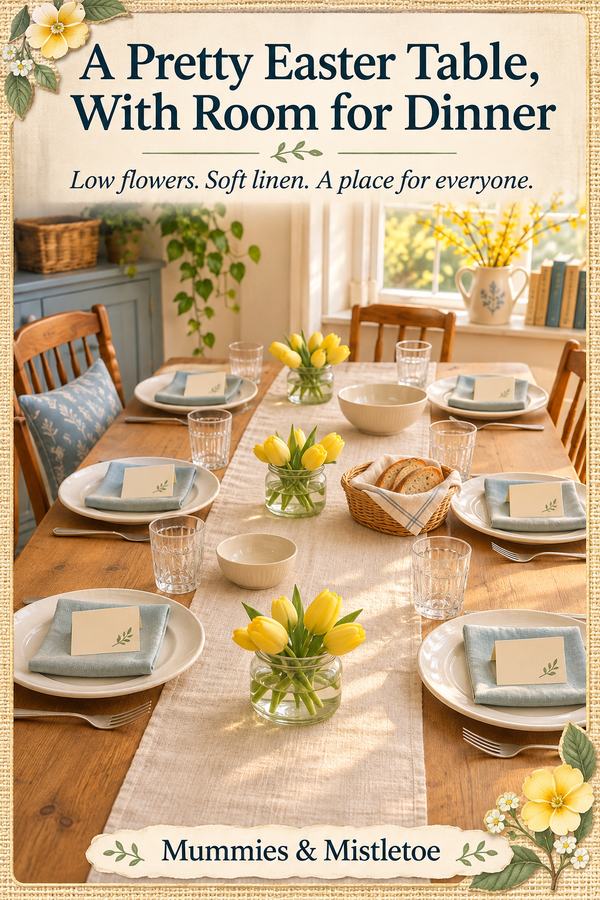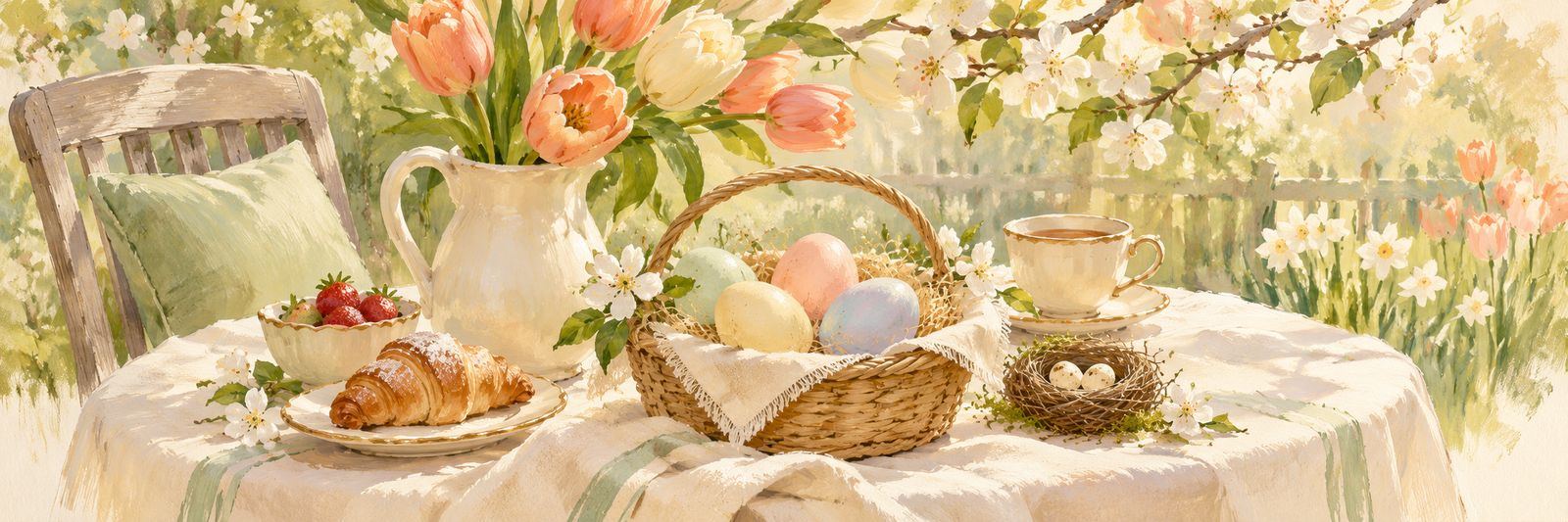
A flowering branch gives an Easter mantel a graceful outline before you add a single ornament. Pair it with a low bowl of eggs and one small rabbit, and the three shapes will carry the display. This plan shows where to put them and how to adapt the arrangement to a narrow shelf.
Choose Blossoms and Egg Colors
You'll need a stable vase, two or three light artificial flowering stems, six lightweight hanging paper eggs, a shallow bowl, three larger decorative eggs and one small rabbit. Choose cream blossoms with pale blue eggs for a soft look, or yellow blossoms with white eggs if your room needs more color.
The branch arrangement belongs at one end, not directly in the middle. The bowl will carry the other end, while the rabbit sits between them. These three different shapes make the display feel composed without requiring matching pairs.
Measure your shelf's depth before choosing the vase. Its base must sit fully on the shelf and remain steady with the stems inserted. If the fireplace operates, follow its manufacturer's clearance instructions; the decorative measurements here are only layout examples, not heat-safety distances.
Build the Branch Shape on a Table First
Arrange the stems in the vase at table height so you can see where they cross. Turn the tallest stem outward, angle a second toward the middle of the mantel, and keep any third stem lower. You want a sideways fan rather than a tight upright bouquet.
Bend artificial stems only as their construction allows. Spread individual twigs so you can see spaces between the blossoms, then check the vase from both the front and side. A branch that looks graceful head-on may stick too far into the room.
Hang the six eggs before moving the arrangement. Put two on the lower outer branches, three at different heights through the middle, and one on a higher inner branch. Leave the tallest tip bare so the eye can follow its shape.
Use lightweight ornaments and short hanging loops. If one egg pulls its twig down or makes the vase lean, take that egg off and let the twig spring back. A stable smaller arrangement is the better starting point.
Lay Out a Five-Foot Shelf
On an illustrative sixty-inch mantel, let the vase and its branches occupy roughly the left eighteen inches. Place the bowl near the right end, with its entire base supported. Set the rabbit between them, a little closer to the bowl than to the vase.
Start with the three larger eggs in the bowl. Rest them against one another so each pattern or color can be seen, then rotate the bowl until its most interesting edge faces the room. The bowl should look substantial enough to answer the tall branch, even though it is much lower.
Leave the center stretch of shelf uncovered. This is where the inward branch can reach without landing over another object. You don't need a garland underneath; the branch already supplies a line across the mantel.
Look from the doorway. If the tall end overwhelms the display, move the bowl a few inches inward or choose a broader one. Turn the rabbit toward the branch to connect the two groups without adding more eggs.
Work With the Mirror or Picture Above It
Keep an existing mirror if its frame suits the arrangement. Position the vase far enough to one side that its tallest branch crosses just the edge of the frame, leaving the center of the glass open. Check the reflection for hanging loops and awkward stem backs.
With a painting, borrow one color from the picture for the eggs. A landscape with blue sky and brown fields can support pale blue eggs and a natural-colored rabbit without adding a new picture just for Easter.
If the wall is empty, the branch can be the height in the arrangement. Resist adding a frame simply to fill the rectangle above the shelf. A flowering silhouette against a plain wall has a different effect from a display layered in front of a mirror, and both can look finished.
Use the Same Idea on a Narrow Shelf
For a shallow mantel, replace the vase of tall stems with one short artificial sprig in a broad, low vessel that fits fully on the shelf. Leave off hanging ornaments if the sprig cannot carry them without drooping.
Set three decorative eggs in individual, stable egg cups along the other half of the shelf. Vary the spacing instead of the cup heights: two closer together, then a slightly larger gap before the third. Omit the rabbit if its base crowds the cups.
This version keeps the branch-and-egg relationship but brings the height down. It also suits a mantel beneath a television, provided everything respects the equipment and fireplace clearances and nothing blocks ventilation.
Finish the Display From the Sofa
Sit where you usually sit in the room. Check that the egg colors are visible from there, that the rabbit isn't hidden behind the bowl, and that the branch doesn't cut across a face in a family picture.
If the arrangement looks faint against a pale wall, deepen the blue of the eggs or use a darker bowl. If it looks busy, remove one patterned ornament and let the blossoms show through. Make that one adjustment before changing the whole display.
When you're happy with the view, put the spare eggs back in their box. From the sofa, you should be able to follow the flowering branch down to the little rabbit and across to the bowl.
Keep the Branches After Easter
When Easter week ends, remove the paper eggs and let the artificial flowering branches keep their place. Change the rabbit and egg bowl for a plain vessel or one framed garden photograph. Later in spring, you can replace the blossoms with artificial leafy stems that fit the same vase.
The mantel can stay light and open through spring. A single leafy stem and the objects you already enjoy may be all it needs.
For a second Easter detail at the entrance, explore the Easter collection at Mummies & Mistletoe. Let a faith-centered flag carry the outdoor message while the flowering branch and paper eggs remain the handmade focus inside.