Keep the wrapping tools together and you can turn almost any clear table into a gift-wrapping spot. A drawer, a portable caddy or a closet shelf can hold the essentials without taking over a room. Choose the version that fits where you wrap and how often you do it.
Start with the space you can spare and the packages you wrap most often. A drawer may handle birthdays and small gifts; a cart or closet can hold larger rolls and boxes. The work surface can still be the dining table, as long as the supplies arrive there in one trip.
Sort the Supplies Before Choosing Storage
Gather the wrapping paper, bags, ribbon, tags, tissue, tape and tools you already own. Open flattened bags to check their handles and look at boxes for crushed corners or missing lids. Keep the pieces you can use without repairing them during a last-minute wrap.
Separate long rolls from flat sheets and short paper remnants. Save remnants large enough for your usual small gifts, then use tiny pieces for tags if you actually make them. A container full of scraps you never reach for can hide the paper you need.
Count the basic tools: a pair of scissors, suitable tape, a pen, a ruler and any specialty tool you use regularly. Put sharp tools in a secure place away from young children. Avoid buying organizers until you know the sizes of the supplies they must hold.
Build a Portable Work Kit
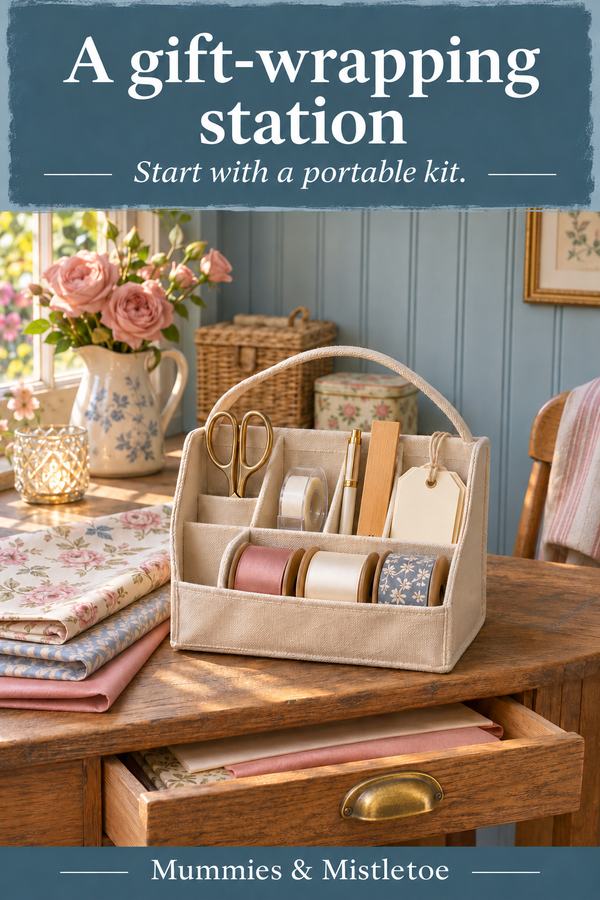
Choose a small box or caddy that holds the scissors, tape, pen, ruler and a few tags. Add a small envelope for gift receipts and a shallow container for ribbon offcuts. Keep the kit light enough to carry with one hand while the other carries the gift.
Use a defined spot for each tool rather than dropping everything into one deep compartment. The tape should be visible without removing ribbon, and the pen should return to the same slot. If the caddy has a lid, make sure it closes without pressing on the scissors or bending the tags.
Keep this kit ready even if the paper lives elsewhere. It is the part of the station that follows you to the table. A short setup becomes easier when the most frequently missing items travel together.
Try Gift Wrapping Station Ideas in One Drawer
Measure the drawer's usable height, width and depth, including any space lost to its runners or interior fittings. Store folded sheets flat in the largest section, with tags and small ribbon lengths in shallow containers beside them. Long rolls can stay in a separate location.
Use a folder or large envelope to keep flat paper from catching on the drawer above. Sort sheets by size before sorting by occasion. You can see immediately whether a piece is large enough without unfolding every pattern.
Put the work kit at the front or keep its contents in a removable tray. Don't fill the drawer so tightly that taking out one bag pulls out three others. Leave a little space for the usable bag that comes home with the next gift.
Use a Cart for Supplies That Move
Choose a cart that fits its storage spot and can move safely along the route to your work surface. Check shelf dimensions against your containers and follow the cart's weight limits. Put heavier items low and secure tall rolls in a holder suited to their size.
Use one shelf for paper and bags, one for ribbon and tissue, and one for the portable kit and empty boxes. The exact order can change with the cart, but keep loose ribbon from trailing into wheels. Avoid hanging tools from the outside where they could catch on furniture or hands.
Try rolling the loaded cart to the table before calling the setup finished. If you must unload half of it to turn a corner, simplify the contents. A mobile station should make the trip easier, not turn the hallway into another obstacle.
Give a Closet Two Clear Zones
Use one zone for long paper rolls and another for flat bags, folded sheets and tools. Keep rolls upright only in a stable holder that prevents them from falling when the door opens. Otherwise, store them horizontally on a suitable shelf or in a long container.
Arrange flat bags by size, with handles folded inside so they don't catch. Keep nested boxes only when you can retrieve them without unpacking a whole tower. A small number of sound boxes is more useful than a pile of shapes you never give.
Put occasional seasonal supplies higher or farther back and the everyday kit within easy reach. Keep tape, paper and ribbon in a dry place away from conditions their manufacturers advise against. Don't use a damp storage corner simply because it has room for long rolls.
Set Up the Work Surface Before You Wrap
Clear enough table space for the package and a full sheet of paper. Bring the gift, work kit and chosen paper together before starting. Check the gift receipt and remove or cover any price information as appropriate.
Lay out the paper, measure the wrap and cut before adding ribbon or decorations. Keep the scissors and tape on the same side of the table so they don't disappear beneath the sheet. Put scraps directly into a small bag or tray as you work.
Finish the tag before setting the package aside. A wrapped box without a name can become surprisingly hard to identify when several gifts use the same paper. Keep the recipient's card with it if the two will travel together.
Reset the Kit Before Putting It Away
Return usable paper to its size group and wind ribbon so the ends won't tangle. Sort out damaged scraps before putting supplies away. Check local guidance for coated paper, tape and mixed materials instead of assuming every scrap belongs in paper recycling.
Replace the pen if it has stopped working and note when tape is running low. Keep a small supply list inside the kit so the next shopping trip fills a real gap. There's no need to restock a color you haven't used in several rounds of wrapping.
Close the drawer, park the cart or return the kit to its shelf. The next gift can start with the paper you want and the scissors already beside it.
Keep a short gift list beside the supply list, with the recipient and occasion on each line. When you're choosing something from Mummies & Mistletoe, note its dimensions there too so you can select the right bag or box before wrapping day.