Three birthdays, a graduation, and the family cookout can look perfectly manageable until they all land in the same month. The problem isn't always forgetting a date. Sometimes it's agreeing to each occasion separately without seeing what sits beside it.
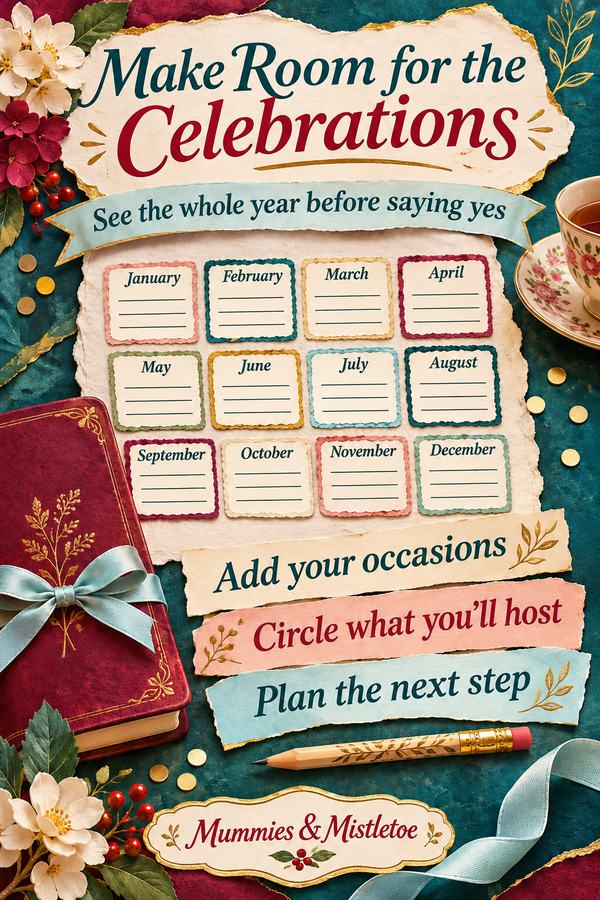
A holiday planning calendar printable puts the larger picture on one page. Our undated version has twelve month boxes, with three date-and-occasion spaces in each. You choose the celebrations that matter to your household, then circle the ones you plan to host.
This is a place for the broad outline. Keep appointments, menus, and shopping lists in your everyday planner. The useful question here is simpler: how much are we taking on, and where can we make room?
Fill the holiday planning calendar printable in three passes
First, add personal occasions with dates you already know: birthdays, anniversaries, and other family milestones. Use a short name for each entry so you can read the page at a glance. “Maya birthday” is enough; the cake flavor can live elsewhere.
Next, add holidays your household observes. Check the dates for the year you're planning, especially celebrations that move around the calendar. Use a reliable calendar or the relevant community's published schedule rather than copying an old page from a drawer.
Finally, add gatherings that need a little advance thought, such as a family reunion or a graduation party. If the date hasn't been agreed, write a question mark beside the occasion and leave the date blank. A penciled possibility should look different from a commitment.
Choose what earns a space
There are three lines per month on purpose. A year-at-a-glance page becomes hard to use when it turns into a miniature diary. Include occasions that affect hosting, travel, gifts, or your household's available time. Leave ordinary errands off the sheet.
If a month has more than three important dates, keep its full list in your planner and write “See May list” in one of the spaces. Don't squeeze five events into a line you can barely read. The overview should point you toward details, not compete with them.
You can also make separate copies for different needs. One household might want a shared family page and a second page for gift planning. Label them plainly so nobody mistakes one for the other.
Circle the hosting commitments before adding ideas
An occasion on the calendar doesn't mean you are hosting it. Circle only the gatherings you have actually agreed to arrange. A birthday dinner at someone else's home can stay uncircled, even if you're bringing a dish.
Now look at each month as a whole. Two circled events, a trip, and an important work deadline may be enough. If a new idea appears, consider whether it belongs in another month, needs to be smaller, or can remain an idea for now.
This is also the moment to talk with the other people involved. Check the plan with your partner, sibling or friend before adding their name beside a job. Confirm who is doing what before the plan grows beyond a date and a good intention.
Move the next action into your everyday planner
The overview tells you when something happens. Your everyday planner tells you when to act. For each circled occasion, choose the next concrete step and give it its own date.
For a family lunch, that might be asking how many people can come. For a gift, it might be checking the recipient's preference. For a personalized item, check the seller's current production and delivery information before deciding when to order. Write the resulting order date in your everyday planner.
Keep a page in a journal for each event that needs more detail. Put the guest count, spending limit, and decisions there. A short note such as “Lunch plan, page 12” can connect the two without covering the annual sheet in tiny writing.
Print a page you can actually write on
The printable is a single landscape US Letter sheet, 11 by 8.5 inches. Select landscape orientation and check the preview so all twelve months and the footer fit. Print one test copy before filling in the whole year.
Write a sample date and occasion in a blank box. If your usual pen feels crowded, try a finer pen or shorter labels. The sheet is designed as an overview, so a long event title doesn't need to appear in full.
Pencil is useful while dates are unsettled. Once plans are firm, you can rewrite the page neatly or leave the practical working copy as it is. Put it somewhere you will see it, such as inside a kitchen cupboard door or beside your planner.
Review the next two months, then stop
At the start of a month, look at that month and the one after it. Confirm uncertain dates, check the circled hosting plans, and transfer any next actions you haven't scheduled. Cross out canceled events as plans change.
Keep this review short. You don't need to redesign the year's celebrations every time someone changes a lunch date. The page is doing its job when you can notice a crowded stretch early and make one useful adjustment.
At the end of a gathering, write a brief note in the event's journal page about what you would repeat. Leave the annual calendar uncluttered. When you plan the next celebration, you'll have both the date in front of you and the practical memory of what worked.
If you like keeping those event notes in a book, our Owl and Roses journal has 150 lined pages for menus, guest counts and next-time ideas. Give each gathering a heading and keep the annual printable tucked beside your current plan.