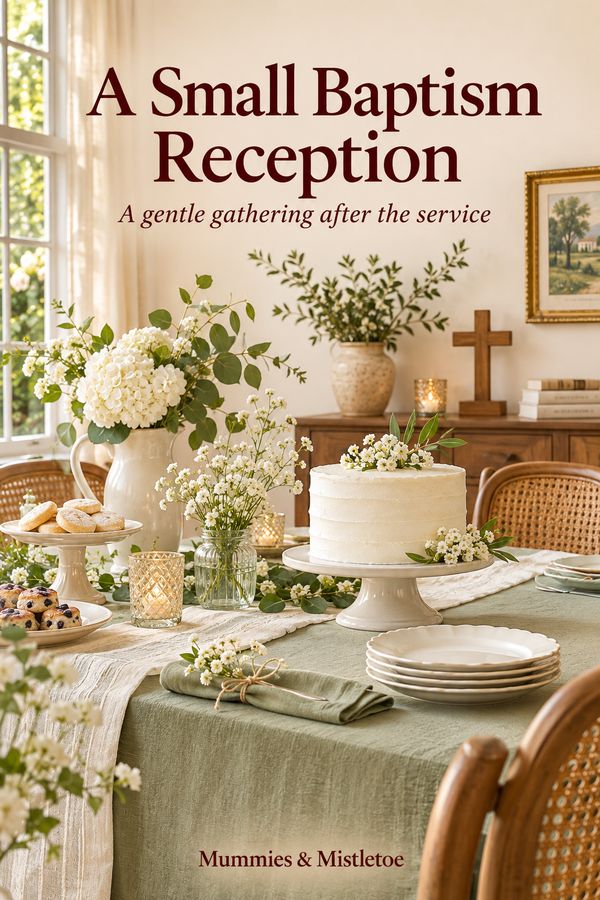
A reception after a baptism gives family and friends a place to share food and congratulate the newly baptized person or their family. The most helpful plan begins with the service schedule and the family's wishes. A modest gathering that fits the day can feel more welcoming than a large event built around assumptions.
Baptisms take place in different Christian traditions and at different ages. Ask the family or the person being baptized what kind of gathering they want, and confirm practical details with their church. Let those answers guide the reception.
Work Backward From the Service
Confirm the expected finish time, any photographs or church activities afterward, and the travel time to the reception. Build in a little space between the service and food rather than promising a meal the moment everyone leaves the church.
If the family has a baby or young child, ask about the most comfortable length for the gathering. If an adult is being baptized, speak to them directly about whom they want there and what would feel right. A baptism reception need not follow a birthday-party format.
Write the invitation plainly: where to go, when food will be available, and whether the gathering is a meal or light refreshments. Guests can plan better when they know what you mean by “join us afterward.”
Choose Food That Does Not Need an Audience
Use a menu that can be served smoothly after the host has been at church too. A prearranged meal delivery, a few ready-to-serve dishes or a trusted helper at the house can all work. Account for dietary needs and any fasting practice the family observes when choosing the menu.
Ask helpers for specific tasks: receive the food, set out plates or make coffee. Avoid assigning the parents or newly baptized person to finish cooking as soon as they arrive. Follow appropriate food-storage and serving guidance for whatever you choose.
Keep one surface free for coats, bags and gifts so the meal table remains usable.
Make the Welcome Personal
A photograph, a small arrangement or a simple card with the person's name is enough decoration. Check the spelling and date before printing anything. Choose faith symbols or Scripture wording with the family's approval rather than assuming every Christian tradition uses the same imagery.
If guests will leave written messages, place cards and tested pens on a quiet side table. A prompt such as “A prayer or kind wish for you today” gives people a starting point. Keep participation optional, and collect the notes in an envelope for the family.
Leave Space for the Person Being Celebrated
People may want photographs, conversations or a chance to hold the baby. Let the family set the pace. Have somewhere quiet to sit and a clear way for them to end the gathering without making an announcement to the whole room.
If a gift is part of your own plans, ask what would be meaningful within their tradition. The meal itself is already a contribution; no guest needs to match a particular level of spending.
At the end, send the family home with the messages and any belongings they brought, and arrange cleanup without involving them. The reception has done its job when it supports the significance of the day and gives people time together.