The tablecloth is on, the runner is out of the drawer, and together they look busier than either one did alone. Knowing how to layer a table runner is mostly about deciding which fabric gets the attention. Give one layer the main pattern and let the other support it.
Before adding flowers, set out one plate, one glass and the napkin you intend to use. Those three pieces help you judge the fabrics as part of a meal instead of an empty decorating project. Keep them on the table while you try the combinations below.
Choose the Main Pattern First
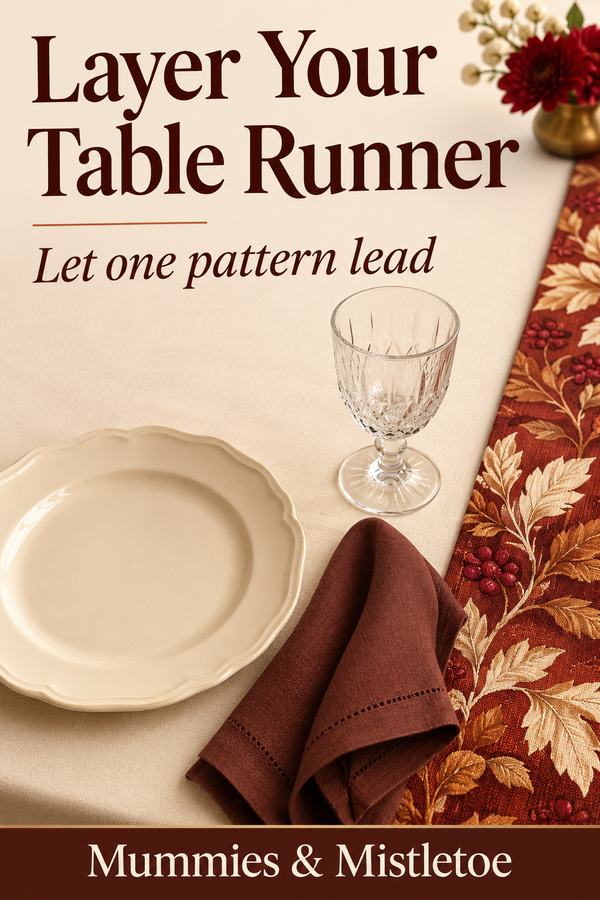
Lay the more patterned fabric down where you can see its colors. Pick one of its quieter colors for the supporting layer. A cranberry floral runner, for example, can sit over a plain cream cloth if cream appears in the print. The repeated color makes the two fabrics feel related.
Keep the scale of the patterns different if you want both layers patterned. A broad check under a small leaf print can be easier to read than two medium-sized florals competing across the whole table. Test the actual fabrics together rather than buying from separate photographs.
Look at the dishes as another pattern layer. If your plates have decorated rims, leave them enough plain background to show. Plain plates give you more room to experiment with fabric, while a busy plate often looks better against a quieter cloth and runner.
How to Layer a Table Runner Over a Cloth
Spread the tablecloth and center it before adding the runner. Smooth each layer separately, following its care instructions for any pressing. Place the runner along the table's center, then check the amount visible on either side from both ends.
Try a plain cloth with a printed runner first. The cloth supplies a continuous background; the runner holds the print in one band. This is useful when you like a strong seasonal design but don't want it underneath every plate.
For a patterned cloth, reverse the arrangement and use a plain runner. A solid band gives the centerpiece a resting place within the pattern. If both pieces are plain, let texture provide the difference, such as a smooth cloth under a runner with a visibly nubby surface. Check that any texture under dishes remains level and practical.
Try Three Complete Combinations
For a warm autumn table, pair a cream cloth with a rust-and-brown printed runner, plain white plates and brown napkins. Keep the centerpiece low and repeat rust once in a small bowl or a few flowers. The runner carries the detailed pattern, so the rest of the table can stay simple.
For a green-and-white winter table, try a small-scale checked cloth beneath a plain green runner. White dishes will stand out against both. Clear glasses and cream napkins keep the palette calm.
For a pale spring table, use a plain light cloth, a softly patterned botanical runner and napkins in one leaf color from the print. If the runner's background is noticeably warmer or cooler than the cloth, put the fabrics together in daylight before committing. A slight difference can be pleasant, but an almost-match that bothers you will still bother you after the flowers arrive.
For a Farmhouse Table
Try an oatmeal cloth, a narrow black-and-cream stripe and plain pottery for a quiet farmhouse look. If the table has beautiful wood, leave the cloth off and use the runner alone. A low bowl of pears or folded napkins can bring softness without hiding the grain.
A floral runner offers a gentler version of the same style. Repeat its leaf color in the napkins and keep the plates plain. The sizing method stays the same; wood, pattern scale and everyday crockery give the setting its character.
Keep the Dishes on a Steady Surface
Place the real dinner plates around the layered fabrics and check whether any sit partly on a thick edge. Press gently at opposite sides of each plate to see if it rocks. Shift the runner or use a flatter layer if the setting isn't steady.
Glasses need a level spot too. A glass half on a raised hem and half on the cloth can be awkward to set down, especially while people are talking. Move the glass fully to one side of that edge and check the reach from the chair.
Now add the empty serving pieces. If a bowl hides most of the runner or leaves nowhere to rest utensils, decide which item should move. A sideboard can hold the main dishes while the runner supports a small centerpiece and a few shared condiments. Keep the layout suited to the way you actually serve the meal.
Fix Slipping and Uneven Ends
If the runner shifts when you place dishes, lift it and check how the two fabrics sit together. A slippery fabric combination may be better separated. Try a different cloth, a different runner or the runner alone on the table.
Check the ends from a seated position. A runner can hang beyond the cloth, finish above its hem or stay entirely on the tabletop. Choose the relationship deliberately and keep both ends balanced. If the fabrics catch against knees or chairs, shorten the hanging portion by choosing a different size.
For a round table, lay the runner through the center and arrange the places before deciding the direction. The edge of the table curves away from the fabric, which changes how the layers look near each chair. A quick photo from the doorway can help you spot a crooked band that is hard to notice while standing directly over it.
Finish With One Repeated Detail
Choose the napkins after the main layers are in place. Repeat a color from the runner or use the cloth's neutral shade. A napkin ring, small place card or plain ribbon can connect the setting without adding another broad pattern.
When you find a combination you like, photograph it with one complete place setting and save the fabric measurements beside the image. That gives you a usable reference for the next gathering, including which dishes worked and where the runner ended.
Take away the test bowl, put the napkins at each place and step back from the table. The main pattern should still be easy to see, with room around it for the people and the supper.
For the autumn combination, our pumpkin vine table runner can supply the patterned layer over a plain cream cloth. Pull one color from the print into the napkins, then let the dishes and the supper have the rest of the space.