A pot of white flowers can sit beside the door without turning the whole porch into a display. Memorial Day decor can be a small part of making room at home for remembrance.
Memorial Day honors United States military personnel who died while serving in the Armed Forces. The National Archives' Memorial Day overview explains that purpose and the national invitation to pause in remembrance. Let that meaning guide the choices you make, especially if the day holds a personal loss for your family.
Choose One Place to Remember
Pick a place where you can pause without being in the middle of household activity. It might be a porch chair, a small table near a window or a shelf where a photograph is already kept.
Use what belongs there naturally. A low flower arrangement, a framed photograph and a handwritten name can be enough. Leave room to sit or stand comfortably nearby.
If you share the home with someone for whom the day is painful, ask what they would welcome. They may prefer a private photograph to a display near the entrance. A quiet observance can be meaningful without being visible to visitors.
Keep Memorial Day Decor Simple
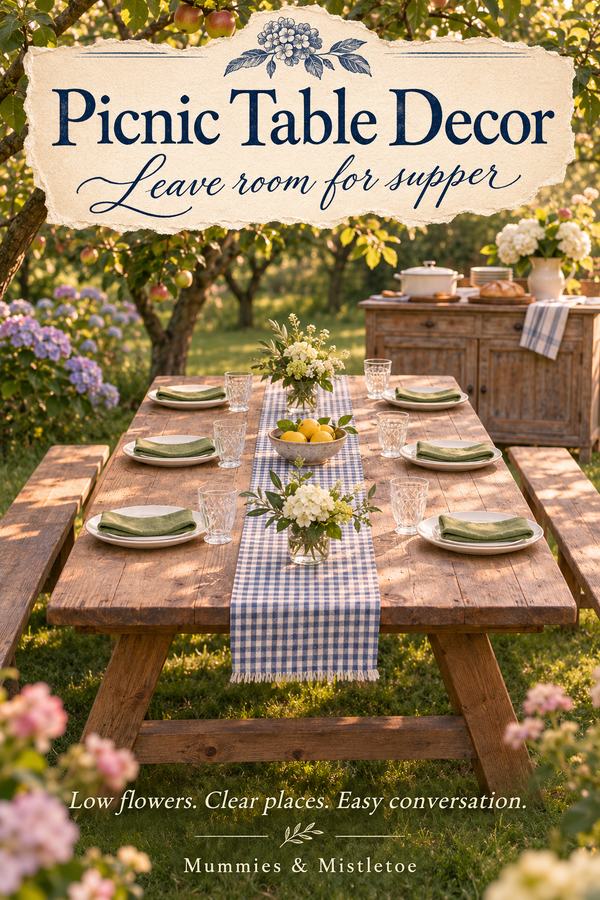
Choose a limited palette and a few materials. White flowers with green leaves and a plain vessel can feel calm. A blue cloth beneath a small arrangement can add color without requiring a collection of themed objects.
Keep the arrangement low if it will sit on a table where people gather. On a narrow shelf, use a small vessel that sits securely and leave the photograph easy to see.
For an outdoor space, use plants and containers suited to the conditions. Choose a place clear of the doorway and steps, and bring any paper or framed photograph inside when the weather could damage it. The flowers can stay as part of the home after the day's observance.
Give a Photograph Its Story
If you are remembering someone known to your family, choose a photograph that those closest to them are comfortable displaying. Use a copy rather than exposing an irreplaceable original to sunlight, moisture or handling.
Write the person's name and a brief, accurate note on a separate card. It might record their relationship to the family or a memory someone has chosen to share. Keep uncertainty out of the label by checking details before you write them.
Avoid turning private grief into a public post without permission. A family can gather around a photograph at home without sharing it online. Let the people most closely connected with the person decide what feels appropriate.
Make Room for a Few Words
If your family wants to speak together, invite one short memory or observation. Someone may remember a shared meal, a piece of advice or a story passed down by a relative.
Give people the choice to listen. Not everyone will want to speak, and nobody needs to produce a polished tribute. For children, a simple explanation of whom you are remembering may be enough.
When you don't have a personal connection to someone who died in military service, you can still take time to learn about an individual through a reliable memorial or museum source. Read carefully, keep their name accurate, and avoid inventing feelings or details to make the account more dramatic.
Pause Together, or on Your Own
The National Archives describes the National Moment of Remembrance as a minute of silence at 3 p.m. local time. You can set a reminder and pause wherever you are, alone or with the people around you.
If you are gathering for a meal, let guests know beforehand that you would like to observe that moment. Keep the invitation gentle and the words brief. A pause does not require a formal speech or a rearrangement of the whole day.
You might sit beside the flowers, look at the photograph or simply put down what you are doing. Leave the silence as silence, without needing to fill it immediately afterward.
Let Children Help With One Concrete Task
Children can help choose flowers, place a copied photograph in a frame or write a name on a card with an adult. Give them a task that suits their age and the family's wishes.
Keep the explanation direct: this is a day to remember people who died while serving in the military. Answer the questions they ask without adding details they haven't requested.
If the family is remembering a particular person, share an ordinary detail about them when it is known and appropriate. A favorite flower, a much-used recipe or a story about their kindness can help the child understand that the name belongs to a person, not only to an occasion.
Put the Keepsakes Away With Care
Afterward, return photographs and papers to their usual protected place. Keep any new family notes with the photograph so the information doesn't become separated from it.
Flowers can remain on the table or porch while they are fresh. Replace the water or care for the plant as it needs, and leave the sitting place usable.
Before you put away the handwritten card, check that the name is complete and correct. Place it beside the photograph for the next time someone asks about the person pictured there.