A few well-chosen words can make a gift feel unmistakably like your friendship. Her name is one option, but so is the phrase you always say, a place you both remember or a tiny joke nobody else would notice. Start there, then decide what will fit on the gift.
For personalized gifts for a best friend, the useful work often happens before you choose a font. Find one detail she would recognize, decide how much of it belongs on the object, and keep the longer explanation for the card. The gift doesn't have to tell the whole story to carry it.
Start with a detail, not a finished slogan
Write down three ordinary things that belong to your friendship: a place you return to, a phrase you both use, or something you regularly do together. “The corner booth,” “another chapter,” and “tea on Tuesday” each suggest a different kind of memory.
Choose the one your friend would recognize without being reminded. A reference that needs several paragraphs of explanation may belong in the note rather than on a mug or notebook cover. The strongest detail is often the least impressive to anyone else.
This approach works for a sister, too. A familiar place or a phrase from your adult life together can be more personal than a general statement about sisters. Use the relationship you have now, not only a childhood memory she may remember differently.
Choose how much to say on the gift
There are three useful levels of personalization. The simplest is a name or initials. That can be the right choice when your friend likes a quiet design and prefers the sentimental part to stay private.
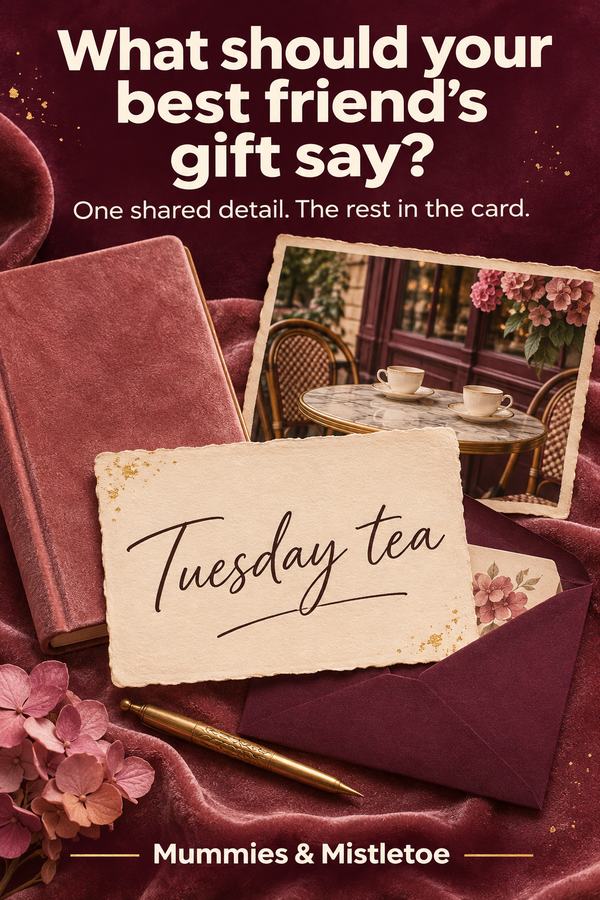
The next level is a short shared reference. “The corner booth” could sit on a notebook cover, while the card explains that it's for the plans you make over lunch. “Tuesday tea” might suit a cup if that is a routine you actually share. These are examples of how to shorten a real detail, not phrases you need to borrow.
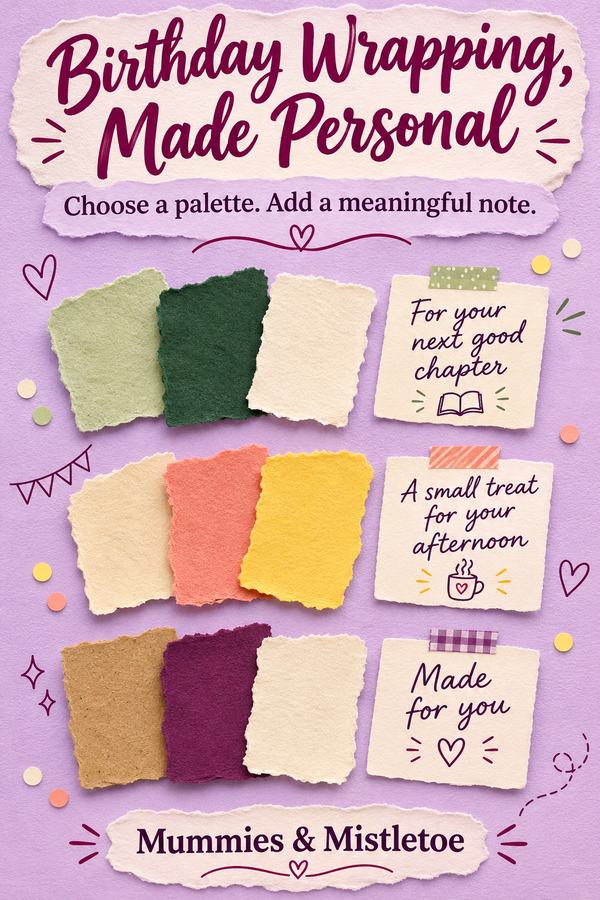
The third level is a brief message, such as “More afternoons together” or “For the next chapter.” Read it aloud in your own voice. If it sounds like something you would never say to her, keep working until it does.
Put the private part in the card
Imagine the gift sitting on a desk at work or being used in front of visitors. Some inside jokes are funny only in the right company. A nickname she enjoys privately may not be one she wants everyone to ask about.
Use the object for a gentle reference and the card for the story. You might print the name of a familiar place, then write about the conversation you had there. That keeps the gift usable without losing the personal meaning.
Ask before using a private photograph, a sensitive date, or a story involving someone else. A quiet check can be as simple as, “Would you like that picture on something, or would you rather keep it in our messages?” The finished design can still be a lovely surprise.
Match the wording to the object
A short phrase that reads comfortably on a journal may become cramped on a small item. Look at the seller's actual personalization limits and design area before settling on the wording. Character limits tell you what can be entered, but the proof tells you how it will look.
For a mug, consider which side carries the text and whether the lettering stays readable on the curved surface. For a journal, think about how the cover will look when closed and sitting on a shelf. Keep the useful qualities of the product in mind alongside the message.
You don't have to fill every available line. A name and one small phrase may be enough. Put the rest of what you want to say in the note, where it can be read without reducing the type to a whisper.
Check a plain-text version before the pretty proof
Write the exact final wording in one place before entering it into an order. Check names, apostrophes, capitalization, and any date against something reliable. Confirm any unusual nickname spelling and check that autocorrect has left it intact.
Read the text once for meaning and once character by character. Those are different checks. A sentence can sound right while still containing the wrong initial or a missing word.
Then inspect the design proof, if one is offered. Check the line breaks, contrast, and size, not just the spelling. View it at roughly the size it will appear on the finished item. If you have to enlarge the preview to read a simple phrase, ask about a clearer layout before approving it.
Let the note finish what the design starts
The card is where you can be specific without squeezing. Name the memory, say what it means to you, and leave room for the friendship to continue. “I thought of our corner booth and all the plans we've made there. Here's somewhere to keep the next ones” gives a notebook a reason to be hers.
For a friend who lives far away, choose words that fit the connection you maintain now. A regular call or a book you read together can matter as much as an old shared address. If you mention a future visit or outing, suggest something you can realistically arrange.
Before wrapping, compare the finished item with the wording you saved. Tuck the longer note inside the package. When she opens it, the small phrase can do its work first, and your own words can tell her the rest.
If the meaningful detail belongs in a handwritten note, choose the object for her style. Our pink floral witch-hat journal could suit a friend who loves a little Halloween all year, with your shared memory tucked inside on a removable card.