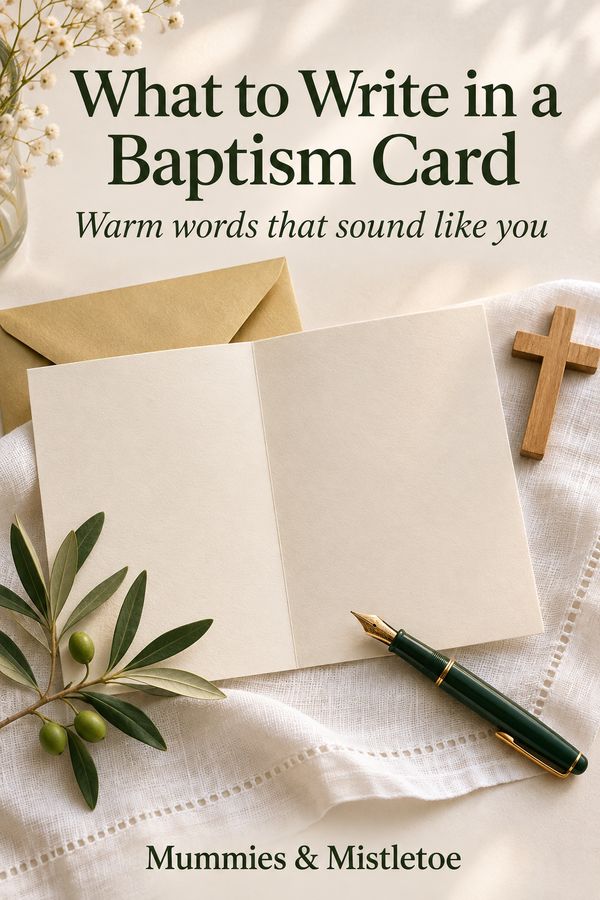
A baptism card does not need to explain the meaning of baptism in a few lines. It needs to sound like someone who cares about the person receiving it. A brief prayer, a specific expression of affection and your name can be enough.
Choose the recipient before choosing the wording. A card addressed to an adult being baptized will sound different from one written to a baby for the family to keep. Your relationship and the family's Christian tradition can guide the language.
Use Three Simple Parts
Begin by naming the occasion. Add a hope, prayer or personal thought. End with the relationship you want the person to feel: your love, encouragement or presence.
For an adult friend, you might write:
“Congratulations on your baptism, Elena. I am grateful to share this day with you. May you find strength in prayer, joy in your church community and good companions for the years ahead. With love, Mara.”
For a young child, a keepsake message could say:
“Dear Noah, we were so happy to be with your family on your baptism day. We pray that you will grow surrounded by love, wise guidance and the knowledge that you are deeply cherished. Love, Aunt Lucy and Uncle Ben.”
Use these as models, not words you must copy. Replace a broad phrase with something true about your connection.
Let Your Own Voice Be Warm and Plain
You do not need an ornate religious vocabulary to write sincerely. “I am praying for you” is stronger when it is something you mean to do than a long promise you chose because it sounded impressive.
If you are not Christian or are unfamiliar with the family's practice, you can honor the day without pretending otherwise:
“We are glad to celebrate this important day with you and your family. Wishing you love, friendship and a joyful gathering with the people who care about you.”
Avoid turning the card into advice about how the person should live. This is a greeting they may keep, not a set of instructions.
Add Scripture Only When It Fits
A short reference can be meaningful if it belongs to the relationship or the service. Ask the family which passage they would welcome if you are unsure. Check the exact wording and translation before quoting, and write the reference so the recipient can find it again.
You can also write your own prayer in ordinary language. “May God give you courage for difficult days and gratitude for joyful ones” is a personal wish, not a claim about what their future will be.
Make a Child's Card Useful as a Keepsake
Write the date, your full name and your relationship somewhere discreetly inside. A child reading the card years later may not know who “Love, Jo” was. If you attended the service, add one detail you genuinely remember, such as a song or a family member's happy expression.
Keep the card itself simple and readable. A small handwritten note on plain stationery can be just as meaningful as an elaborate printed design. Read the message once before sealing it: does it sound like you, and does it leave the recipient with affection rather than expectations? That is a good card.