Some gifts defeat a neat rectangle before the first fold. A handle sticks out, a soft item collapses, or a curved shape leaves paper stretched tight in one place and loose in another.
Choose the wrapping method around the object instead of forcing every gift into the same technique.
First decide what needs protection
Set the gift on the table and look for delicate parts, sharp edges, and areas that should not bear weight. Keep original protective packaging when it serves a purpose.
Check the object’s size before buying a bag or box. Include handles and protruding pieces in the measurement. A slightly larger suitable container is more useful than a huge box filled mostly with empty space.
For gifts going by post, use the carrier's protective-packing guidance before adding decorative wrapping.
For a soft gift, make a tidy bundle
Fold clothing or another soft item into a compact shape that suits it. Place it in a reusable bag, wrap it in suitable clean fabric, or use paper with enough room to fold without crushing the contents.
For paper, wrap around the bundle first and secure that seam. Fold the shorter ends inward in manageable sections, keeping the folds broad rather than trying to create razor-sharp corners in something that moves.
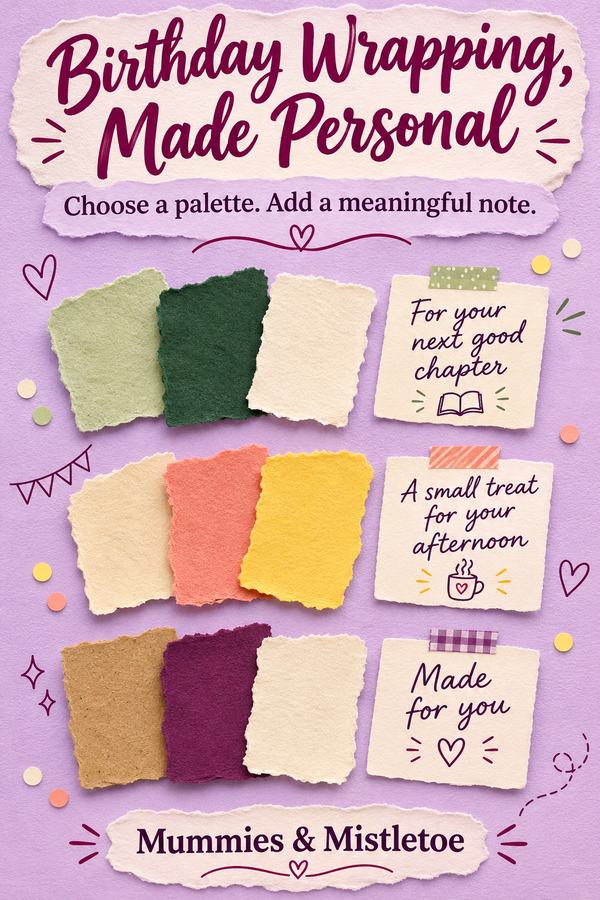
If the fabric wrapping is also part of the present, say so on the tag so the recipient knows it is theirs to keep.
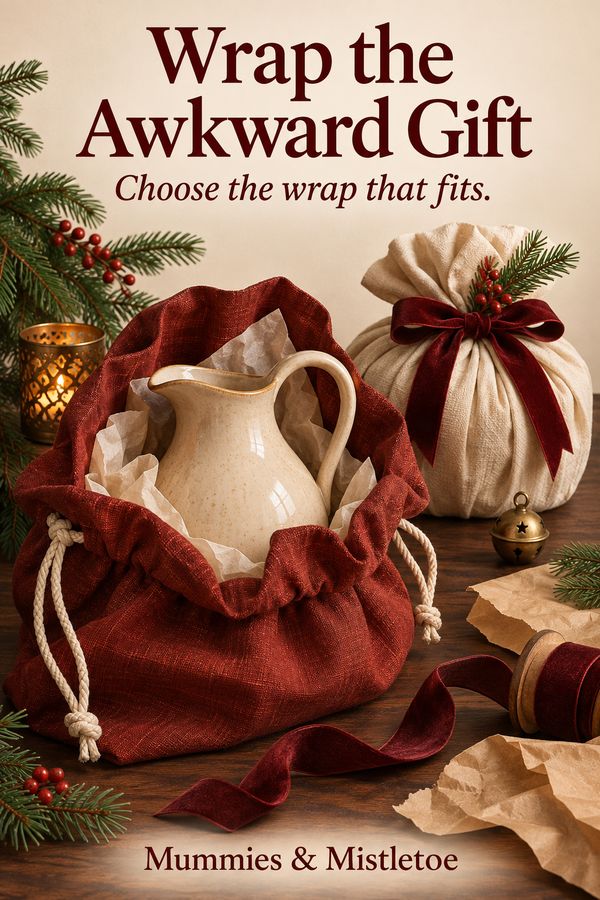
For a handled or curved item, use a fitted bag
Choose a bag with a base that supports the item and enough width for its widest point. Add appropriate protection around fragile parts, then use tissue or a folded sheet of paper to cover the opening without pressing down on the gift.
Support a mug around its body and base, with protective padding around the handle.
If you are choosing a mug gift from Mummies & Mistletoe, check the item’s dimensions and retain useful protective packaging before planning the outer presentation.
For an irregular small object, use a modest box
A box is still a good answer when it provides protection. The goal is a suitable fit, not eliminating boxes altogether.
Choose one close to the object’s size, protect the contents appropriately, and close it without pressure on the gift. Wrap the box normally. A plain reused box can look lovely under paper, provided it is clean and sturdy.
Cover old shipping labels with paper or a fresh gift tag for a tidy finish.
For something too large to wrap, change the reveal
Place a card with a photograph or a simple clue in an envelope, or use a fabric cover that can be lifted away. Have the gift waiting in its intended place for the reveal.
Add a clear tag and stop there. The recipient will remember the thoughtful choice more than whether every curve disappeared beneath paper. Good wrapping makes a gift pleasant to receive; it does not need to disguise basic geometry.