Mark the summer solstice with a shadow record: a page showing how one familiar place changes over an afternoon. A fixed object, a ruler and a few short visits are all you need.
Find a dependable shadow
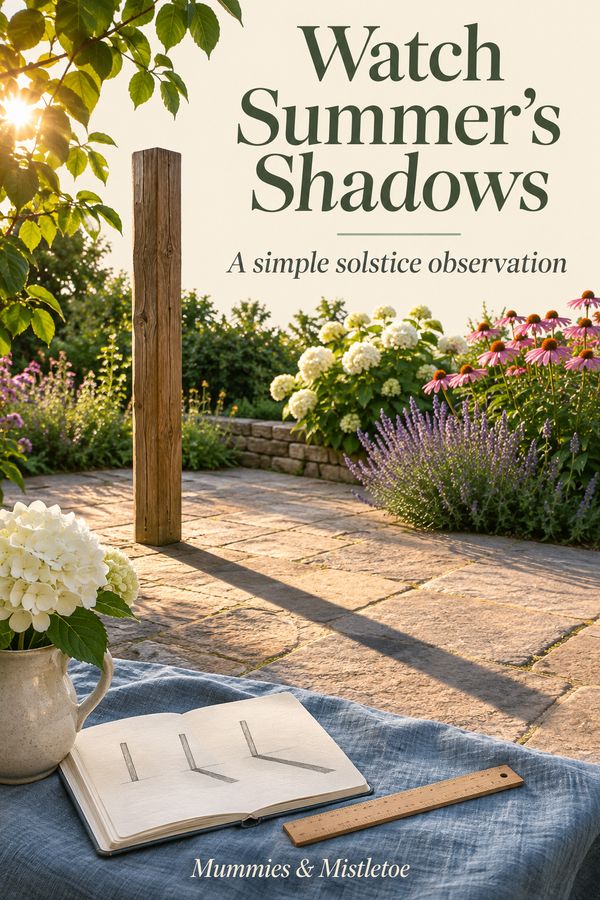
Choose a stationary object on level ground, such as a fence post, that casts a clear shadow. A familiar spot in your own yard makes repeat visits easy; record the outline on paper or with washable chalk on your own paving.
Keep the object and starting point the same throughout the activity. A chair that moves between readings makes comparisons difficult. Observe shadows on the ground rather than looking directly at the sun.
Make a small observation page
Divide a sheet into four boxes. In each, leave space for time, shadow length, direction and a quick sketch. Add the date and location at the top. You can describe direction with nearby landmarks: “toward the gate” is useful if everyone understands which gate.
Choose three or four observation times spaced about half an hour apart. Set reminders and enjoy a drink or a shady seat between readings.
Measure from the same point
At each visit, measure from the base of the object to the shadow's tip. Write down the unit you use. Sketch the outline and note whether the edge looks sharp or fuzzy. Passing clouds are worth recording, too.
If you are using chalk, label each outline with its time. Step back after the last reading and compare the shapes. On paper, draw the outlines from a shared starting point so their differences are easy to see.
Notice before explaining
Ask: Which shadow was longest? Did its direction change? What happened when a cloud passed? A useful observation can be as simple as “the tip moved closer to the flowerpot.”
Save the page and repeat the activity another day from the same spot. Conditions will not always match, and that becomes part of the record. One carefully observed fence post can make an ordinary summer afternoon feel newly interesting, without turning it into a complicated science project.