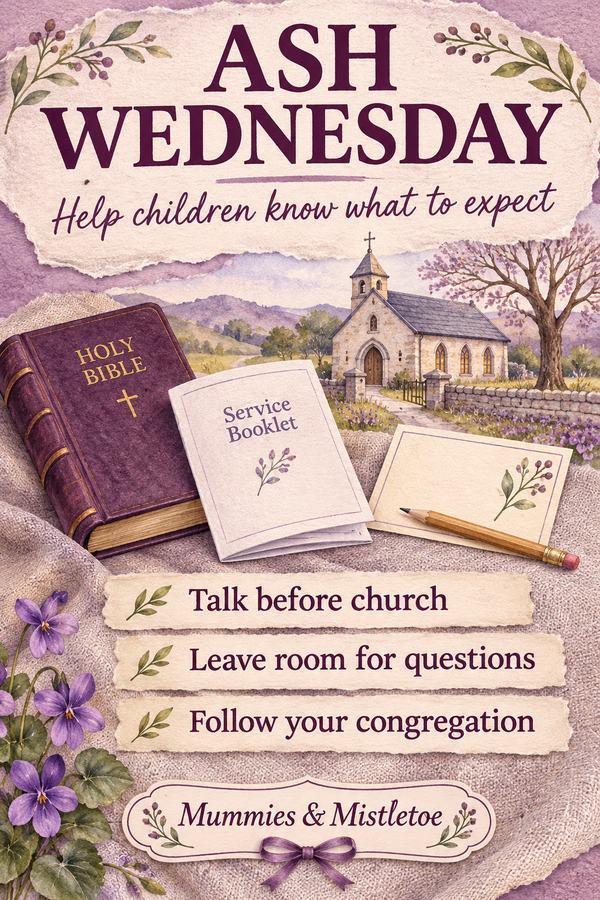
Talk Before You Reach the Church Door
The service is on the calendar, and a child wants to know why people will have marks on their foreheads. Ash Wednesday for kids begins with a little preparation: what they may see, what the ashes mean and whom they can ask when something is unfamiliar.
Have the conversation before everyone is putting on shoes. Ten quiet minutes gives you room to explain the day without rushing a question at the church entrance. A little familiarity will help the child follow what happens.
Explain the Day in Plain Words
In churches that observe it, Ash Wednesday begins Lent. The Catholic Bishops' Conference of England and Wales describes the season through prayer, fasting and practical generosity. You can explain repentance to a child as turning back toward God, being sorry for wrong choices and seeking to live differently.
Try a short introduction: “Today we begin a season of preparing for Easter. We ask God to help us turn away from wrong and learn to love him and other people.” Ask which word they'd like you to explain.
Keep your family's own church teaching close to the conversation. Christians do not all begin Lent with the same services or calendar, and a child may have friends who observe the season differently. You can describe your practice without calling another family's practice a mistake.
Tell Them What the Ashes Are For
The Church of England's guide describes ashes marked as a cross as a sign of penitence and trust in God. It also notes that the ashes are often made from the previous Palm Sunday's palm crosses. Explain that the cross is part of the church's prayer that day.
Ask your congregation how ashes are distributed and what words the minister uses. Tell the child what to expect in that particular service, including whether they will approach the minister with you. Use that congregation's routine when explaining the visit.
A useful explanation is, “The ashes remind us to be humble before God and to turn back to him.” If the words about dust or death prompt a question, answer calmly in language suited to the child. You can discuss human life and God's care without turning the conversation into a warning intended to frighten them.
Make a Small Plan for the Service
Confirm the start time, likely length and any arrangements for families. Pack what your child normally needs to participate comfortably, and choose a place where you can step out quietly if necessary. Explain beforehand that people may sit, stand, kneel or remain quiet, depending on the service.
Let a child who is old enough carry the service booklet or help find the page. A younger child can simply stay beside you and watch. Neither has to understand every part before being present with the congregation.
If a child is worried about having their forehead touched, speak with the minister before the service about a suitable approach. Avoid making that concern a public struggle in the line. Your church can guide you about participation while you help the child feel prepared.
Read a Few Verses at Home
Before or after church, read Matthew 6:1-4 in the World English Bible. Jesus teaches about giving without making a show of it. Keep the reading short and connect it to an example a child knows, such as helping someone without announcing it to the room.
Ask the child to think of a time someone helped them quietly. They might remember a lunch packed, a lost item found or a patient explanation. An older child can talk about why seeking praise can change the way a person offers help.
You can return to the chapter's teaching on prayer and fasting with your pastor's guidance as the season continues. One short reading gives you a place to begin and return to as the season unfolds.
Choose One First Step, Without Keeping Score
Invite the family to choose a small act of generosity for the next day. It could be contributing to an established collection, writing a kind note or helping with a household job. Choose an action that answers a real need, and let it remain private.
Fasting and abstinence have particular rules in some churches. Follow your church's guidance on age and health, and seek pastoral or medical advice where appropriate. A household activity such as putting away a phone for prayer can accompany those practices; it does not automatically replace a prescribed fast.
For a young child, participating in prayer and helping someone may be the first step you discuss at home. Keep any extra family activity suited to their abilities. Begin with a practice your family can return to thoughtfully.
Leave Room for the Question That Comes Later
If you cannot attend a service, ask your congregation about an appropriate home prayer or other way to participate. Leave the preparation and use of ashes to the church's guidance rather than improvising with fireplace ash or craft materials. You can still read, pray and talk together.
At bedtime, ask whether anything from the day is still on the child's mind. Write down a question you want to take to the minister, then close with a brief prayer in your own words. Leave that question beside the Bible where you'll remember to return to it.